Quilting history · Baltimore Album quilts

The History of Baltimore Album Quilts

The finest appliqué of the 1840s, and the mystery of who designed it

Eagles with flags, monuments, ships, baskets heaped with shaded roses, and names inked on nearly every block. For about ten years from the mid-1840s, the women of Baltimore made the most elaborate album quilts in America. Here is where the style came from, who the quilts were really for, and why the question of who designed the finest blocks is still open, with quilts from the Met, the Art Institute of Chicago, the Museum of Fine Arts in Boston and the National Gallery of Art.

  • 13 moments
  • 1842 to today
  • 16 museum photographs
  • A Baltimore album quilt of shaded, many-colored flowers in baskets, wreaths and cornucopias around a central wreath with an eagle and flag
  • An album quilt of 25 red and green appliqué blocks in red sashing: wreaths, baskets, a lyre and an eagle with a flag
  • A Baltimore album quilt top of appliquéd wreaths, stars, a rooster, an urn and birds in a red diagonal lattice, with a vine and sawtooth border
  • A red and green album quilt of wreaths, bouquets, baskets, urns and a lyre, framed by a vine of red roses
  • Close-up of a red woven basket heaped with layered, shaded roses and flowers, with fine quilting behind
  • A red and white album quilt of 25 appliqué and pieced blocks inside a swag border tied with bows

What is a Baltimore Album quilt?

A Baltimore Album quilt is an appliqué quilt of many different blocks, often made and signed by different people, from Baltimore, Maryland, at the height of the album quilt fashion, about 1845 to 1855. The blocks show wreaths, baskets and cornucopias of flowers alongside eagles, flags, monuments and ships, and most are signed in ink. Many were presentation quilts for ministers and other men honored for their service, or gifts between friends and family.

1820s – 1845

Where album quilts came from

Baltimore didn't invent the album quilt. It took a fashion everyone shared and made it grander than anyone else.

Early 1840s

The album craze begins

In the early 1840s, women in the Mid-Atlantic began making album or friendship quilts: each block made or signed by a different person, like a page in the autograph albums that were popular at the time. The fashion centered on Philadelphia, New Jersey and Baltimore, and had faded by the mid-1850s. It is one chapter in the longer history of quilting.

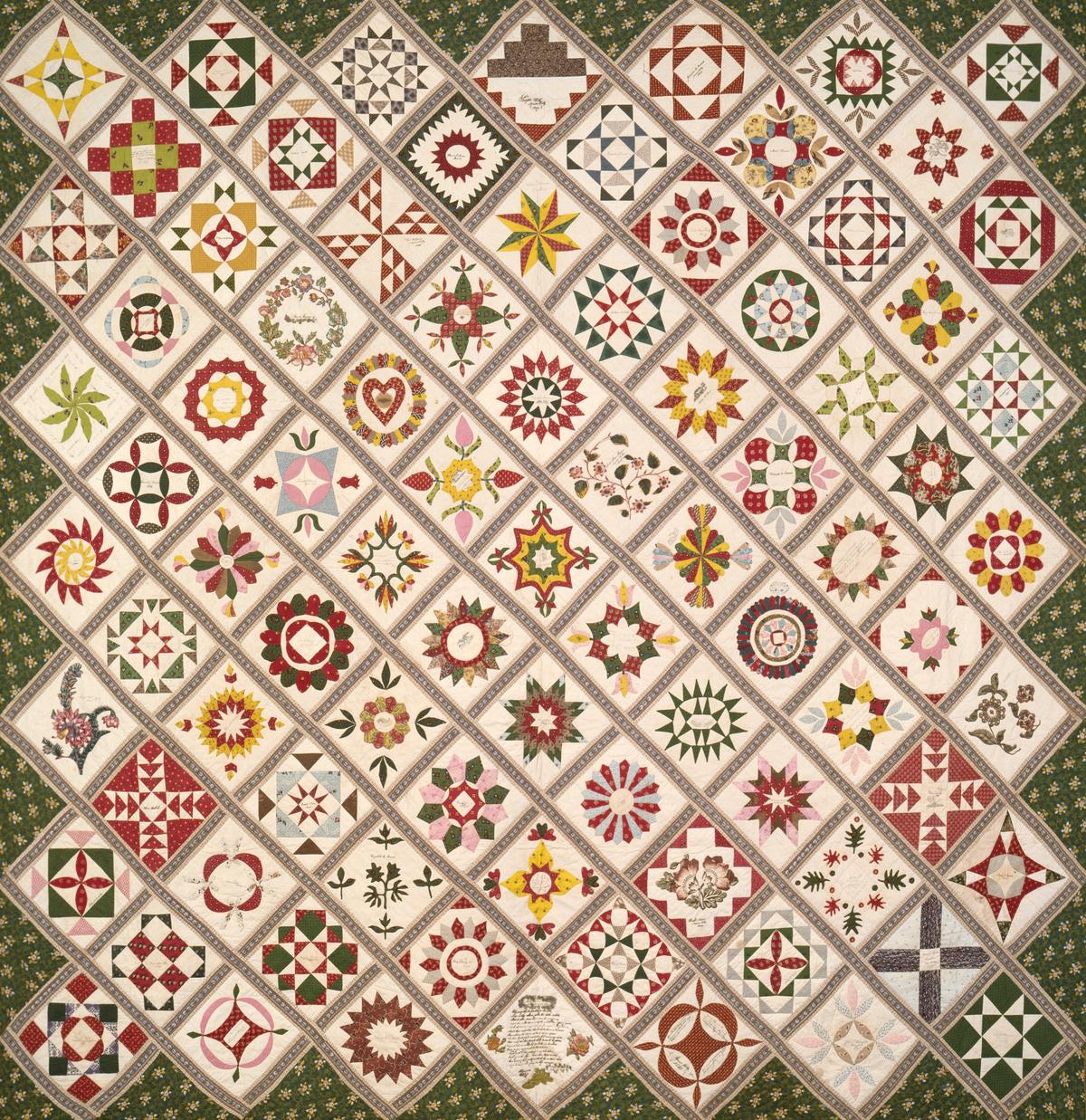
A friendship quilt made in 1842 for Ella Maria Deacon of Mount Holly, New Jersey, has 85 different squares inscribed with names and verses. One simply says "Remember me."

A friendship quilt of small pieced and appliquéd squares set on point, many inscribed with names, inside a green floral border
Friends of Ella Maria Deacon, Friendship Quilt, Mount Holly, New Jersey, 1842. Art Institute of Chicago · Public domain

1840s

Baltimore, a booming port

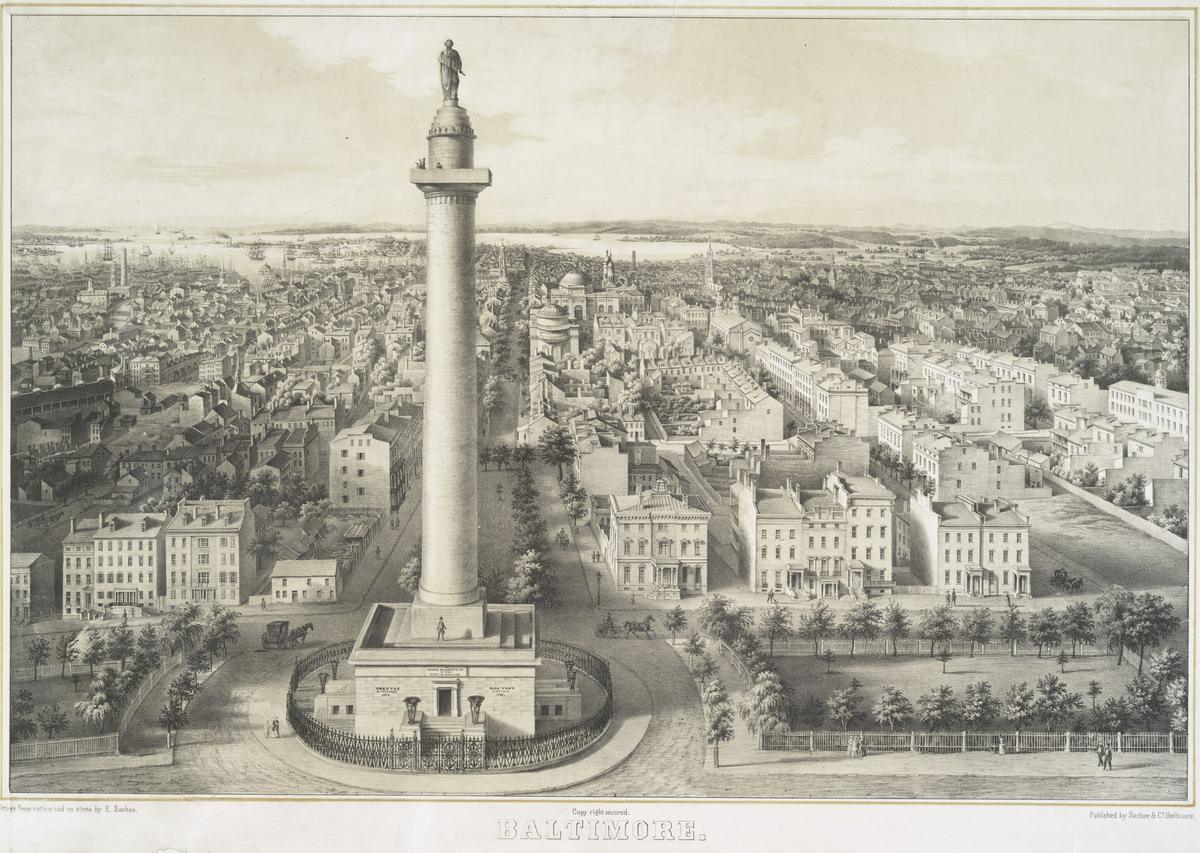
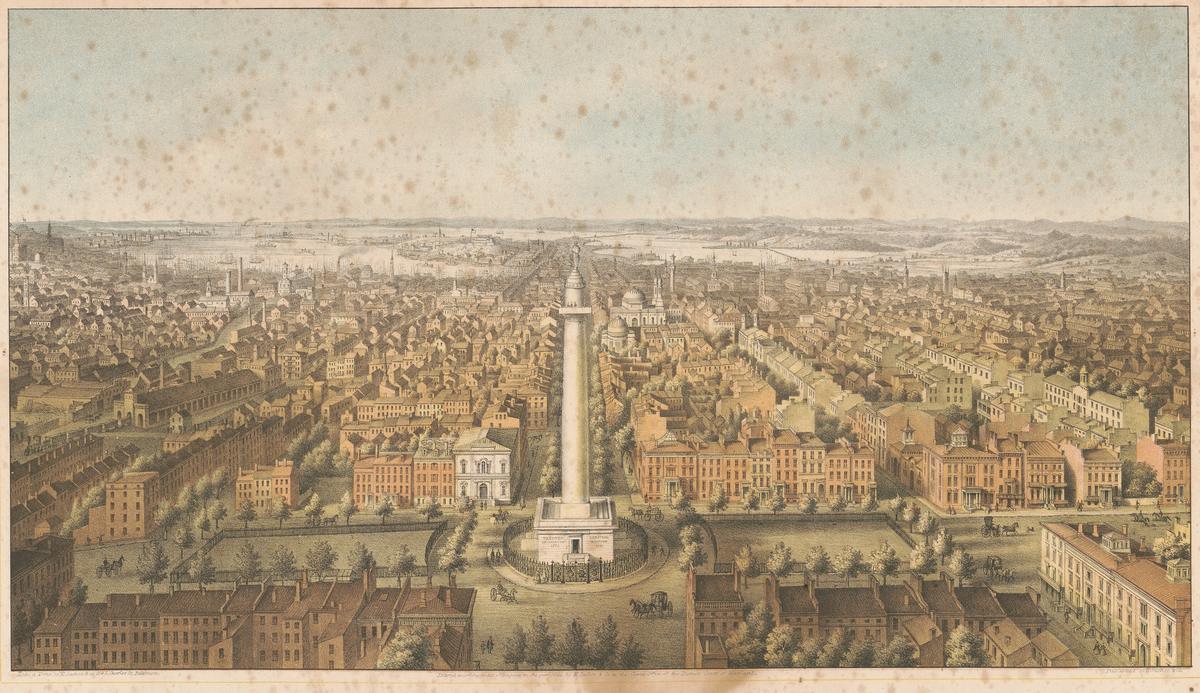
In the 1840s Baltimore was a fast-growing port with a busy harbor and shipping trade, and the home of the Baltimore & Ohio Railroad, founded in 1827. Its civic pride showed in its monuments: the Washington Monument, designed by Robert Mills and completed in 1829, and the Battle Monument, honoring the defenders of 1814.

Those landmarks, along with ships and the harbor, would appear in appliqué on the city's album quilts.

A lithograph looking down Baltimore's streets from above, with the tall column of the Washington Monument in the center and the harbor beyond
Edward Sachse, Baltimore, a view of the Washington Monument, lithograph, 1850. The New York Public Library · Public domain
A colored bird's-eye view of Baltimore with the Washington Monument at the center and ships in the harbor on the horizon
E. Sachse & Co., View of Baltimore City, Md., from the North, 1862. Library of Congress · Public domain

1820s – 1840s

Baltimore's appliqué roots

Fine appliqué had a history in Baltimore before the album quilts. The Smithsonian holds an appliquéd counterpane of 1820–1840 designed by Achsah Goodwin Wilkins (1775–1854), a Baltimore merchant's daughter, and similar pieces have been attributed to her. Colonial Williamsburg notes that she enlisted African American women in her household to stitch the motifs she designed and pinned in place.

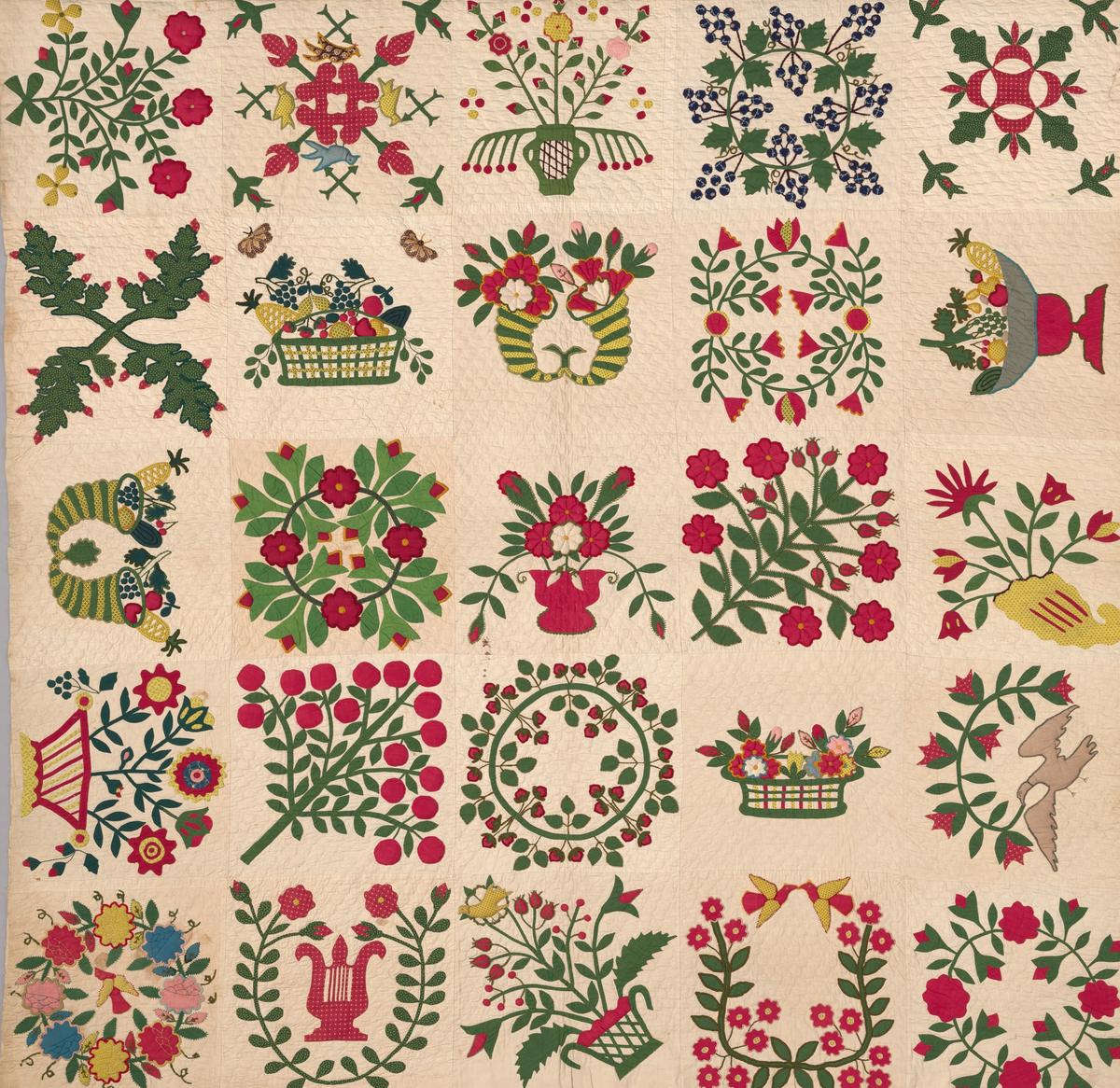
Dena Katzenberg's 1981 study credited Wilkins with directing the most sophisticated album quilts, an attribution that, like others in this field, rests largely on style. The Art Institute of Chicago's Fruit and Flowers quilt, with padded and glazed cottons, is catalogued only as "possibly" from Baltimore.

An appliqué quilt of padded red and green flowers, baskets of fruit, cornucopias and a bird on a cream ground
Fruit and Flowers Quilt, possibly Baltimore, 1845–50. Art Institute of Chicago · Public domain

1844 – 1855

The Baltimore Album at its height

For about a decade, Baltimore's quiltmakers turned the album into a showpiece of names, pictures and appliqué.

1844 – 1848

The first Baltimore signature albums

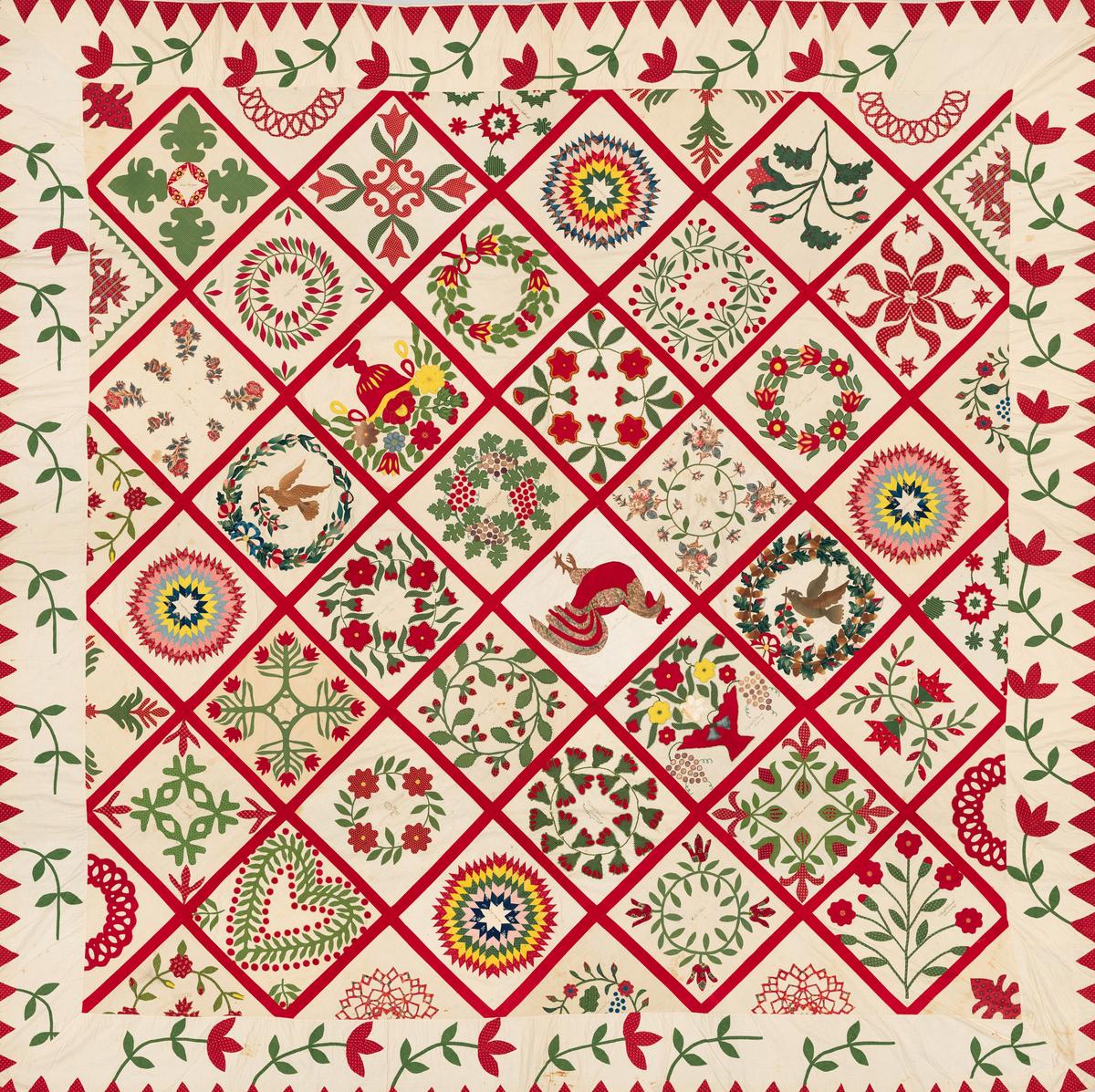
Some of the earliest dated Baltimore album pieces are from 1844 and 1845. The Smithsonian holds Susan and Henry Underwood's album quilt top of 1844, and the Minneapolis Institute of Art has a Baltimore signature album top of 1844–45 made by 36 women, each contributing and signing one square.

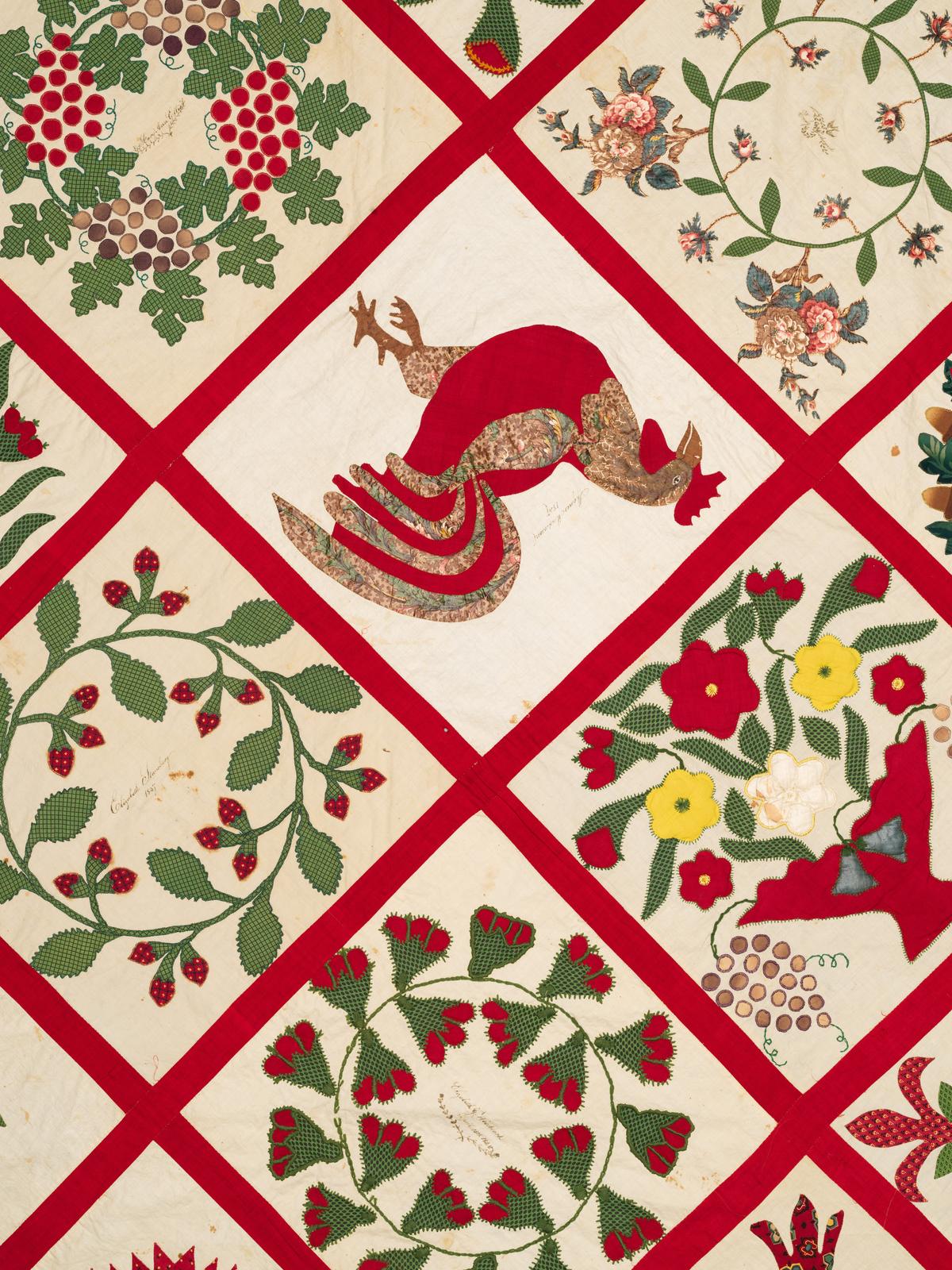
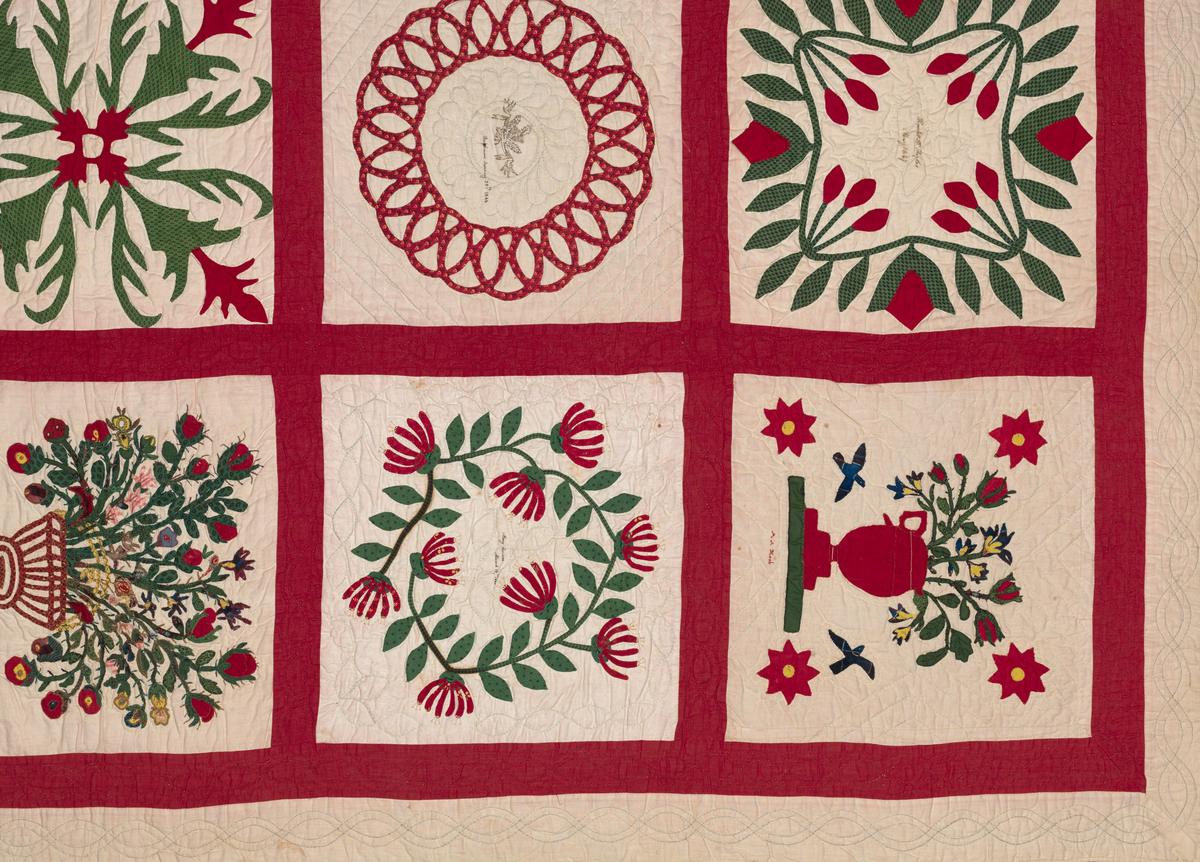
Most blocks were signed, often with verses, in indelible ink, which made such inscriptions practical. On the Met's album top of 1845–48, one maker inked her name and the year 1847 inside a wreath of strawberries. Museums describe these quilts as a record of names, sentiments and sewing skill, made at a time when many families were moving west.

Close-up of Baltimore album blocks in a red lattice: a patchwork rooster, bunches of grapes and a strawberry wreath with an inked name and the date 1847
Detail of a Baltimore album quilt top, 1845–48: a rooster, grapes and a strawberry wreath signed in ink and dated 1847. The Metropolitan Museum of Art · Public domain
A Baltimore album quilt top of appliquéd wreaths, stars, a rooster, an urn and birds in a red diagonal lattice, with a vine and sawtooth border
Baltimore Album Quilt Top, various makers, Baltimore, Maryland, 1845–48. The Metropolitan Museum of Art · Public domain

1844 – 1852

Methodist women and presentation quilts

Baltimore was a center of American Methodism: the Methodist Episcopal Church in America was organized there at the Christmas Conference of 1784, held at the Lovely Lane Meeting House. Many Baltimore album quilts have Methodist connections. The Lovely Lane Museum holds one dated 1844–47 and another made in 1848 with a picture of the Greene Street Methodist Church, and the Smithsonian holds an 1847 album quilt made for the Rev. Nadal.

Many were presentation quilts for men honored for religious, civic or military service. A quilt for Samuel Williams (1769–1847), a Methodist lay preacher, has 42 blocks signed by the relatives and friends who made it.

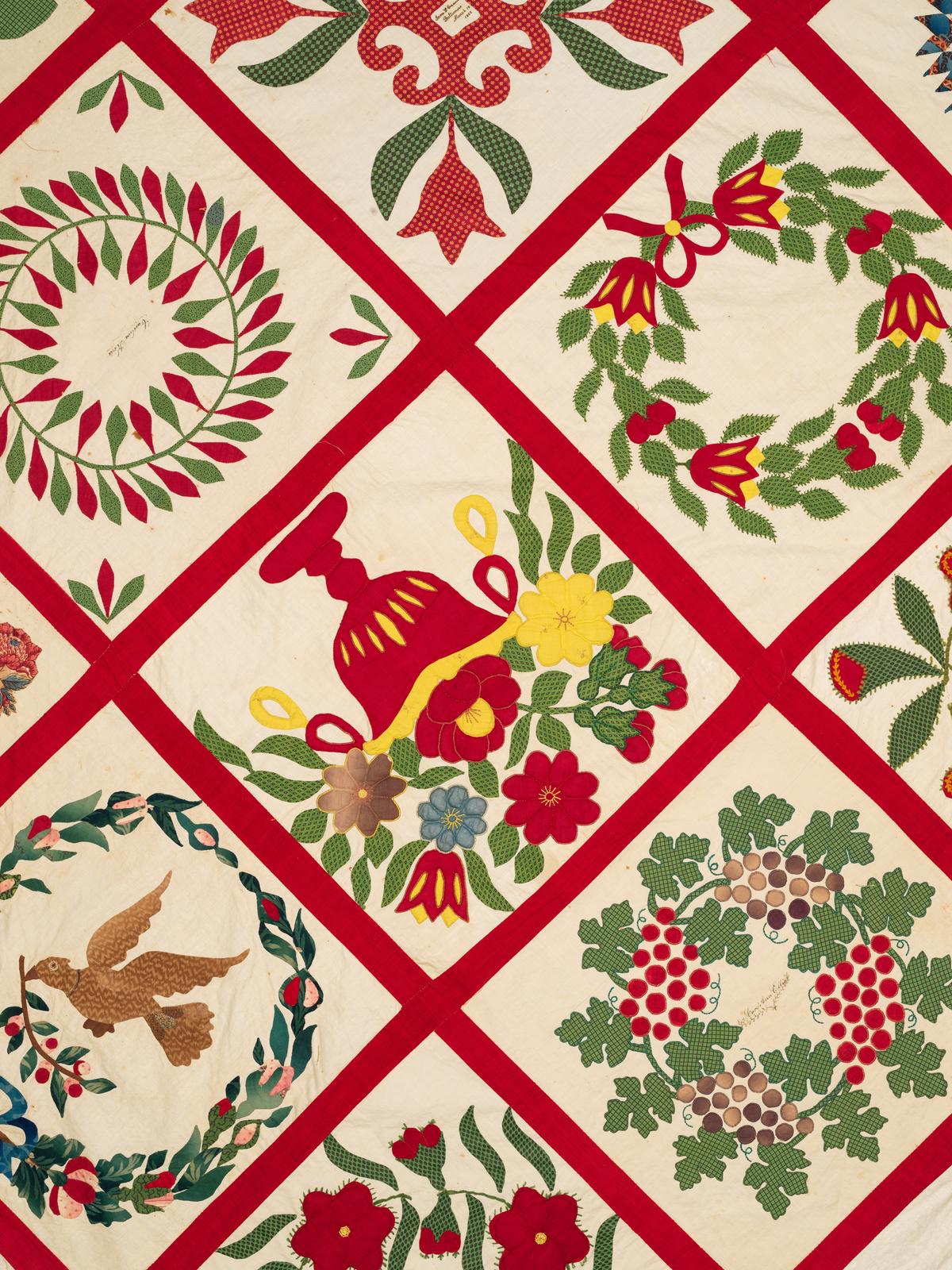
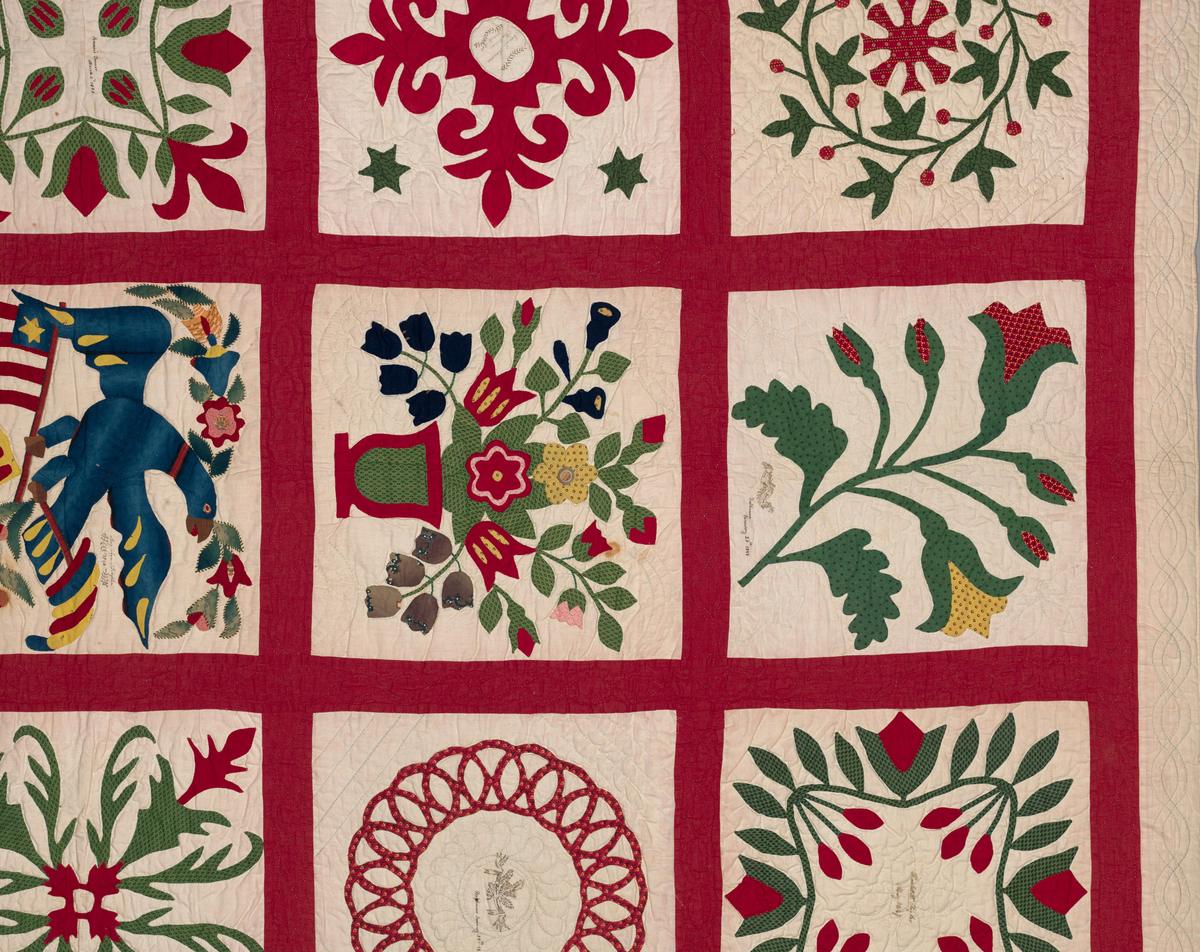
Close-up of Baltimore album blocks set on point in red sashing: a red urn of flowers, wreaths of leaves and tulips, a bird in a wreath and bunches of grapes
Detail of the same Baltimore top: an urn of flowers, wreaths, a bird and grapes. The Metropolitan Museum of Art · Public domain

Begun 1846

A family album: the Brown and Turner quilt

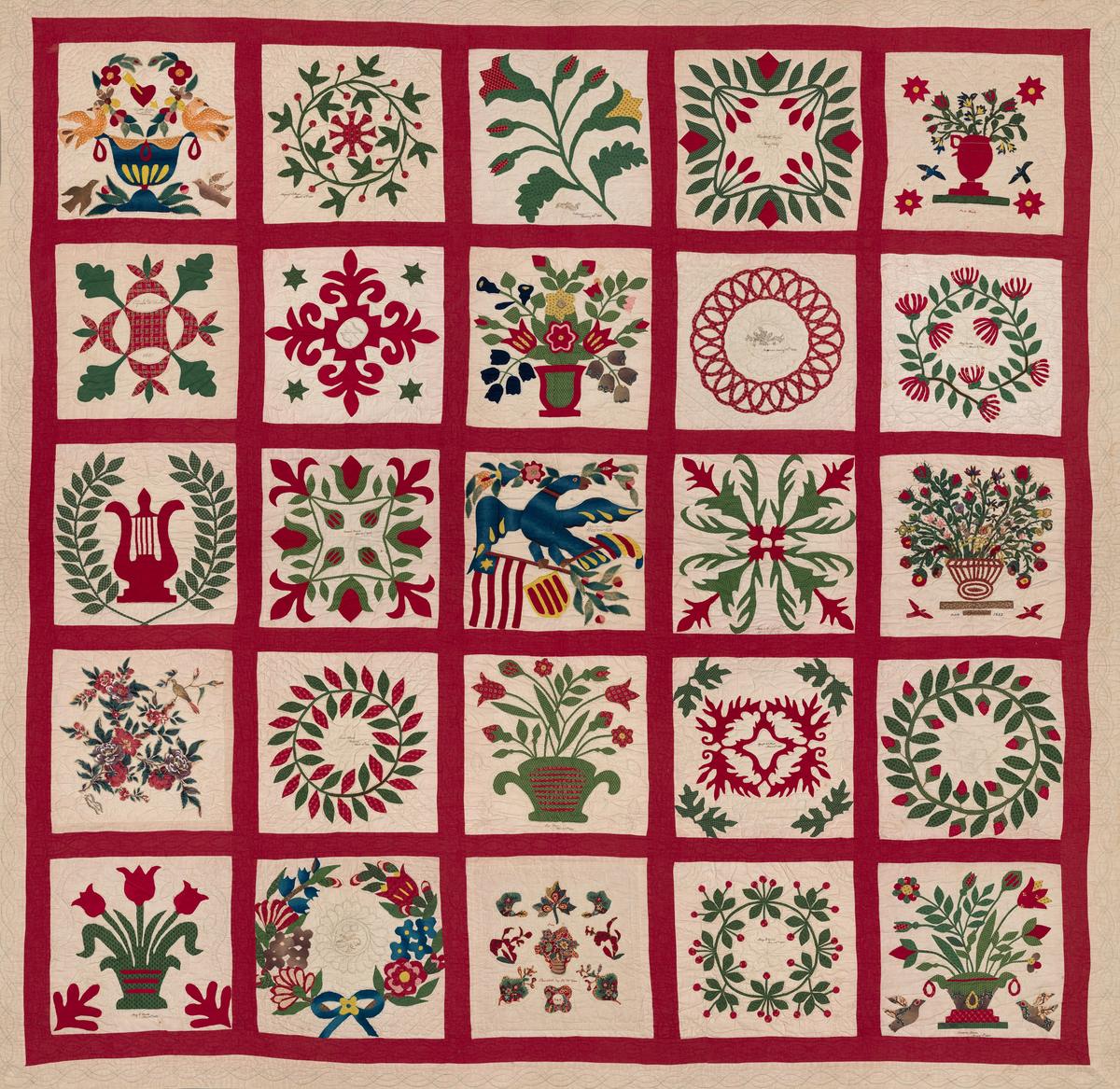
The Met's album quilt begun in 1846 was appliquéd mostly by members of the Brown and Turner families of Baltimore, in red-and-green blocks framed by red sashing. It came to the museum with a family story that it was a wedding quilt, but genealogical research showed that Mary Brown had married Francis Turner in 1839, so curators now suggest the blocks were a gift in anticipation of a child's birth.

Several signatures on it also appear on the Met's other Baltimore album top of 1845–48, a sign of the circles of friends who traded blocks.

An album quilt of 25 red and green appliqué blocks in red sashing: wreaths, baskets, a lyre and an eagle with a flag
Brown and Turner families, album quilt, Baltimore, Maryland, begun 1846. The Metropolitan Museum of Art · Public domain
Close-up of red and green appliqué wreath and urn blocks with faint inked inscriptions at their centers
Detail of the Brown and Turner quilt: wreath and urn blocks with inked inscriptions. The Metropolitan Museum of Art · Public domain

1846 – 1852

Eagles, monuments and ships: the picture blocks

The most elaborate Baltimore albums mix wreaths, baskets of flowers and cornucopias with pictures: American eagles with flags and shields, the Washington and Battle Monuments, ships and steamboats, and memorial squares for Major Samuel Ringgold and Colonel William H. Watson, who died in the Mexican-American War of 1846–48.

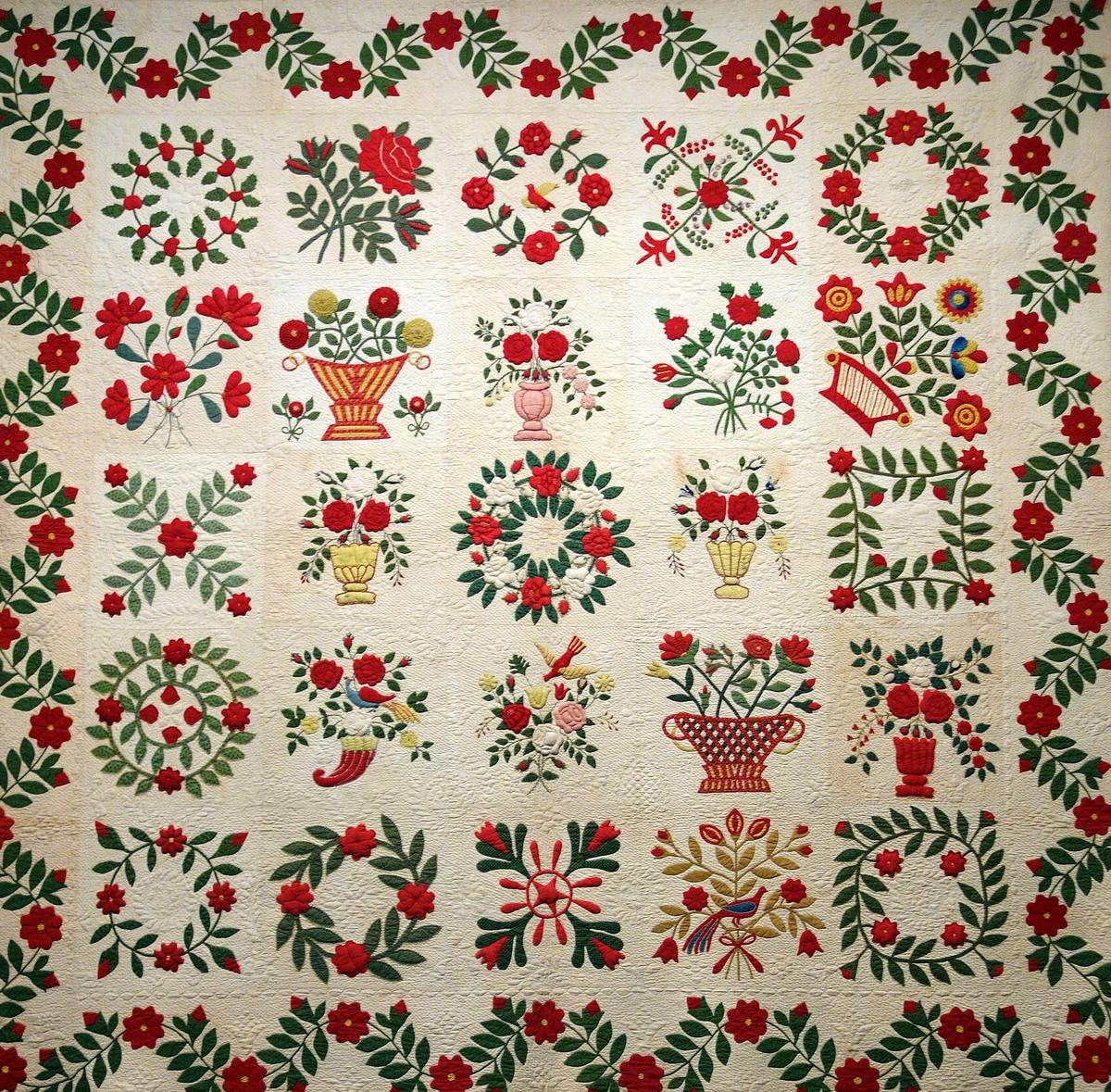
Some carry the all-seeing eye, the three linked rings of Friendship, Love and Truth and other emblems of the Odd Fellows, or the Masonic compass and square. The album at the Museum of Fine Arts, Boston, shown here in a visitor's photograph, is credited on its label to Martha, May and Margaret Riley, before 1847.

Close-up of appliqué blocks: a blue eagle holding an American flag, an urn of flowers and a spray of oak leaves
Detail of the Brown and Turner quilt: an eagle with a flag, an urn of flowers and an oak branch. The Metropolitan Museum of Art · Public domain
A red and green album quilt of wreaths, bouquets, baskets, urns and a lyre, framed by a vine of red roses
Baltimore Album Quilt, credited on the museum label to Martha, May and Margaret Riley, Baltimore, Maryland, before 1847. Museum of Fine Arts, Boston. Photo: Daderot, Wikimedia Commons · CC0

1846 – 1854

The showpieces and Mary Simon's kits

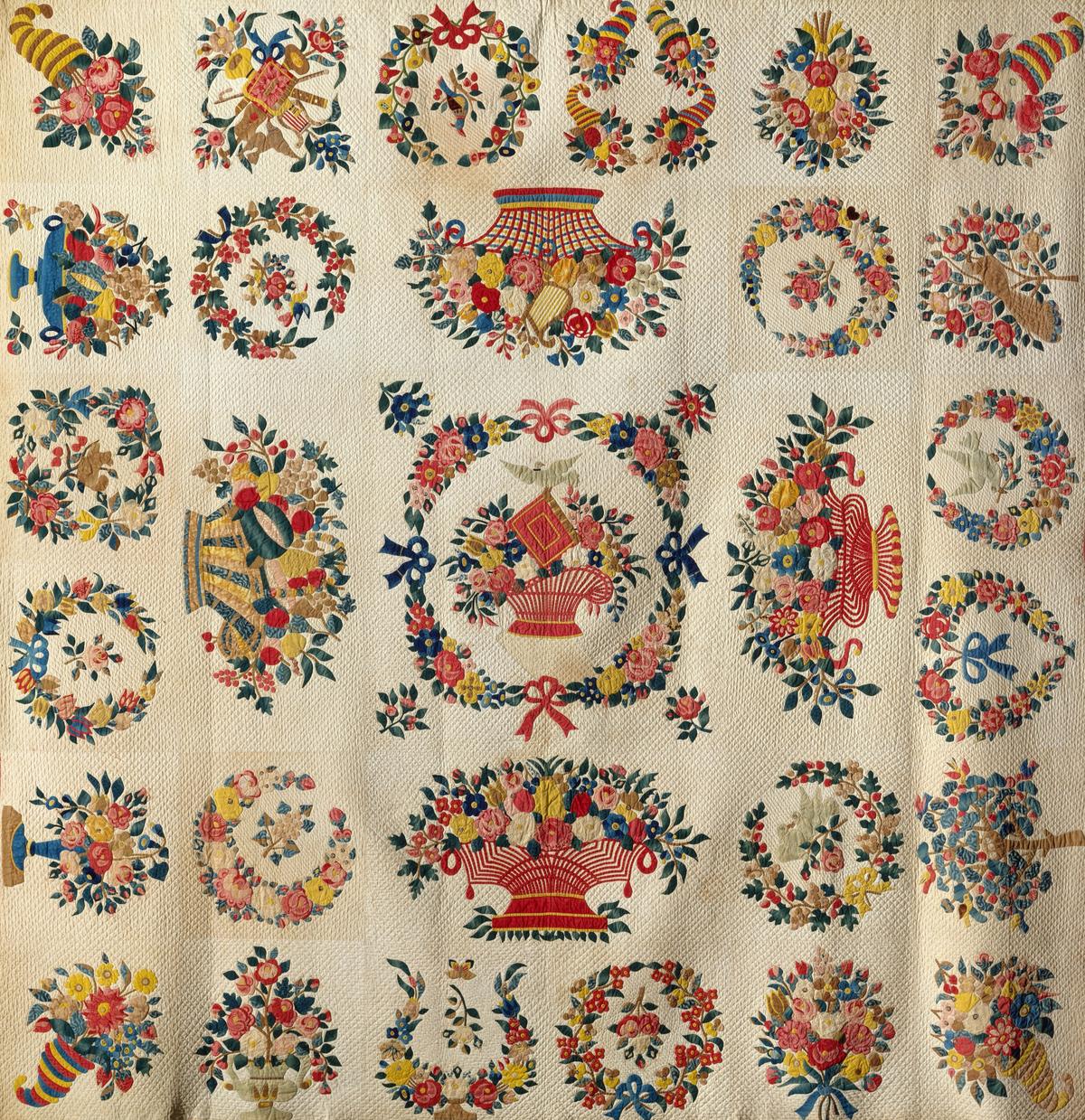
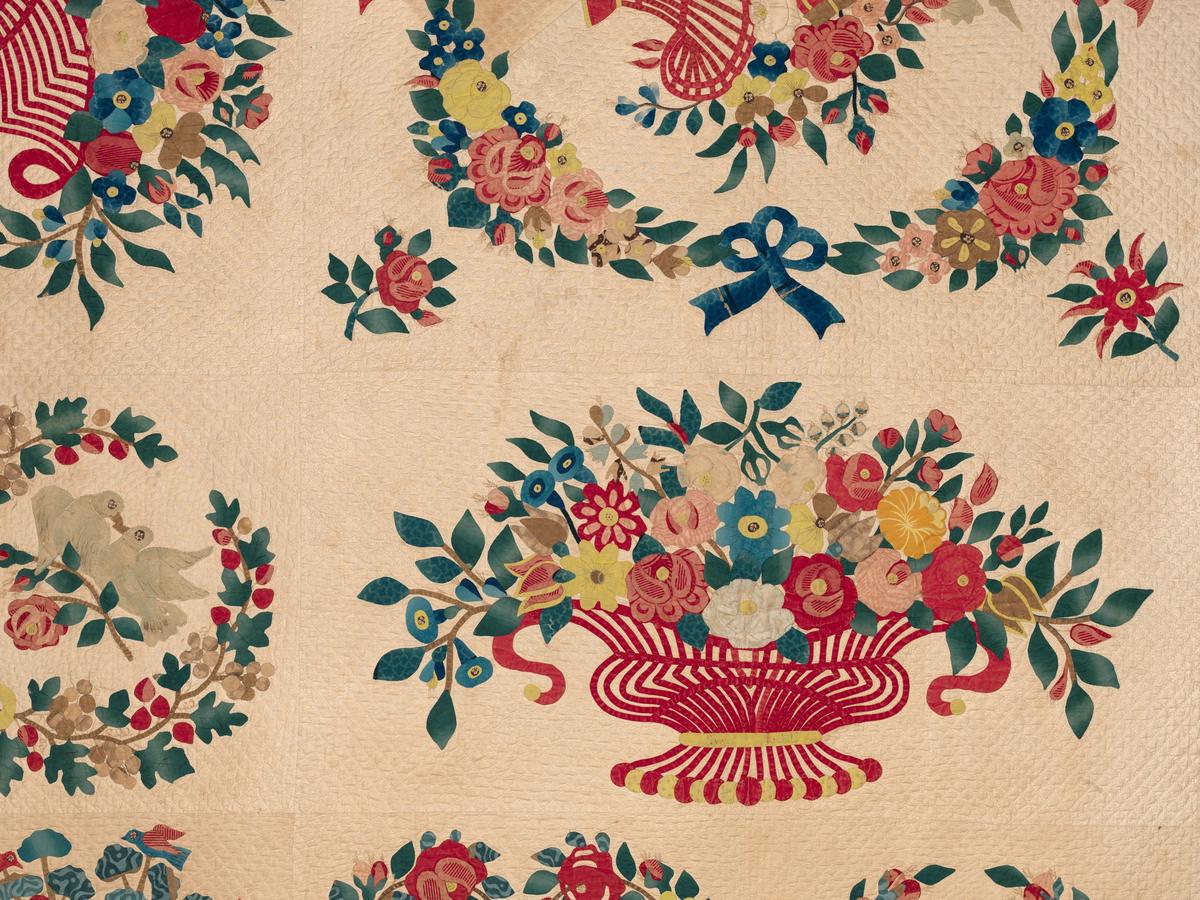
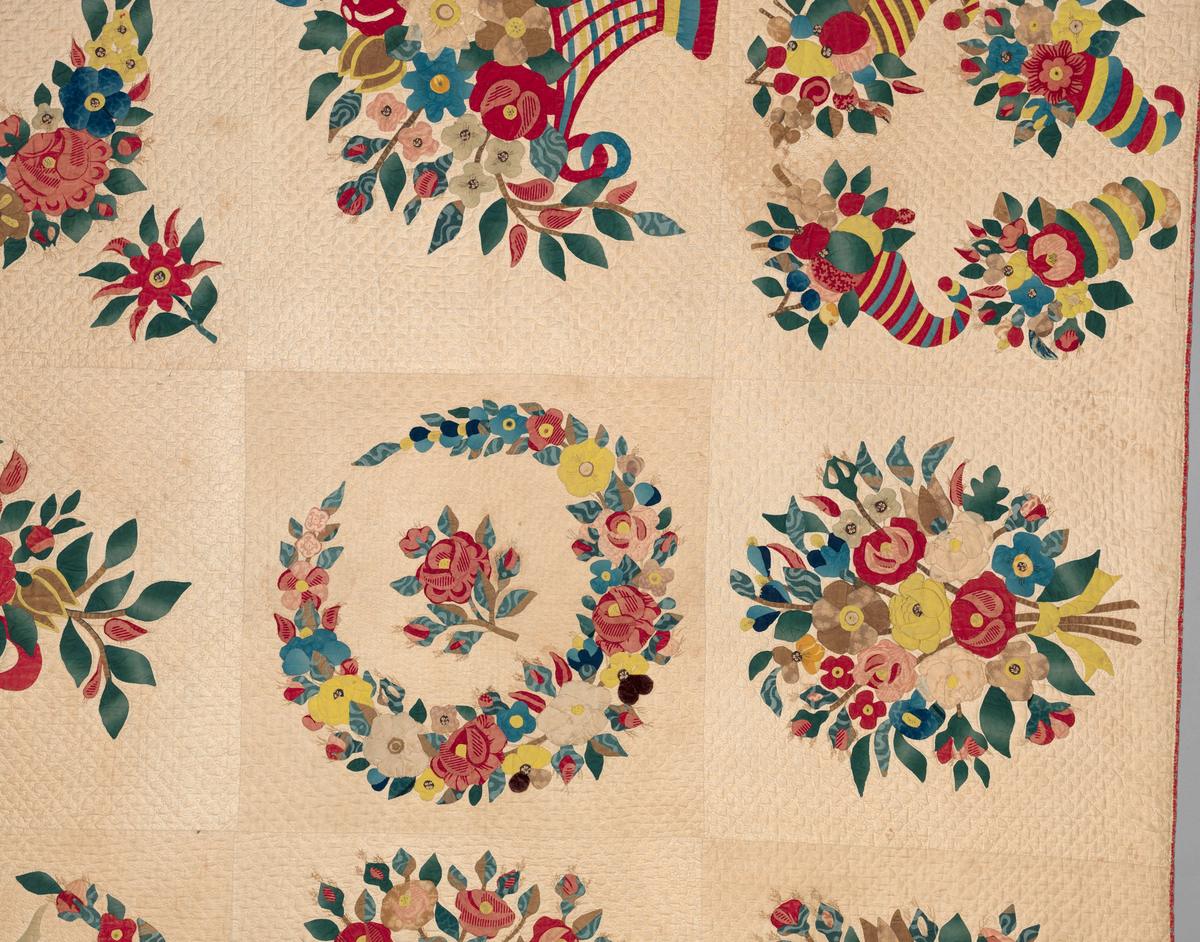
The finest "Baroque" Baltimore blocks, with layered, shaded flowers and fancy baskets, are now credited by the Met to Mary Hergenroder (or Heidenroder) Simon, a Bavarian-born immigrant who married the Baltimore carpet weaver Philip Simon in 1844. Sources give different dates for her life. She is thought to have designed and basted blocks as kits, sold to Baltimore quiltmakers between 1846 and 1854.

The key evidence is a diary entry of February 1, 1850, in which Hannah Mary Trimble named Mary Simon as the designer of two quilts she saw that day and described her cutting and basting blocks. The rest rests on style. The Met's Presentation quilt of about 1849, in cotton and silk velvet, is attributed to her designs.

A Baltimore album quilt of shaded, many-colored flowers in baskets, wreaths and cornucopias around a central wreath with an eagle and flag
Presentation quilt, designs attributed to Mary Simon, Baltimore, Maryland, about 1849. The Metropolitan Museum of Art · Public domain
Close-up of a red woven basket heaped with layered, shaded roses and flowers, with fine quilting behind
Detail of the presentation quilt: a basket of layered, shaded flowers. The Metropolitan Museum of Art · Public domain
Close-up of rose wreaths, a bouquet and a striped cornucopia in shaded appliqué
Detail of the presentation quilt: rose wreaths, a bouquet and a striped cornucopia. The Metropolitan Museum of Art · Public domain

Mid-1850s

The fashion fades

The great Baltimore album style lasted only about a decade, from roughly 1845 to 1855. The block type attributed to Mary Simon does not appear after the mid-1850s, even though she lived on in Baltimore for decades.

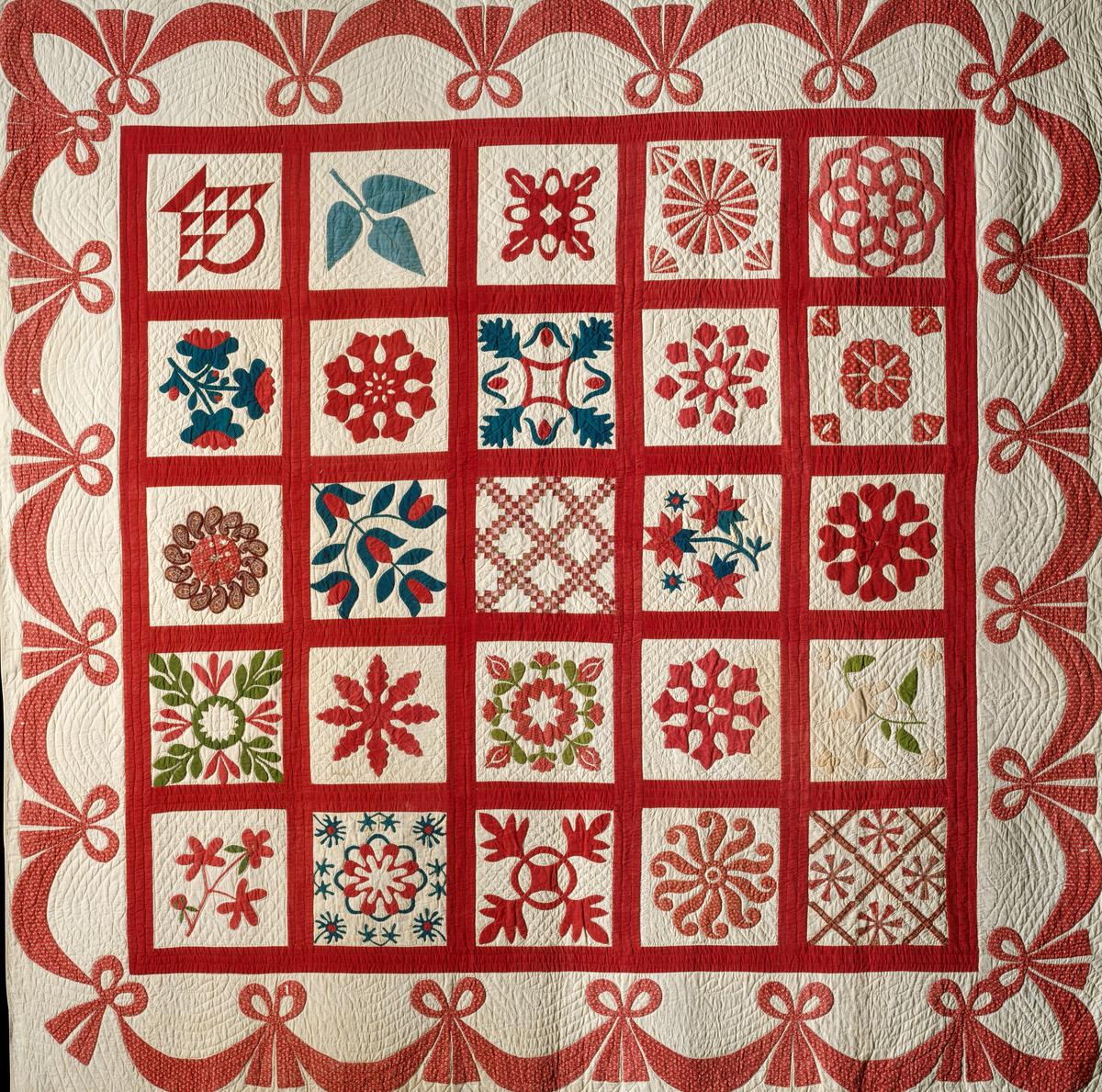
Album quilts continued elsewhere for a few more years, such as this one made in about 1855–60 by members of the First Reformed Churches of Fishkill and Hopewell, New York.

A red and white album quilt of 25 appliqué and pieced blocks inside a swag border tied with bows
Members of the First Reformed Churches of Fishkill and Hopewell, album quilt, New York, about 1855–60. The Metropolitan Museum of Art · Public domain

1938 – today

Rediscovery, a legend and a revival

A century later, the quilts came back into fashion, along with stories that later research had to untangle.

1938 – 1940s

Dr. Dunton and the first histories

Dr. William Rush Dunton Jr. (1868–1966), a Baltimore-area psychiatrist and pioneer of occupational therapy, became the first serious researcher of Baltimore album quilts. In 1938 a man named Evans Bramble brought him seven blocks from a trunk that had belonged to Mary Evans, which led Dunton to connect her name with the style.

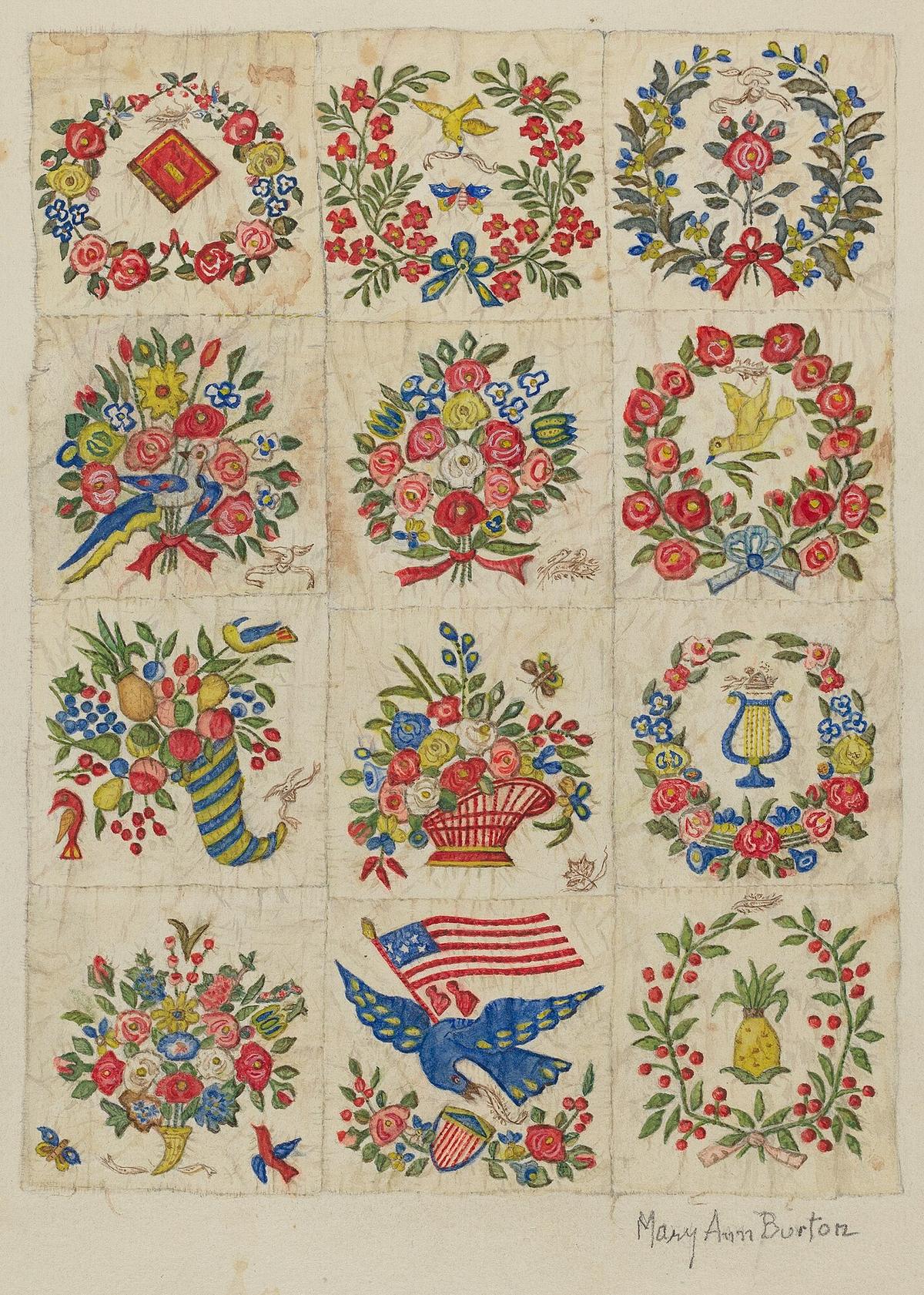
Dunton organized quilt exhibitions at the Baltimore Museum of Art in the 1940s and self-published Old Quilts (dated 1946; some records say 1947). Around the same time, an Index of American Design artist, Mary Ann Burton, painted a Baltimore-style album for the National Gallery's record under the romantic title "Baltimore Bride's Quilt."

A watercolor of twelve album blocks: flower wreaths, a cornucopia, a basket, a lyre and an eagle carrying an American flag
Mary Ann Burton, Applique Quilt (Friendship Quilt, or "Baltimore Bride's Quilt"), watercolor for the Index of American Design, about 1942. National Gallery of Art, Washington · CC0

1981

Katzenberg's exhibition and the Mary Evans legend

In 1981 Dena Katzenberg, curator of textiles at the Baltimore Museum of Art, organized the exhibition Baltimore Album Quilts, whose catalogue became the standard reference on the style. Drawing on Dunton's notes, it attributed the most elaborate blocks to Mary Evans, on the basis of one photographed square.

Over the next two decades scholars, auction houses and dealers attributed more than twenty quilts to Evans from that single square. The Met now calls the Evans attribution erroneous.

1983 – 1993

The Baltimore Album revival

Elly Sienkiewicz saw a show of Baltimore album quilts in 1982, and in 1983 published Spoken Without a Word, with patterns and her reading of the quilts' symbolism. Her Baltimore Beauties and Beyond series followed from 1989, and PBS credits her with being largely responsible for the revival of interest in the style.

In 1993 a small group of appliquérs founded the Baltimore Appliqué Society, which went on to promote the tradition. Today's quilters still make Baltimore-style albums block by block, and pieced blocks such as the Basket, Flower Pot and Rosebud carry the same baskets and blooms in simple squares and triangles.

1994 – today

New research, new caution

In 1994 the Maryland Historical Society (now the Maryland Center for History and Culture) published Lavish Legacies by Jennifer Faulds Goldsborough, and its curators' research traced design sources in samplers and printed textiles. Research in diaries and census records shifted the credit for the fanciest blocks from Mary Evans to Mary Simon.

But the Met warns that more than a dozen quilts, its own included, are now attributed to Simon on style alone, which could repeat the Evans mistake; the DAR Museum says the Simon theory is itself in question, though the style still bears her name. Exhibitions such as the Baltimore Museum of Art's Baltimore Album Quilts: Appliquéd Artistry (2004) and the Met's 2016 purchase of an 1845–48 album top show how highly these quilts are valued. To draw an appliqué block of your own, you can turn a picture into appliqué in Quiltler.

Baltimore Album myths

Few quilts have gathered as many stories. Here is what museum records and research actually say.

Myth

Mary Evans made the great Baltimore album quilts.

The idea came from seven blocks in a trunk shown to Dr. Dunton in 1938, then a single square published in 1981, and more than twenty quilts were credited to her on that basis. The Met calls the Evans attribution erroneous.

Overstated

Mary Simon made all the elaborate Baltimore quilts.

A diary entry of February 1, 1850 names her as a designer who cut and basted blocks, probably sold as kits, but most quilts now credited to her are attributed by style. The Met warns this could repeat the Evans error. Say "attributed to" or "in the style of" Mary Simon.

Mostly not

Baltimore album quilts were bride's quilts.

"Baltimore Bride's Quilt" is a later, romantic name. Many were presentation quilts for ministers and other men honored for their service, or friendship gifts. Even the Met's Brown and Turner quilt, long called a wedding quilt, was probably made for a coming baby.

Interpretation

Every motif had a fixed secret meaning.

Some pictures clearly point to real things: monuments, ships, Odd Fellows and Masonic emblems, memorials for Mexican War dead. For the flowers and birds, museums say only that motifs may have related to the recipient. Fixed meanings come from modern books and are one reader's interpretation.

Not always

Each block was designed and sewn by the woman who signed it.

Some blocks were sold as basted kits by designers such as Mary Simon, and some appliqué was stitched by others. A signature may mark the giver rather than the designer or the sewer.

Myth

Album quilts were only made in Baltimore.

The album and signature fad of about 1840–1855 spread through Philadelphia, New Jersey, New York and beyond. Baltimore's are simply the most elaborate, with picture blocks and layered appliqué.

Make an album of your own

Baltimore blocks are appliqué, but their baskets and flowers live on in pieced blocks too, and some blocks still carry the album name.

Baltimore Album questions

What is a Baltimore Album quilt?

An appliqué quilt of many different blocks, often made and signed by different people, from Baltimore, Maryland, in about 1845 to 1855. The blocks show wreaths, baskets and cornucopias of flowers, and on the grandest quilts eagles, flags, monuments and ships.

When were Baltimore Album quilts made?

Mostly from about 1845 to 1855, with some of the earliest dated pieces from 1844 and 1845. The fanciest block style disappears after the mid-1850s, though album quilts carried on elsewhere for a few more years.

Who made Baltimore Album quilts?

Many hands: women of Baltimore's families, churches and circles of friends made and signed the blocks. The finest blocks are now credited by the Met to Mary Simon, who is thought to have sold basted blocks as kits, but that rests on one 1850 diary entry and on style. The older credit to Mary Evans is now considered wrong.

What do the symbols on Baltimore Album quilts mean?

Some pictures point to real things: Baltimore's monuments, ships, Odd Fellows and Masonic emblems, and memorials for officers killed in the Mexican-American War. Museums say other motifs may have related to the person who received the quilt. Fixed meanings for each flower or bird come from modern books and are best read as interpretation.

What is the difference between an album quilt and a friendship quilt?

The terms overlap. Both gather blocks made or signed by different people, like the pages of an autograph album, and both were in fashion from about 1840 to 1855. "Baltimore Album" usually means the elaborate appliqué albums made in Baltimore.

Were Baltimore Album quilts made for brides?

Mostly not. "Baltimore Bride's Quilt" is a later, romantic name. Many were presentation quilts for ministers and other men, or gifts between friends and family, and even the Met's Brown and Turner quilt, long called a wedding quilt, was probably made for a coming baby.

Who started the Baltimore Album revival?

Elly Sienkiewicz's Spoken Without a Word (1983) and her Baltimore Beauties and Beyond series, from 1989, brought the style back to quilters, and PBS credits her with much of the revival. The Baltimore Appliqué Society, founded in 1993, keeps the tradition going.

More quilt history

Sources and image credits

  1. International Quilt Museum, World Quilts: Friendship Quilts
  2. Art Institute of Chicago: Friendship Quilt made for Ella Maria Deacon, 1842
  3. Historic Odessa: signature quilt, citing Jessica F. Nicoll, Quilted for Friends (1986)
  4. Antiques and the Arts Weekly: "The Appliquéd Artistry of Baltimore Album Quilts" (2004)
  5. Smithsonian NMAH: Achsah Goodwin Wilkins's appliquéd counterpane, 1820–1840
  6. Colonial Williamsburg: appliquéd counterpane (Achsah Goodwin Wilkins)
  7. Christian Science Monitor: review of the Baltimore Album Quilts exhibition (1982)
  8. Smithsonian NMAH: Susan and Henry Underwood's album quilt top, 1844
  9. Minneapolis Institute of Art: Baltimore signature album quilt top, 1844–45
  10. Barbara Brackman: "Lovely Lane in Baltimore Blues" (2016)
  11. Smithsonian NMAH: Rev. Nadal's Baltimore album quilt, 1847
  12. The Met: Quilt, Album pattern, begun 1846, Brown and Turner families
  13. The Met: Baltimore Album Quilt Top, 1845–48
  14. Colonial Williamsburg: appliquéd Baltimore album (Odd Fellows symbols)
  15. Minneapolis Institute of Art: Album Quilt, second quarter of the 19th century
  16. The Met: Quilt, Presentation pattern, about 1849, attributed to Mary Hergenroder Simon
  17. The Met, Heilbrunn Timeline of Art History: Quilt, Presentation pattern
  18. American Folk Art Museum: Mary Heidenroder Simon
  19. The Met: Quilt, Album pattern, about 1855–60, Fishkill and Hopewell
  20. Baltimore Museum of Art Archives: Dunton Quilting Collection finding aid
  21. The Quilters Hall of Fame: William Rush Dunton Jr.
  22. National Gallery of Art: Mary Ann Burton, Applique Quilt ("Baltimore Bride's Quilt"), about 1942
  23. PBS, America Quilts: Elly Sienkiewicz
  24. Quilt Alliance, Quilters' S.O.S.–Save Our Stories: Elly Sienkiewicz (1999)
  25. The Quilt Show, Quiltipedia: What are Baltimore Album quilts?
  26. Washington Times (2001): the Baltimore Appliqué Society
  27. Baltimore Appliqué Society blog: 25th anniversary (2019)
  28. Maryland Center for History and Culture: Lavish Legacies
  29. Library of Congress: Jennifer Goldsborough lecture on Baltimore album quilts (1995, archived)
  30. DAR Museum, Eye on Elegance: Baltimore album quilts

Every photograph is in the public domain or released under CC0: quilts and prints from the Metropolitan Museum of Art, the Art Institute of Chicago, the New York Public Library, the Library of Congress and the National Gallery of Art, and a visitor's CC0 photograph of the Riley quilt at the Museum of Fine Arts, Boston. Each caption names the object and links to its record.