Quilting history

The History of Quilting

A timeline from ancient Egypt to today

A quilt is three layers of cloth held together with stitches. That simple idea has kept people warm, armored soldiers, told Bible stories, spread fashion, made art and remembered the dead. Here is how it changed over 5,000 years, with quilts from the Met, the Smithsonian and the Library of Congress.

  • 18 moments
  • 5,000 years
  • 25 museum photographs
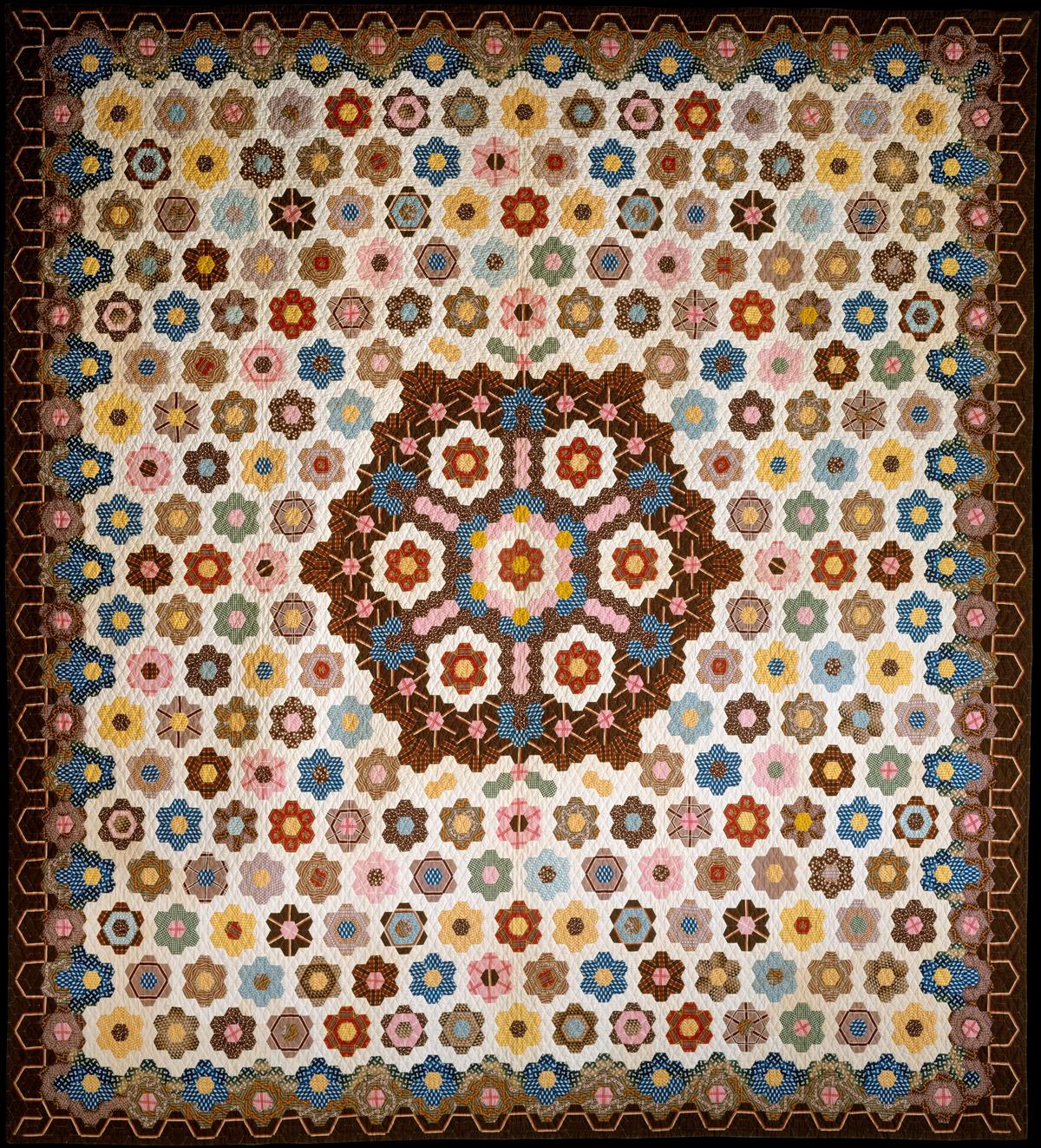
  • A hexagon mosaic quilt of hundreds of small printed hexagons in rosettes around a large central star
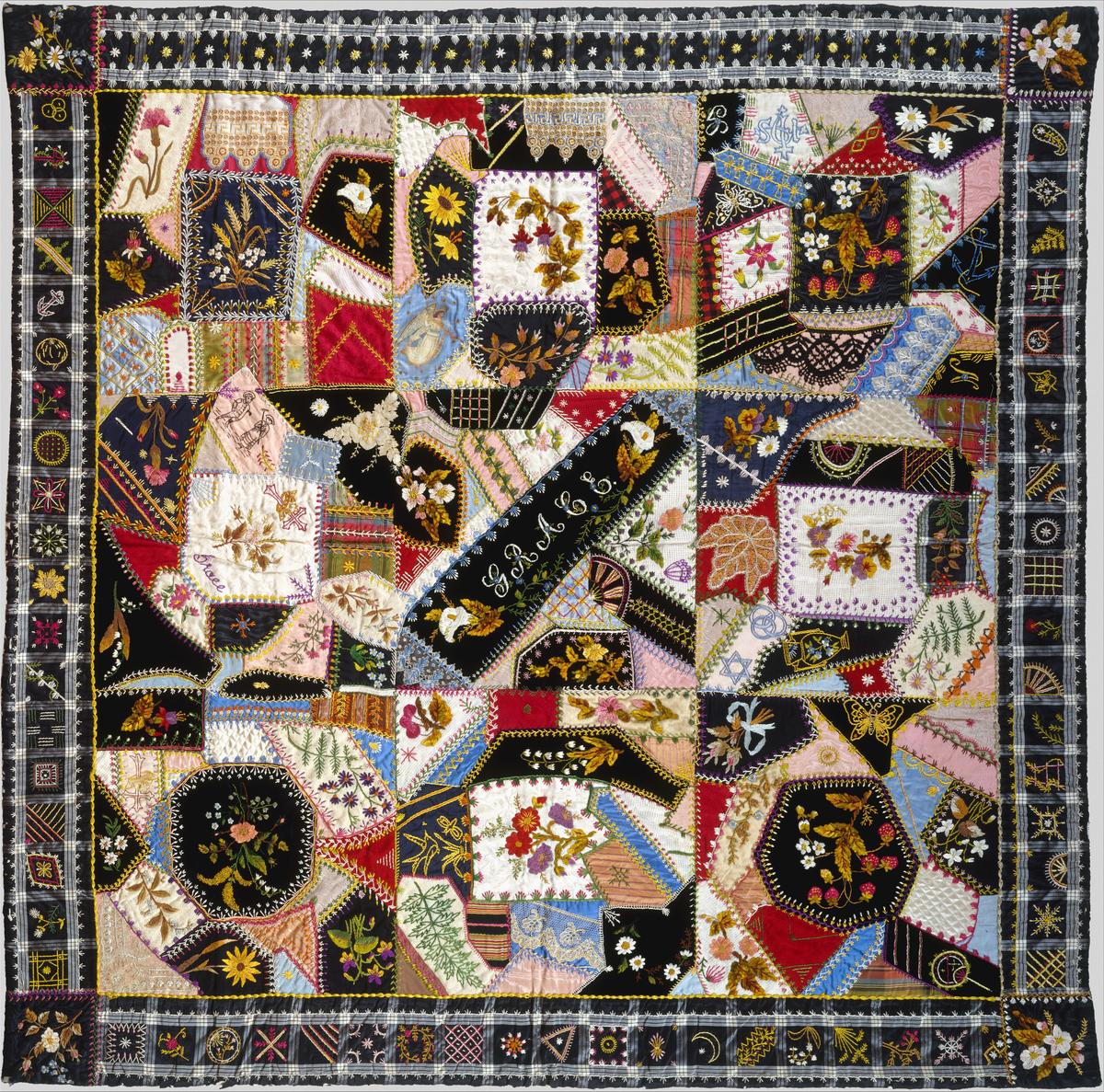
  • A silk and velvet crazy quilt of irregular jewel-toned patches embroidered with flowers and fans on black
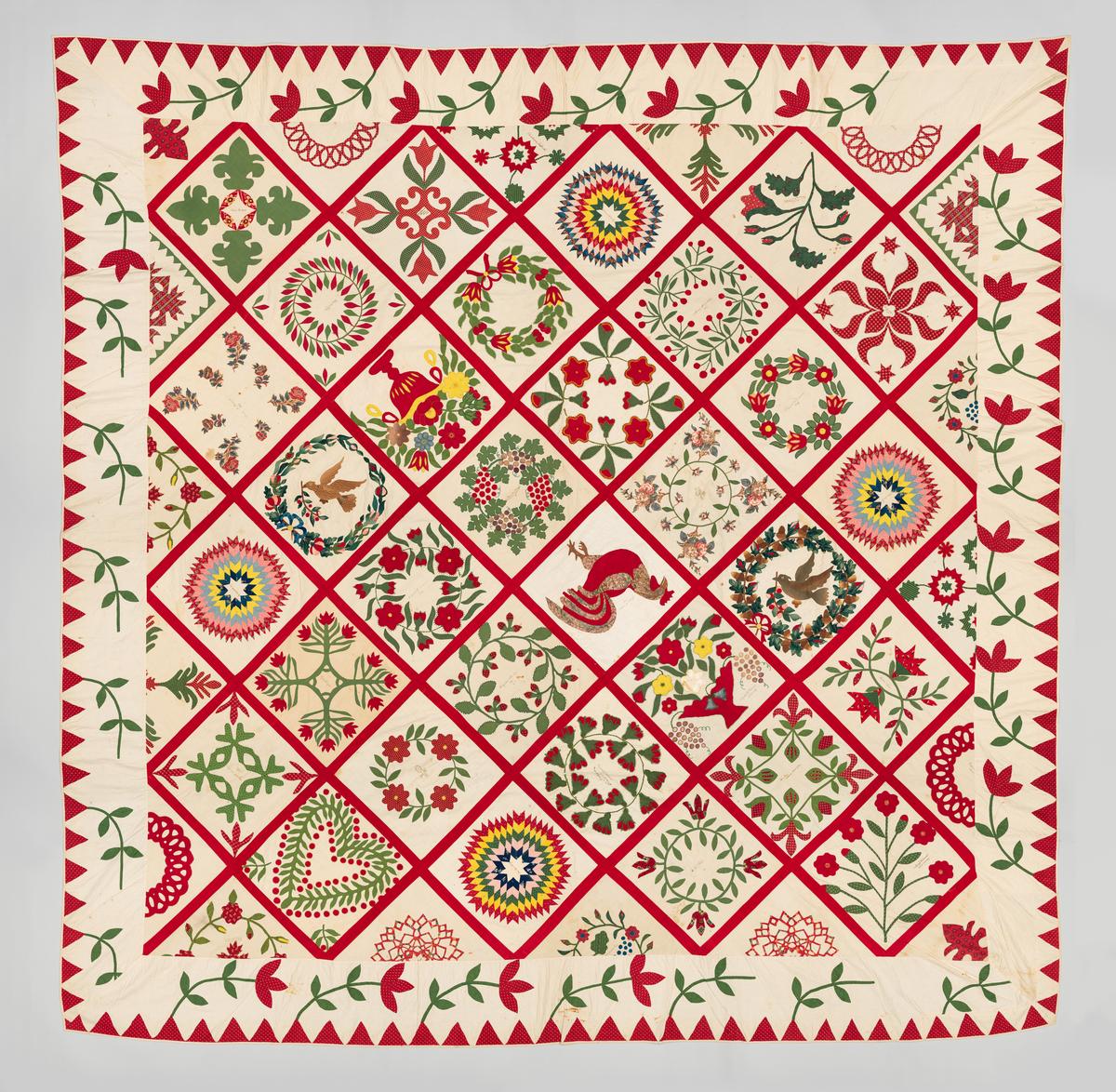
  • A Baltimore Album quilt of appliquéd blocks: an eagle and flag, baskets of fruit and wreaths of red and green on white
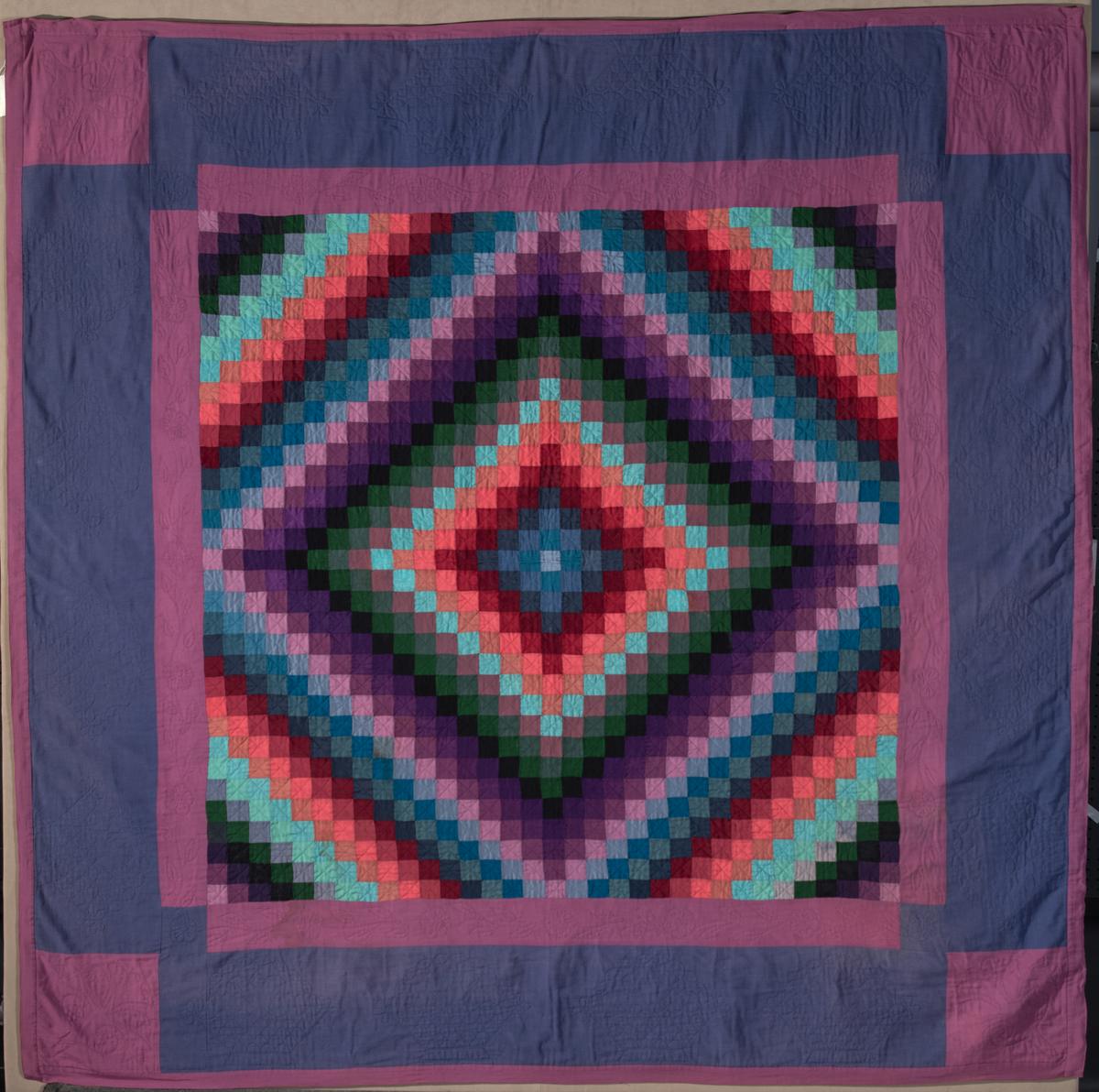
  • A Sunshine and Shadow quilt of tiny solid squares in concentric diamonds of pink, green and blue
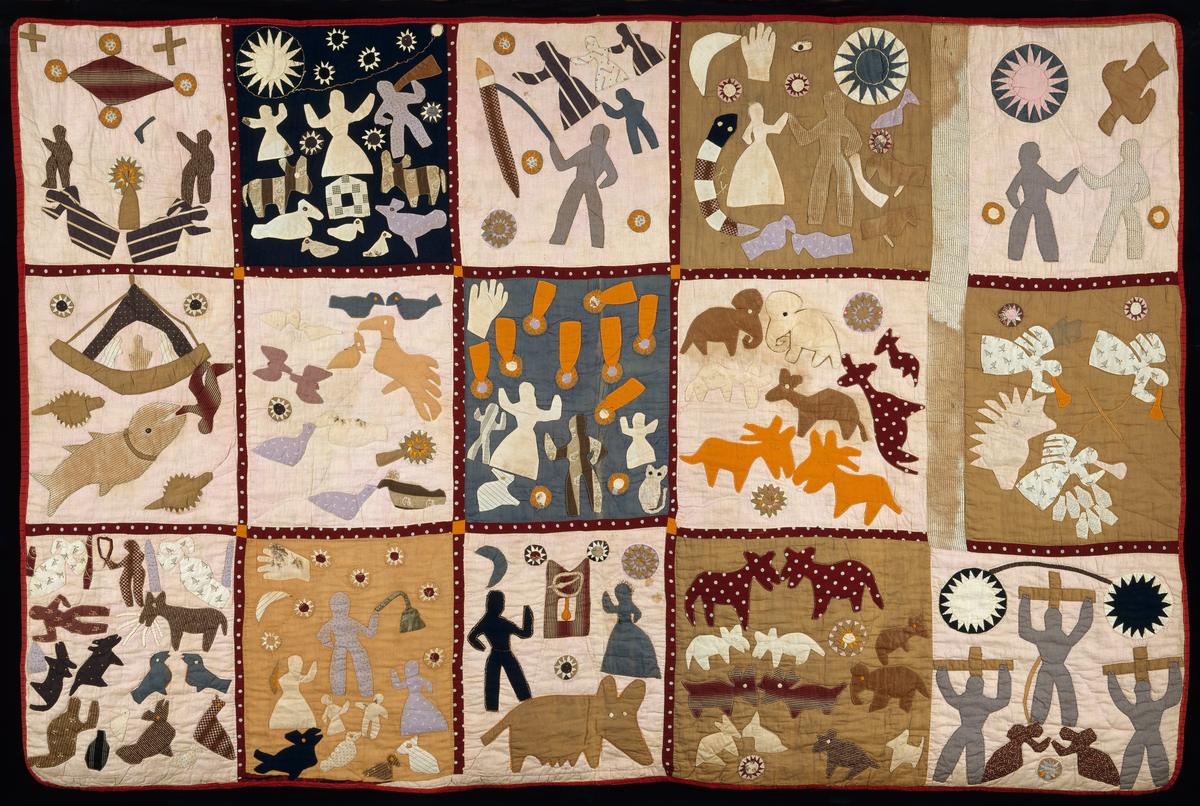
  • Harriet Powers' Pictorial Quilt: fifteen appliquéd scenes of Bible stories, local legends and events in the sky
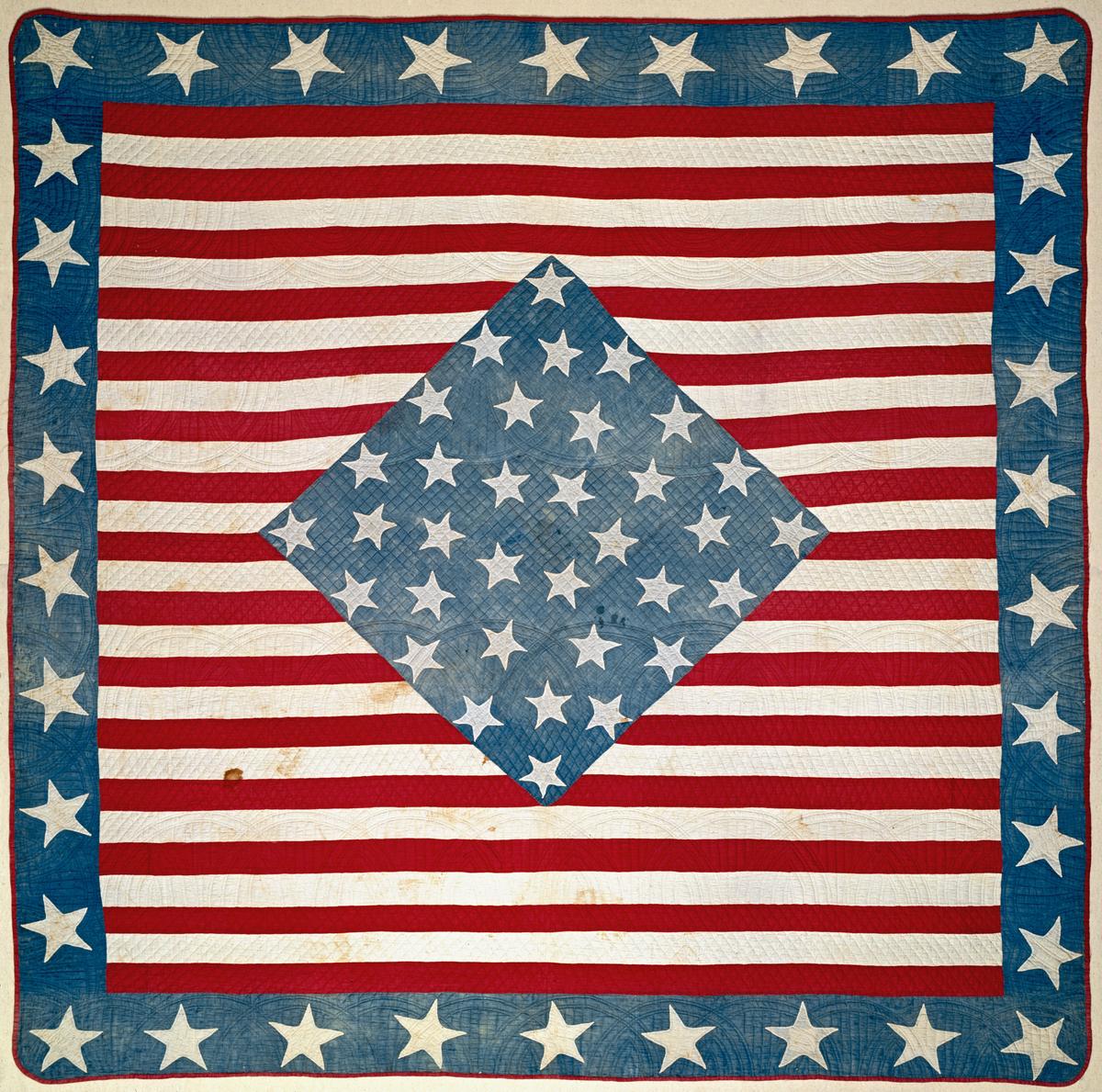
  • A red and white striped flag quilt with a blue diamond of white stars in the middle and a star border

When did quilting begin?

Quilted cloth is at least 2,000 years old: a quilted felt carpet from a burial at Noin-Ula, Mongolia, made around the 1st century BC to the 1st century AD, is one of the oldest that survive. An Egyptian ivory king of about 3000 BC wears a patterned robe often called the first picture of quilting. Patchwork came much later: the oldest dated piece known is a silk coverlet from 1718, and the pieced and appliquéd quilts most of us picture took off in 1800s America.

Ancient & medieval

Ancient beginnings to the Middle Ages

Quilting is older than any quilt that survives. Cloth rots, so the earliest evidence is a carving, a carpet from a tomb and a few padded coats.

c. 3000 BC

An Egyptian king in a patterned robe

A tiny ivory figure of an early Egyptian king, found in 1903 in the Temple of Osiris at Abydos and now in the British Museum (EA 37996), wears the robe of the sed jubilee festival, covered in a fine pattern of diamonds enclosed by double lines.

Quilt histories often call it the earliest picture of a quilted garment. That is an interpretation: the museum describes the pattern but doesn't call the robe quilted, and it dates the figure to about 3000 BC, not the 3400 BC often repeated online.
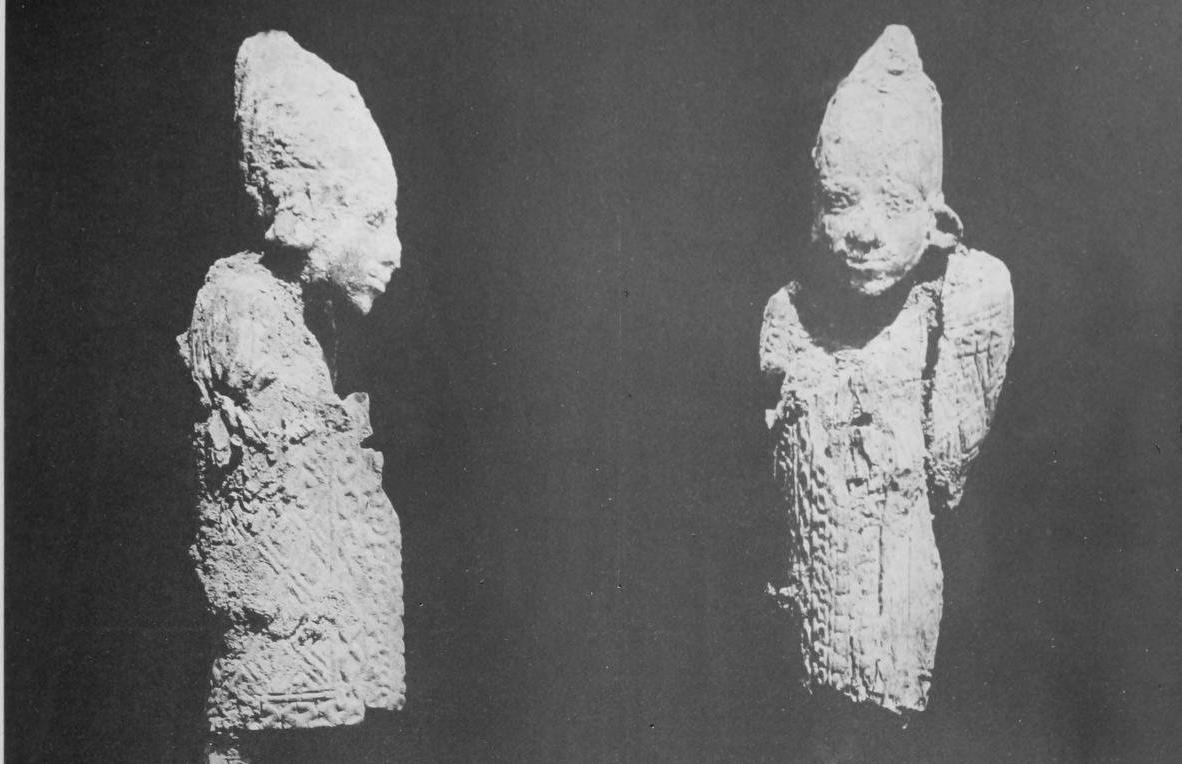
Two views of a small ivory statuette of an early Egyptian king in a robe covered with a diamond pattern
Ivory statuette of a king, Abydos, Egypt, about 3000 BC, photographed in 1903. W. M. F. Petrie, Abydos II (1903), pl. 13 · Public domain

1st century BC – 1st century AD

A quilted carpet from Mongolia

In 1924–25 Pyotr Kozlov's expedition excavated Xiongnu burial mounds at Noin-Ula (Noyon Uul) in northern Mongolia. Barrow 6 held a woolen carpet lined with felt, its middle quilted with red woolen thread in spirals and lines, its border decorated with appliqué. About 2.6 by 1.95 meters, it is now in the State Hermitage Museum in St Petersburg and is one of the oldest surviving quilted textiles.

1100s – 1400s

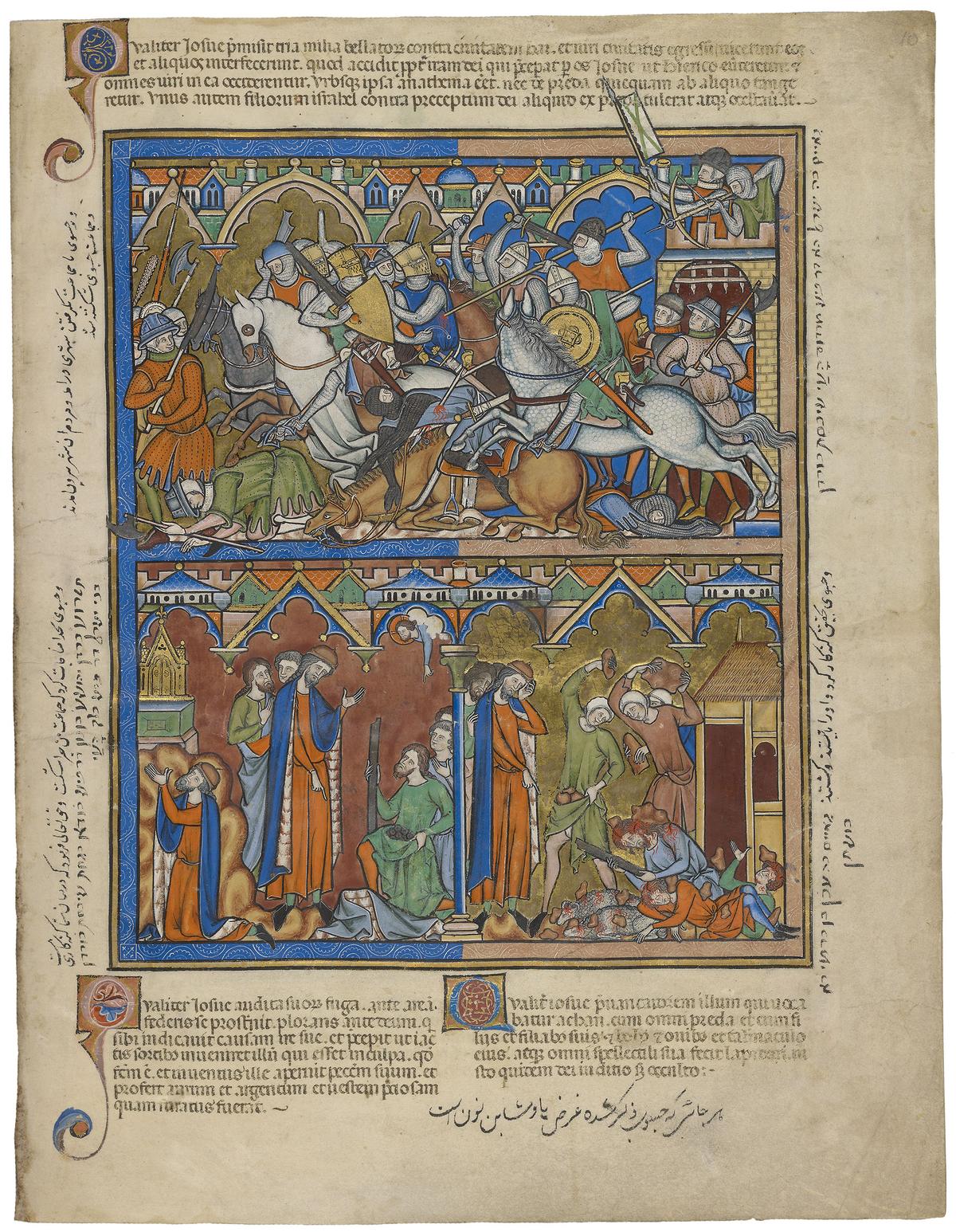
Quilted armor

Medieval soldiers wore quilted, padded jackets called gambesons or aketons: layers of linen stitched in lines and stuffed with wool, cotton or rags, worn as cheap armor on their own or under mail and plate. The word aketon probably comes through French from the Arabic al-qutn, cotton.

You'll often read that Crusaders brought quilting home from the Middle East. It makes a good story, but historians haven't established it.

A page of a medieval illuminated manuscript showing armored knights in battle in blue, red and gold
Knights in battle in the Crusader Bible, Paris, about 1244–54. Crusader Bible, Morgan Library & Museum, MS M.638 · Public domain

Late 1300s

The Tristan Quilt and Sicilian trapunto

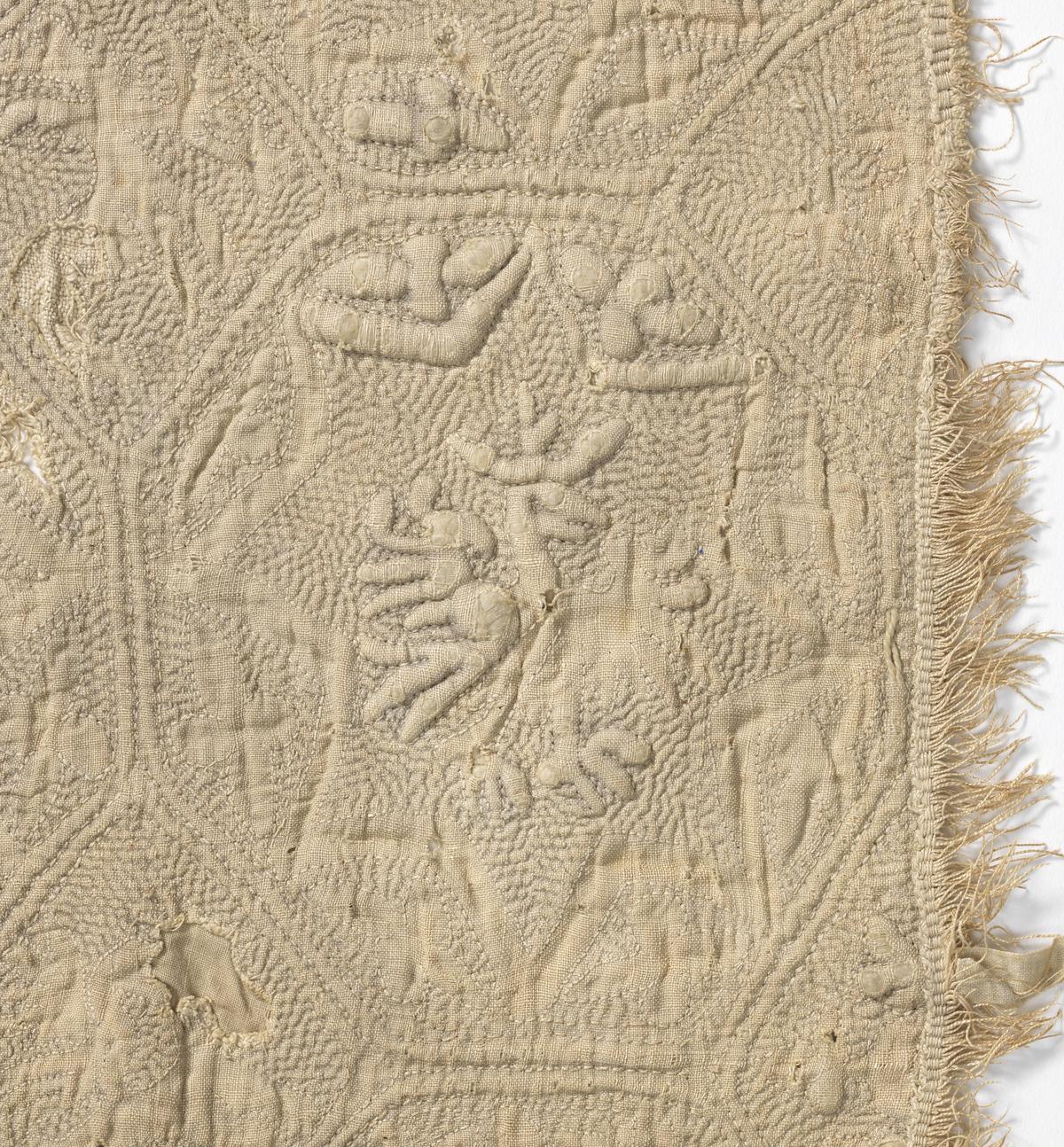
The Tristan Quilt is one of the oldest surviving European quilts: a linen bed cover made in Sicily and worked in trapunto (stuffed quilting) with 14 scenes from the legend of Tristan. One part is at the Victoria and Albert Museum in London, which dates it to about 1390; a second, with eight scenes, is in the Bargello in Florence.

It was long linked to a Guicciardini family wedding in 1395, but later research suggests it may be earlier. The quilt pictured is a Sicilian trapunto quilt from the following century, in the same tradition.

Close view of a cream linen quilt with stuffed trapunto animals and a bird raised in relief
Trapunto quilt, Sicily, 15th century: the same stuffed-quilting art as the Tristan Quilt. Quilt, Sicily, 15th c. · Cooper Hewitt, Smithsonian Design Museum · CC0

1600s–1700s

Chintz, wholecloth and the first patchwork

Trade brought painted Indian cotton to Europe, and quilting became fashionable at home: in bed covers, petticoats and, before long, patchwork.

Late 1600s – 1700s

Indian chintz and Marseille corded quilts

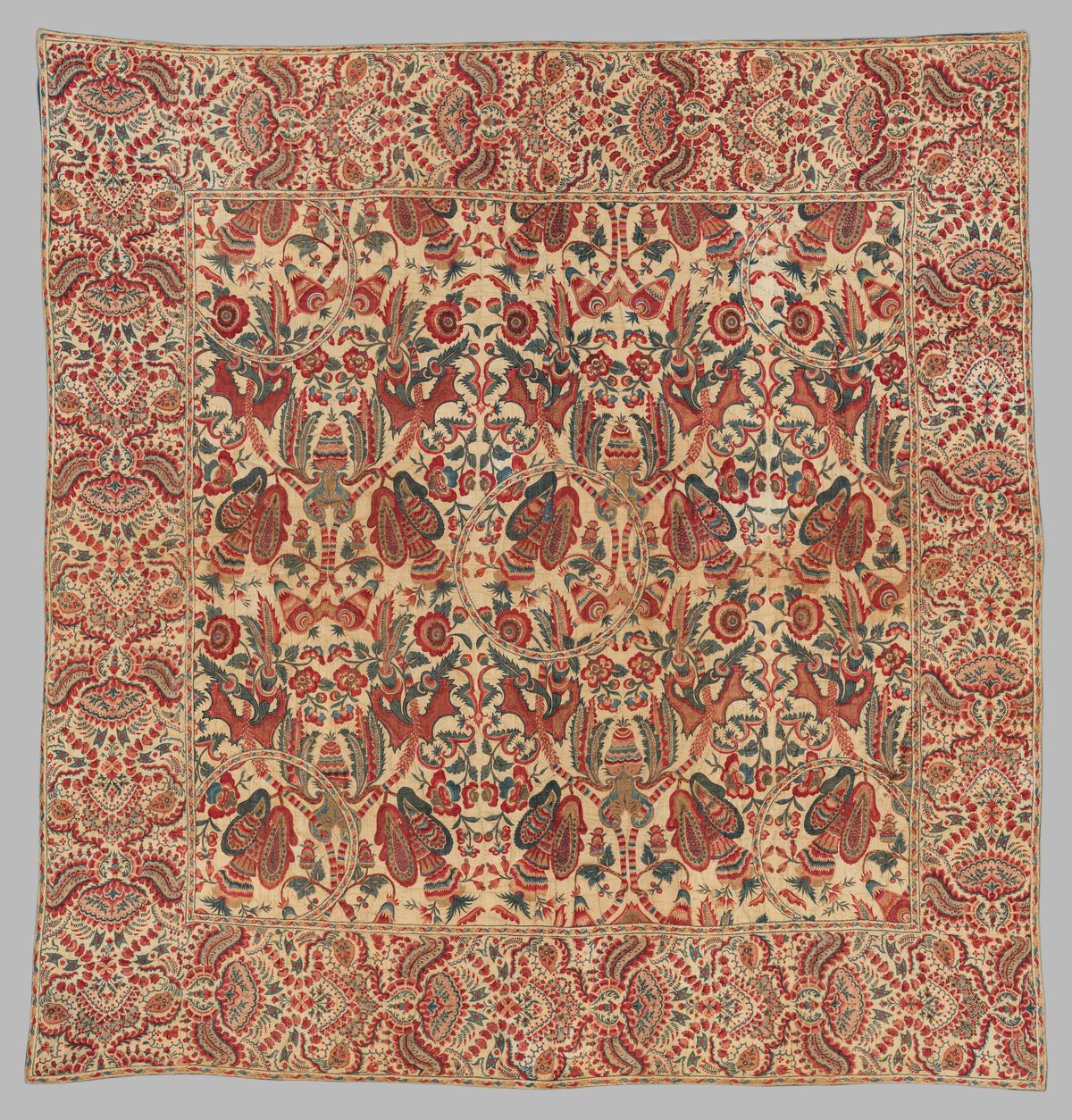
Painted and dyed Indian cottons, called chintz, became a craze in Europe. Quilted bed covers and palampores (large painted hangings, often with a flowering tree) were major exports to Britain and the Netherlands.

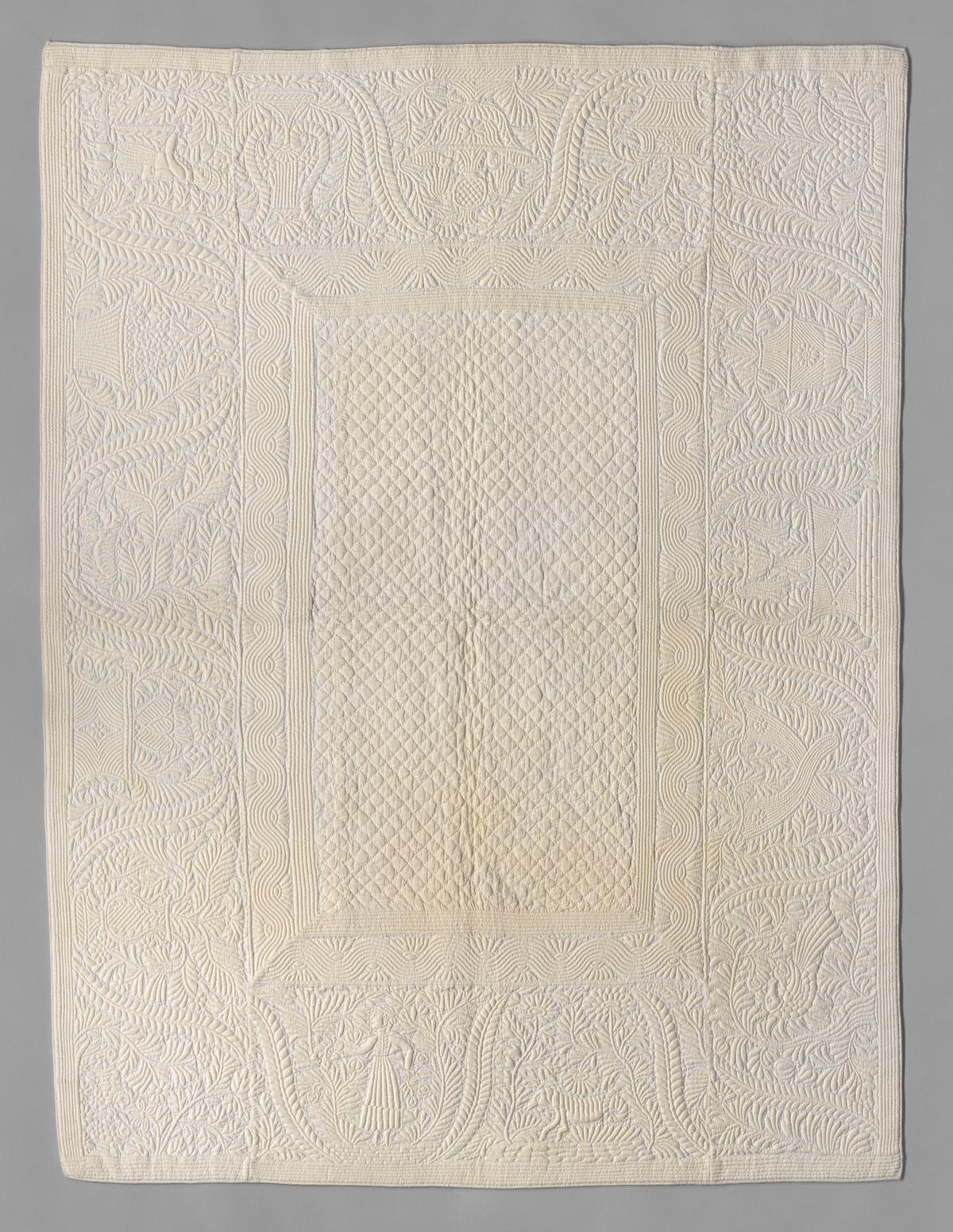
In the south of France, workshops around Marseille answered with all-white corded quilts, cord threaded between two layers to raise the design in relief. The style gave its name to Marseilles quilting and stayed fashionable into the early 1800s.

A quilted Indian chintz palampore densely painted with red and pink flowering branches
Quilted palampore for the Dutch market, Coromandel Coast, India, about 1720. Quilted palampore, India, ca. 1720 · The Metropolitan Museum of Art · CC0
An all-white corded quilt whose pattern is raised in relief by cord threaded between the layers
Corded whitework quilt, about 1700. Corded quilt, ca. 1700 · The Metropolitan Museum of Art · CC0

1718 – 1840s

Wholecloth, broderie perse and hexagon mosaics

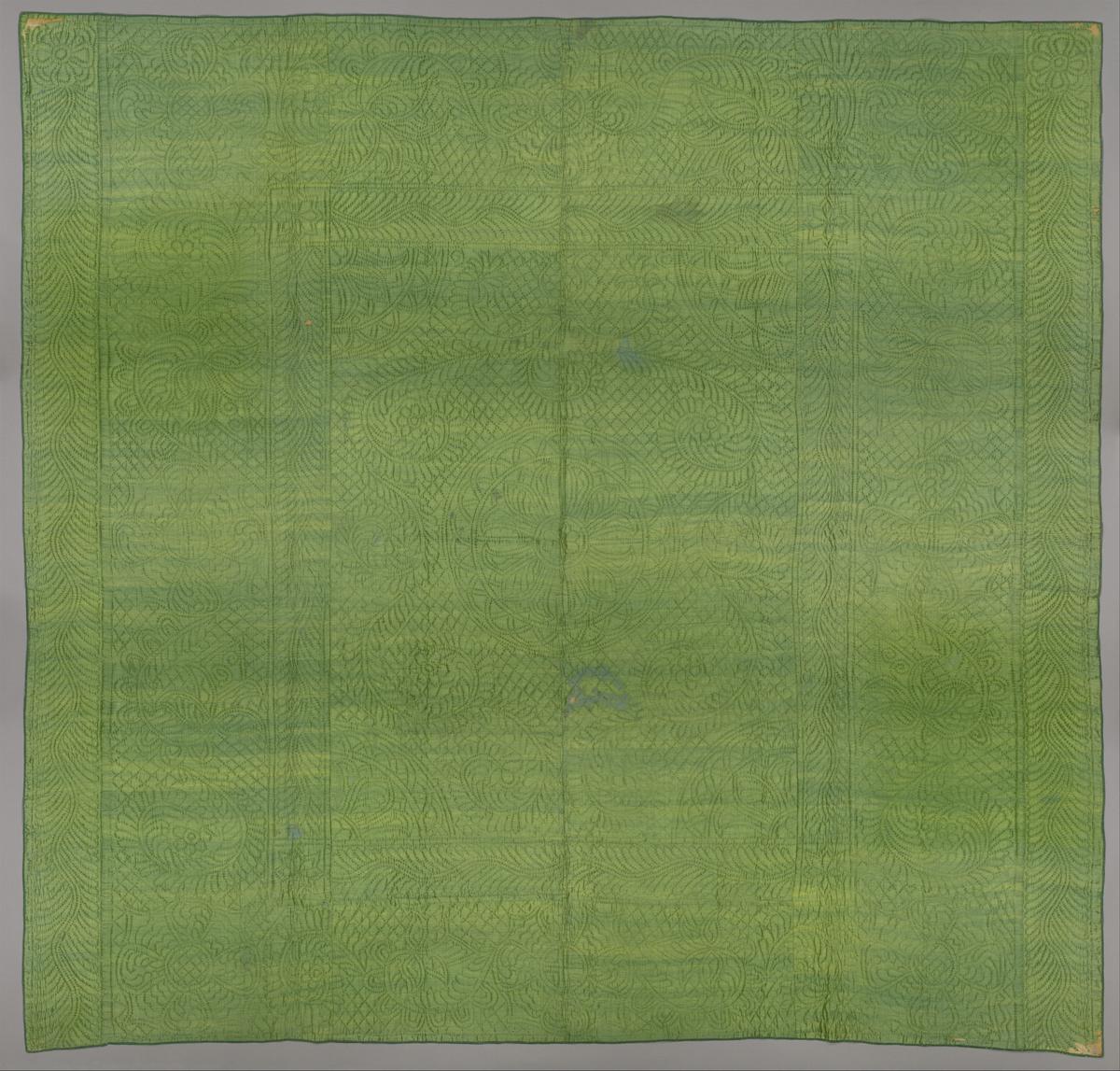
The finest quilts of 1700s Britain and its colonies were often wholecloth: one fabric, frequently silk or glazed wool (calamanco), decorated only by the quilting.

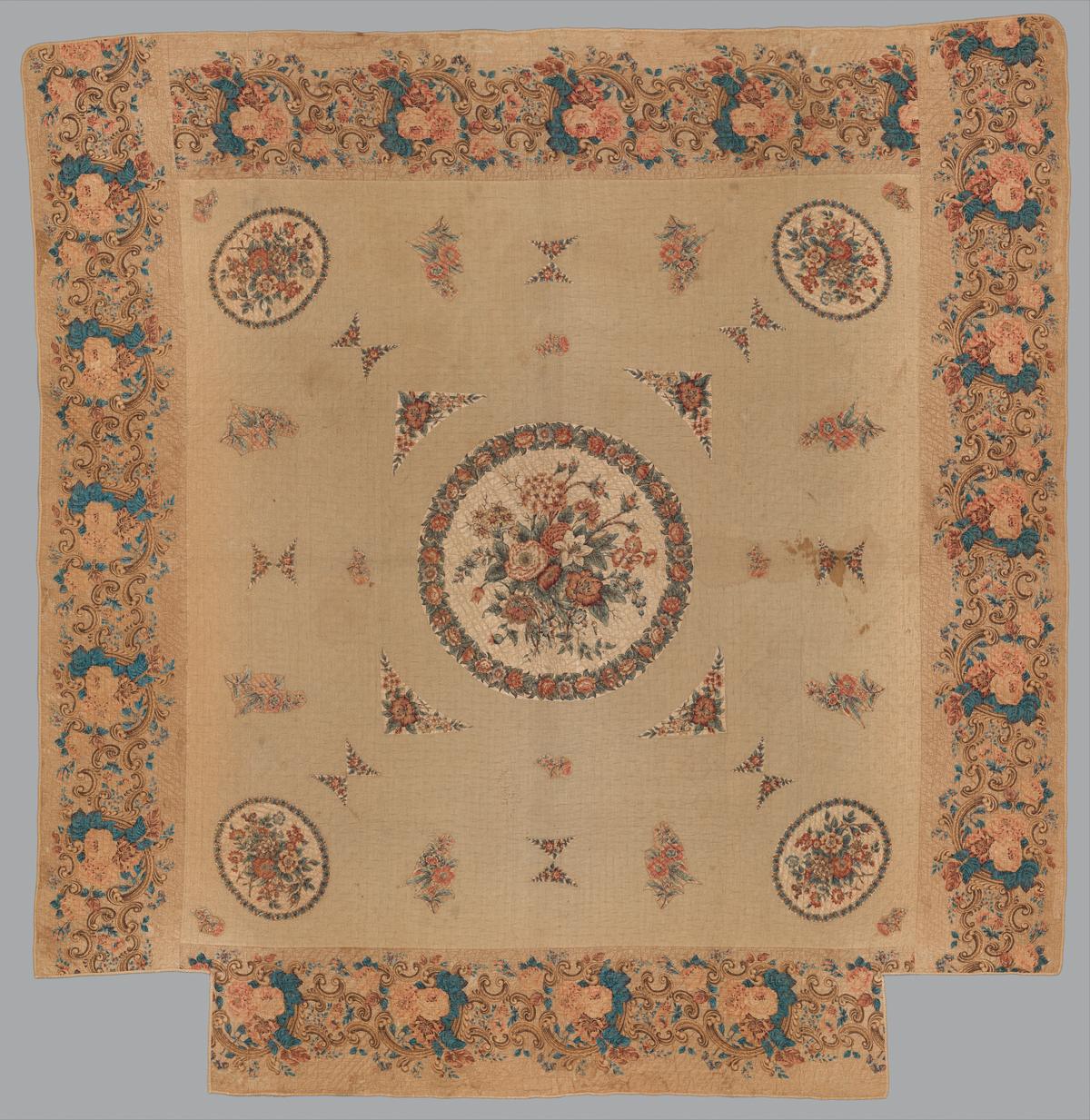
Precious chintz went further as broderie perse: printed flowers and birds cut out and appliquéd onto a plain ground, a style at its height from about 1775 to 1860.

Patchwork pieced over paper templates, what we now call English paper piecing, appears in the 1718 Silk Patchwork Coverlet, one of the earliest dated patchworks known. By the 1830s, hexagon honeycomb mosaics were fashionable in America too, the ancestor of Grandmother's Flower Garden.

A hexagon mosaic quilt of hundreds of small printed hexagons in rosettes around a large central star
Elizabeth Van Horne Clarkson, Honeycomb Quilt, about 1830. Elizabeth Van Horne Clarkson, Honeycomb Quilt, ca. 1830 · The Metropolitan Museum of Art · CC0
A green silk wholecloth quilt whose only decoration is its quilting stitches
Wholecloth quilt, Britain, dated 1747. Wholecloth quilt, British, 1747 · The Metropolitan Museum of Art · CC0
A tan quilt with a central medallion and borders of chintz flowers cut out and appliquéd
Chintz appliquéd quilt (broderie perse), American, about 1820–30. Chintz appliquéd quilt, ca. 1820–30 · The Metropolitan Museum of Art · CC0

1800s

The great American quilt century

Cheap printed cotton, the sewing machine and a nation at war made the 1800s the century when quilting belonged to everyone.

From 1820

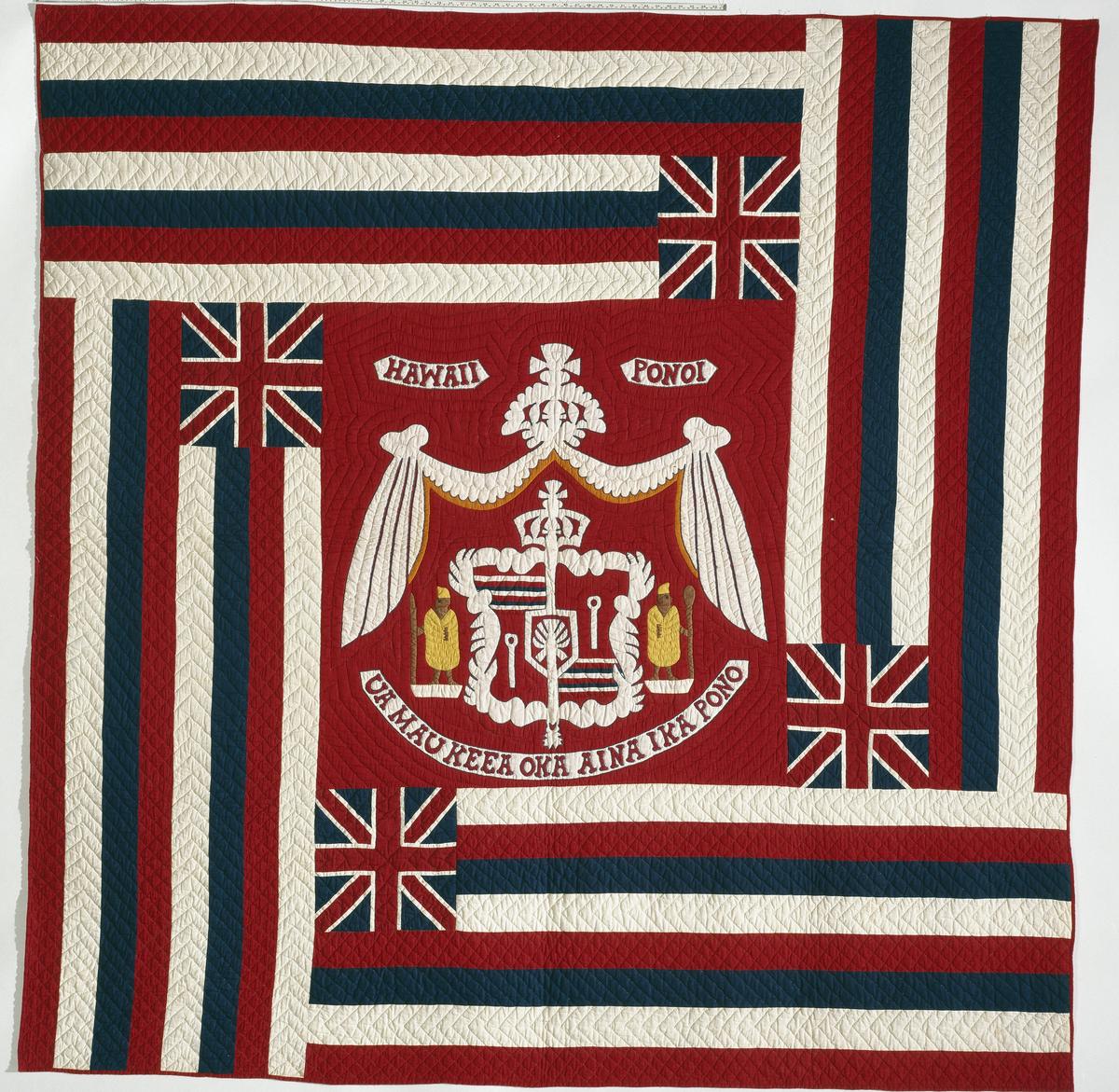
Hawaiian quilting

Sewing with Western cloth came to Hawaii with the American missionaries who arrived on the brig Thaddeus in 1820. Hawaiian quilters went on to create a style all their own: one large, radially symmetrical appliqué cut from folded fabric, often of plants, echo-quilted in lines that follow the design.

After the monarchy was overthrown in 1893, Hawaiian Flag quilts combining the flag and the royal coat of arms became treasured heirlooms. The tradition is called kapa kuiki: more on Hawaiian quilts.

1841 – 1850s

The Rajah Quilt and album quilts

In 1841, women convicts transported to Tasmania on the ship Rajah made a pieced and appliquéd coverlet during the voyage, with sewing supplies from Elizabeth Fry's British Ladies' Society. Now at the National Gallery of Australia, the Rajah Quilt is the only known surviving quilt made on a convict ship.

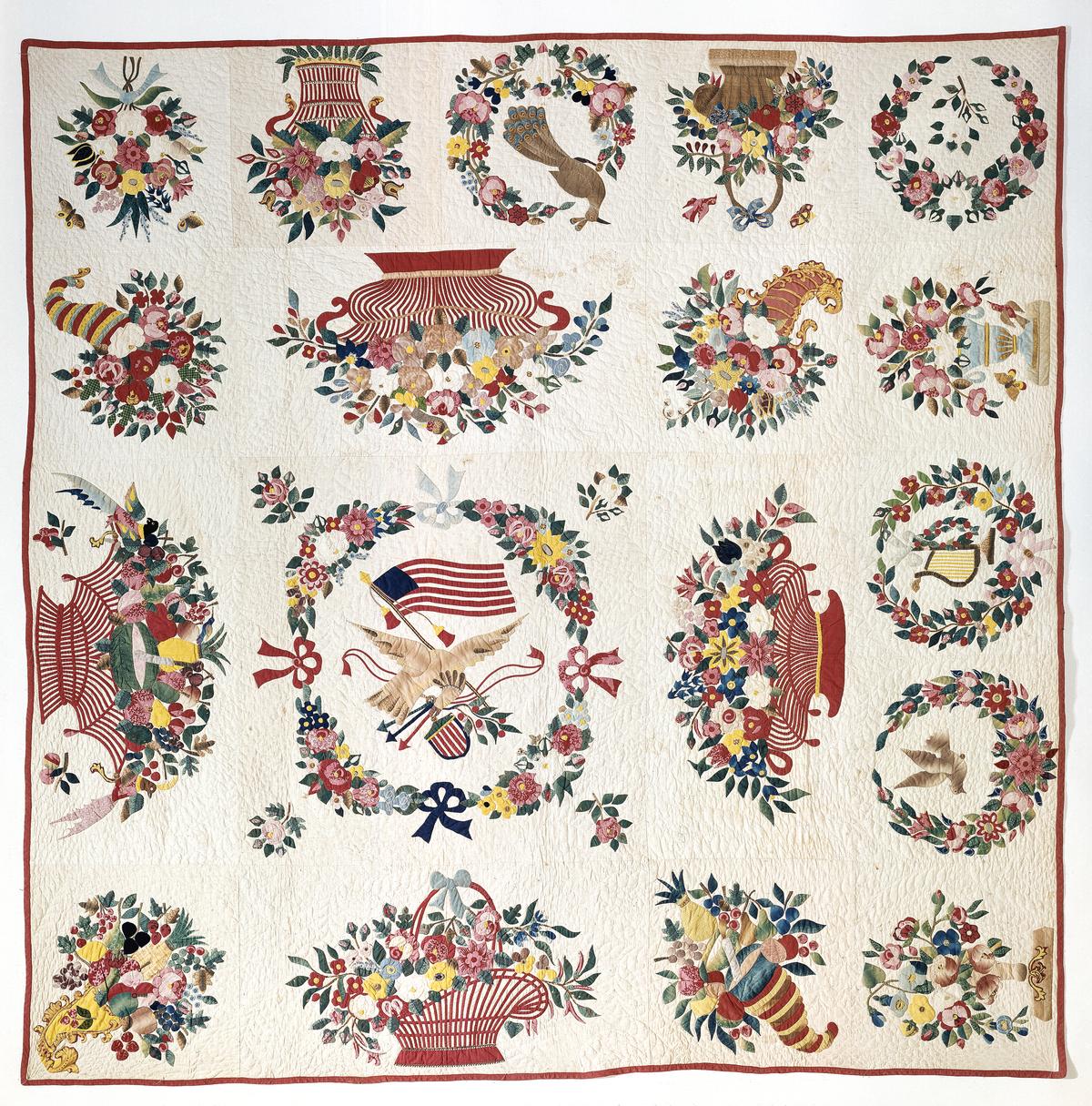
In the United States, album and signature quilts gathered blocks from many hands, often signed, as gifts for ministers, friends and families moving west. The most elaborate are the Baltimore Album quilts of about 1846–1854, crowded with appliquéd eagles, baskets, wreaths and buildings: more on Baltimore Album quilts.

1846 – 1870s

The sewing machine arrives

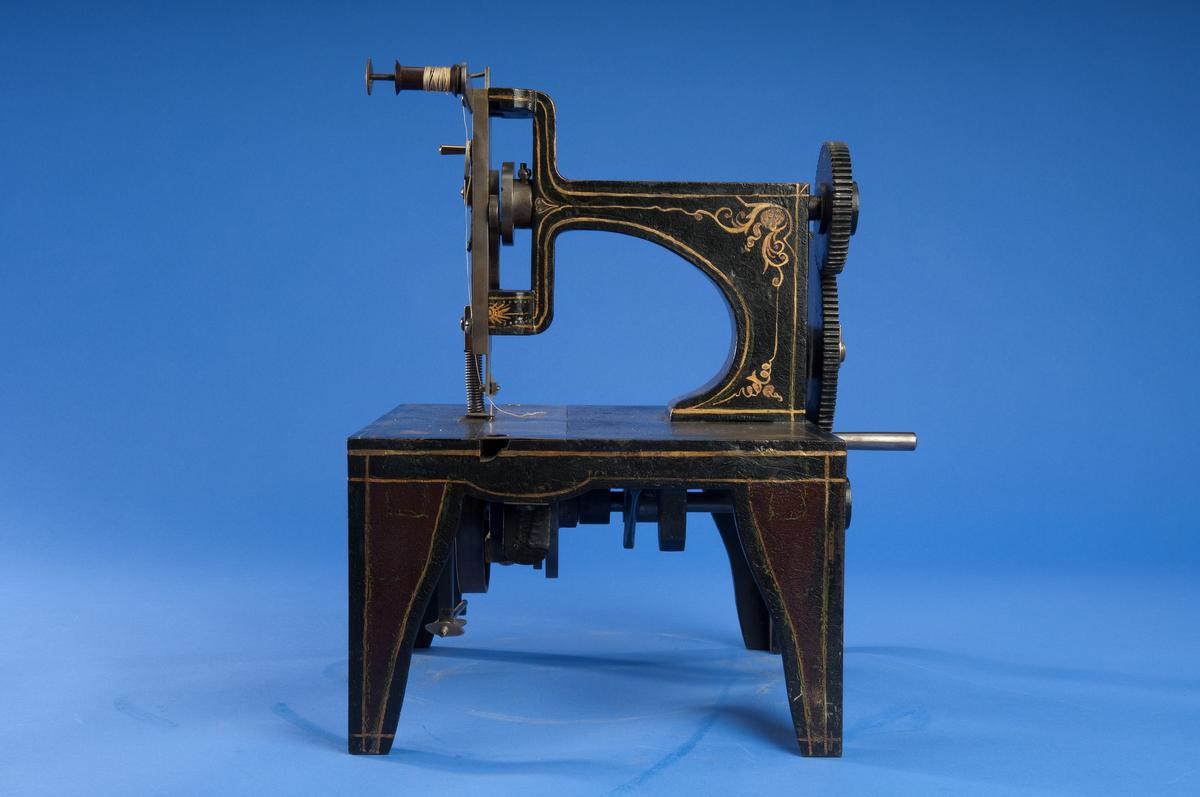
Elias Howe patented a lockstitch sewing machine in 1846, and Isaac Singer's machine was patented on August 12, 1851. From 1856 Singer's company sold machines on installments, which put them into homes.

Quilters soon used machines for piecing and binding (the Smithsonian's Baltimore Album quilt above has a machine-stitched binding), and a few, like the maker of a chain-stitched quilt now at the Smithsonian, quilted with them too.

1861 – 1865

Civil War quilts and the Log Cabin

During the Civil War, women's aid societies made quilts for soldiers. The US Sanitary Commission asked for simple cotton quilts about 50 by 84 inches to fit army cots, and tens of thousands were sent; quilt historian Virginia Gunn estimated about 125,000 quilts and comforters. Very few survive, because they were worn out or buried with the soldiers. Women also made quilts to sell for the war effort. More on Civil War quilts.

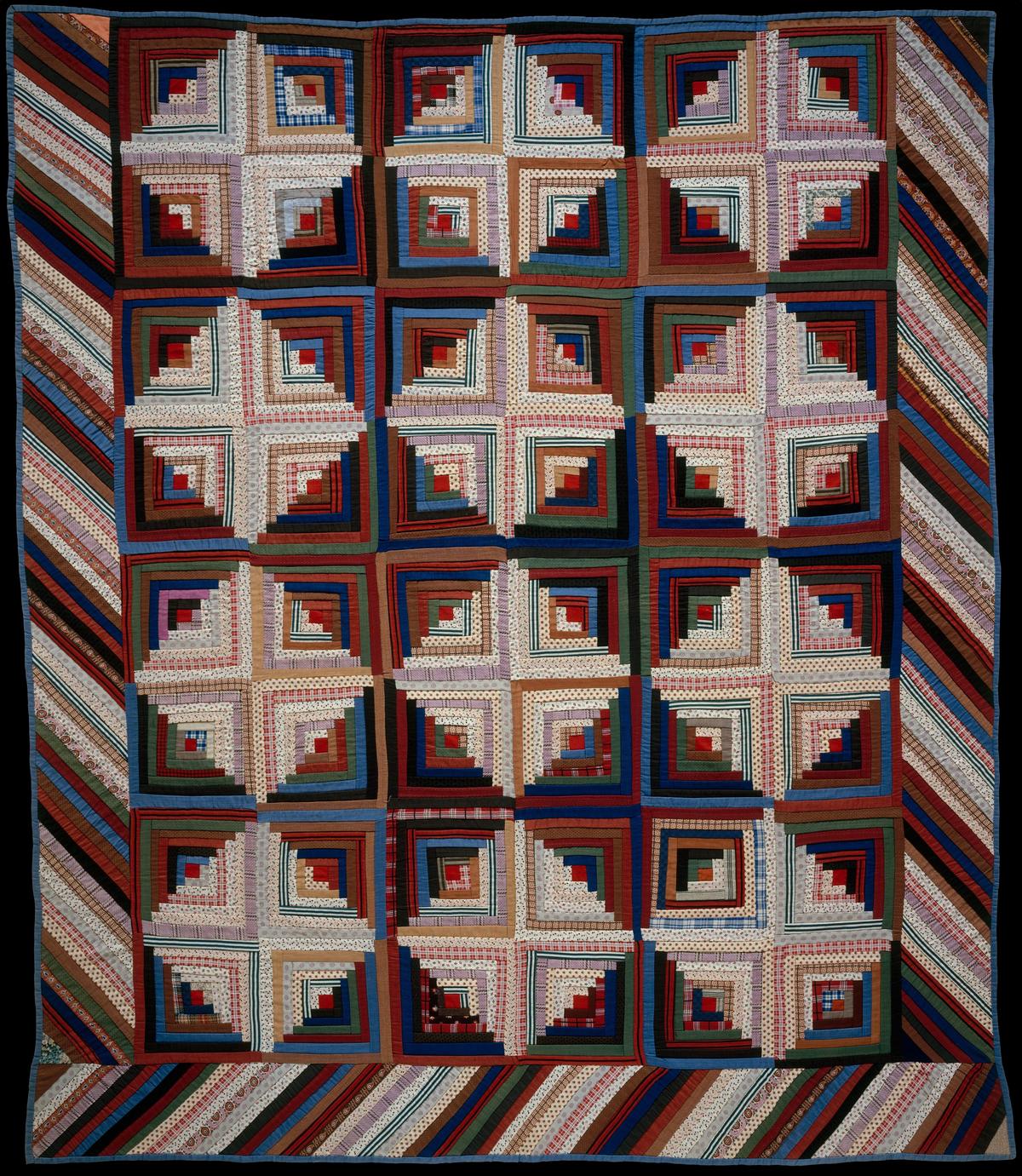
The Log Cabin block, strips built around a center square, became hugely popular from the 1860s. Its link to Abraham Lincoln's log-cabin image is often repeated but not proven: more on the Log Cabin.

A red and white striped flag quilt with a blue diamond of white stars in the middle and a star border
Mary Rockhold Teter, "Stars and Stripes" Quilt, 1861, made for her son, a Union soldier. Mary Rockhold Teter, "Stars and Stripes" Quilt, 1861 · National Museum of American History · CC0
A Log Cabin quilt whose light and dark halves form bold diamonds
Log Cabin quilt, Light and Dark variation, American, about 1865. Quilt, Log Cabin pattern, ca. 1865 · The Metropolitan Museum of Art · CC0

1876 – 1890s

The crazy quilt craze

Crazy quilts, irregular patches of silk, velvet and satin covered in fancy embroidery, swept America in the late 1800s. The fad is usually linked to the 1876 Centennial Exposition in Philadelphia, where many Americans first saw Japanese art and its asymmetry; historians treat that link as likely rather than proven.

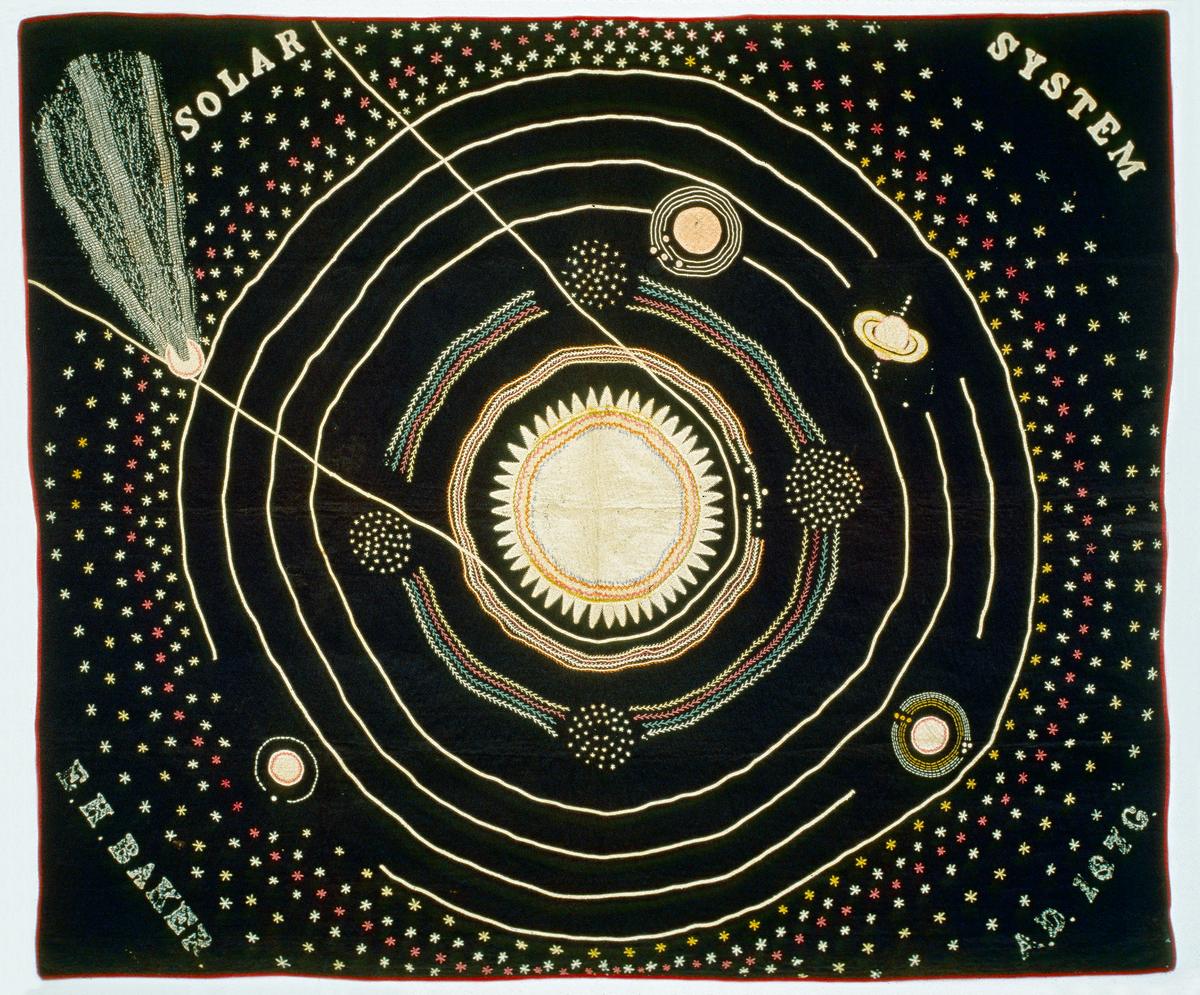
Britannica puts the peak around 1884, and the fashion had faded by the mid-1890s (more on crazy quilts). Most crazy quilts were parlor showpieces, not bed covers. Quilts were becoming personal statements in other ways too: Ellen Harding Baker sewed the solar system in wool to illustrate her lectures on astronomy.

A silk and velvet crazy quilt of irregular jewel-toned patches embroidered with flowers and fans on black
Tamar Horton Harris North, crazy quilt of silk and velvet, about 1877. Tamar Horton Harris North, Crazy pattern quilt, ca. 1877 · The Metropolitan Museum of Art · CC0
A black wool quilt appliquéd with the sun, the planets' orbits and a comet
Ellen Harding Baker, "Solar System" Quilt, Iowa, dated 1876. Ellen Harding Baker, "Solar System" Quilt, 1876 · National Museum of American History · CC0

1886 & 1898

Harriet Powers' story quilts

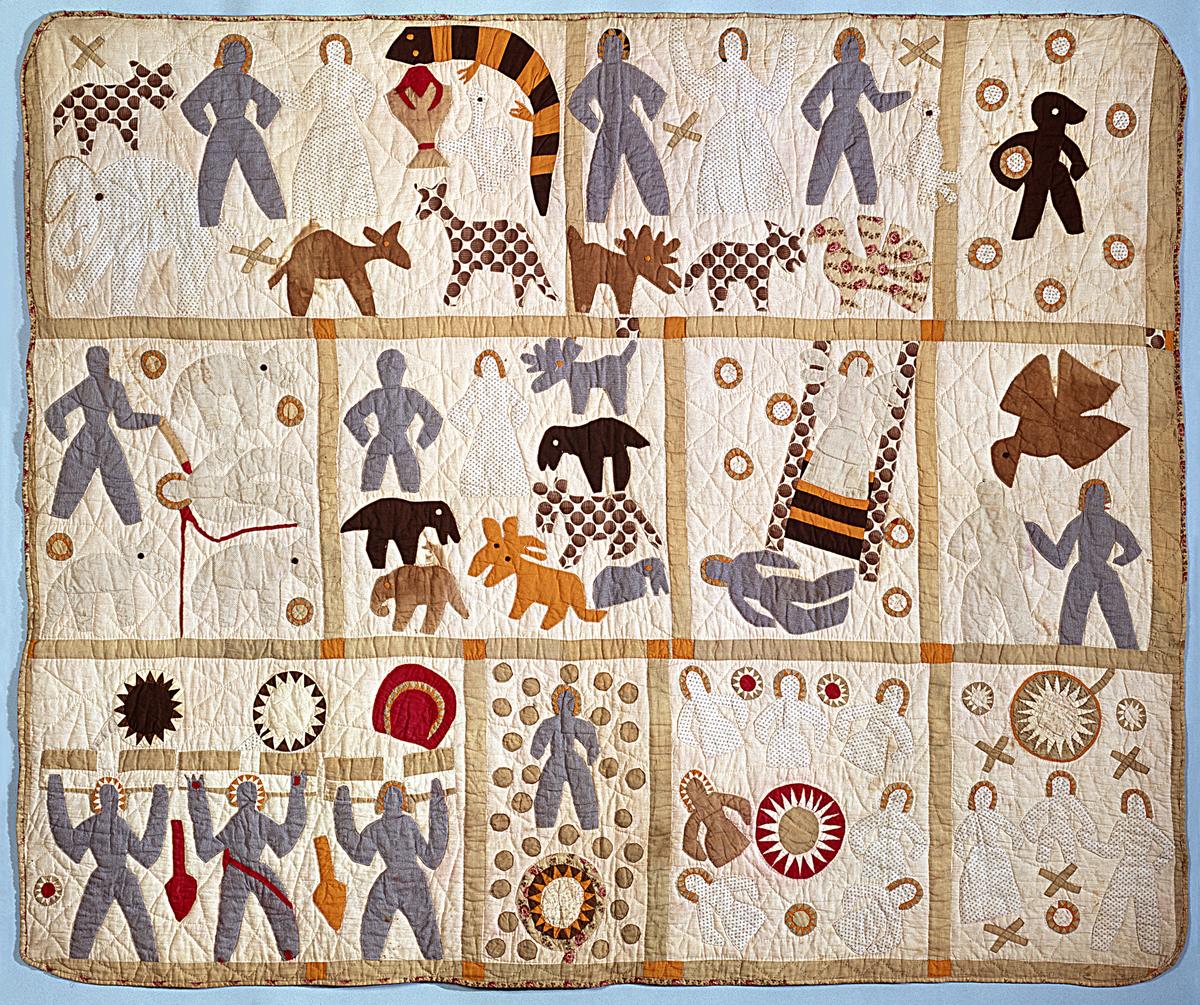
Harriet Powers (1837–1910) was born into slavery in Georgia. In 1886 she showed her Bible Quilt, 11 appliquéd panels of Bible stories, at a fair in Athens, Georgia. The artist Jennie Smith later bought it and wrote down Powers' own explanation of each scene. It is now at the Smithsonian's National Museum of American History.

Her Pictorial Quilt (1895–98, Museum of Fine Arts, Boston) mixes Bible stories with local legends and remarkable events in the sky. The two are among the most celebrated quilts in the African American tradition and in all American folk art.

c. 1870s – 1940s

Amish quilts of Lancaster County

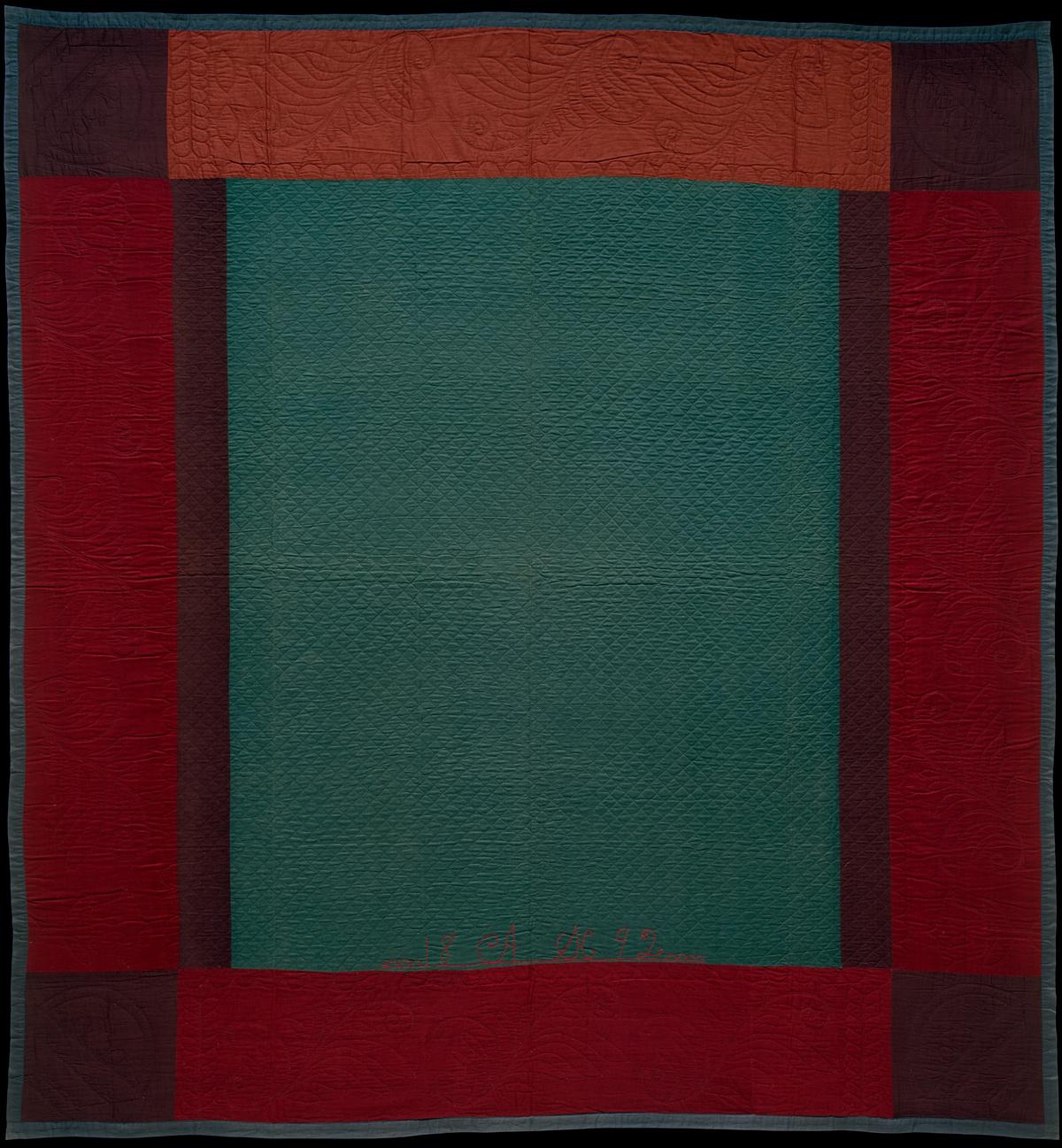
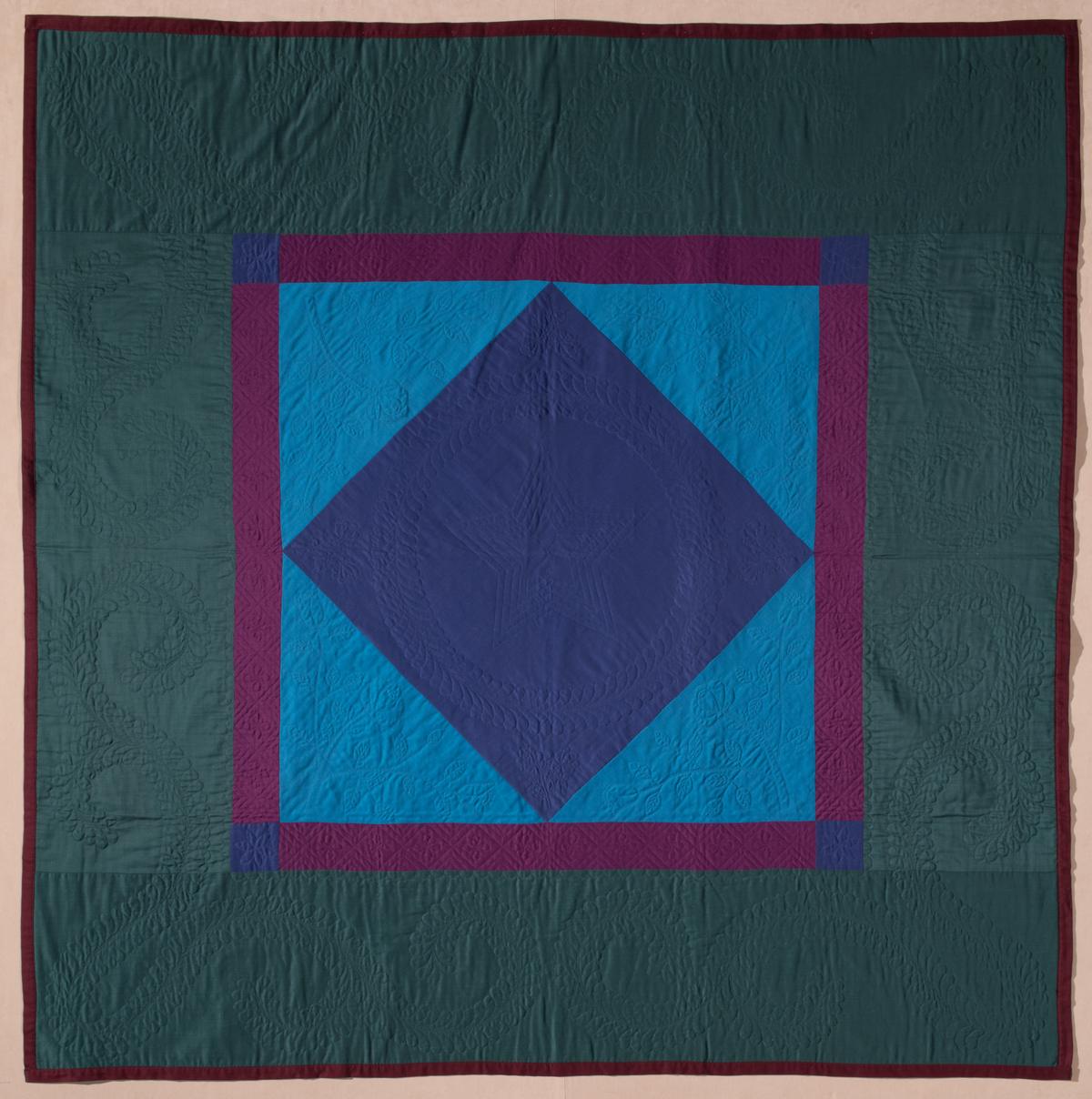
Amish quiltmakers in Lancaster County, Pennsylvania, worked in the plain, solid colors of their clothing, often fine wool, rather than the printed calicoes most American quilters used. Bold, simple layouts such as Center Diamond, Bars and Sunshine and Shadow are set off by intricate hand quilting.

Most classic examples date from the late 1800s to the 1940s. Decades later, collectors and art museums prized them as forerunners of modern abstract art: more on Amish quilts.

1900s

Revival, recognition and remembrance

Quilting nearly disappeared more than once in the 1900s, and each time it came back bigger: in hard times, in art museums and in memory.

1920s – 1940s

The Depression-era revival

Quilting boomed again between the wars, fed by the Colonial Revival and by hard times. Newspapers printed free patterns: the Kansas City Star ran quilt blocks from 1928 to 1961. Favorites included Grandmother's Flower Garden, Double Wedding Ring and Dresden Plate, often in cheerful pastels.

Thrifty quilters reused cotton flour and feed sacks, which manufacturers began printing in colorful patterns to win repeat customers (more on feed sack quilts). In 1933 Sears, Roebuck ran a national quilt contest tied to Chicago's Century of Progress world's fair. It drew more than 24,000 entries for a $1,000 grand prize.

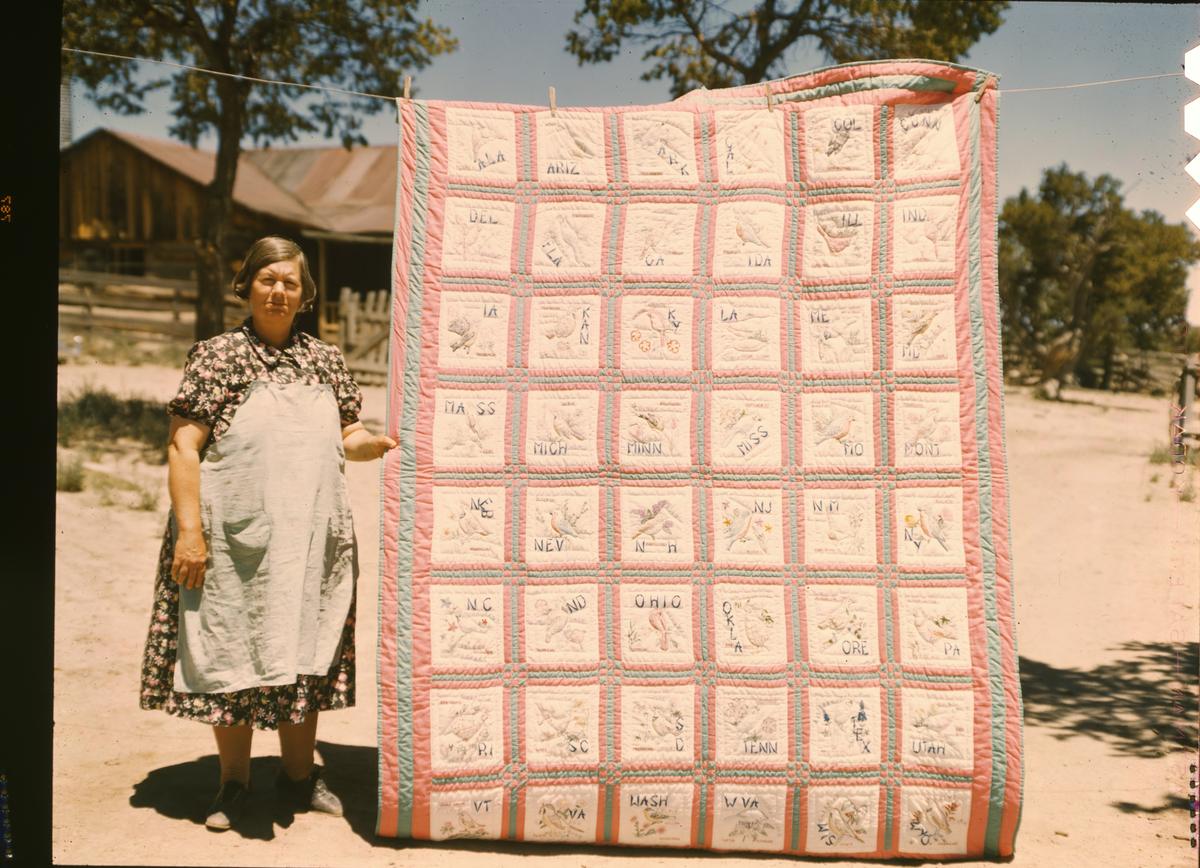
A 1940 color photograph of a homesteader in an apron beside her pink and white embroidered state quilt hung on a line
Mrs. Bill Stagg with the state quilt she made, Pie Town, New Mexico, 1940. Russell Lee, Pie Town, New Mexico, 1940 · Library of Congress, FSA/OWI Collection
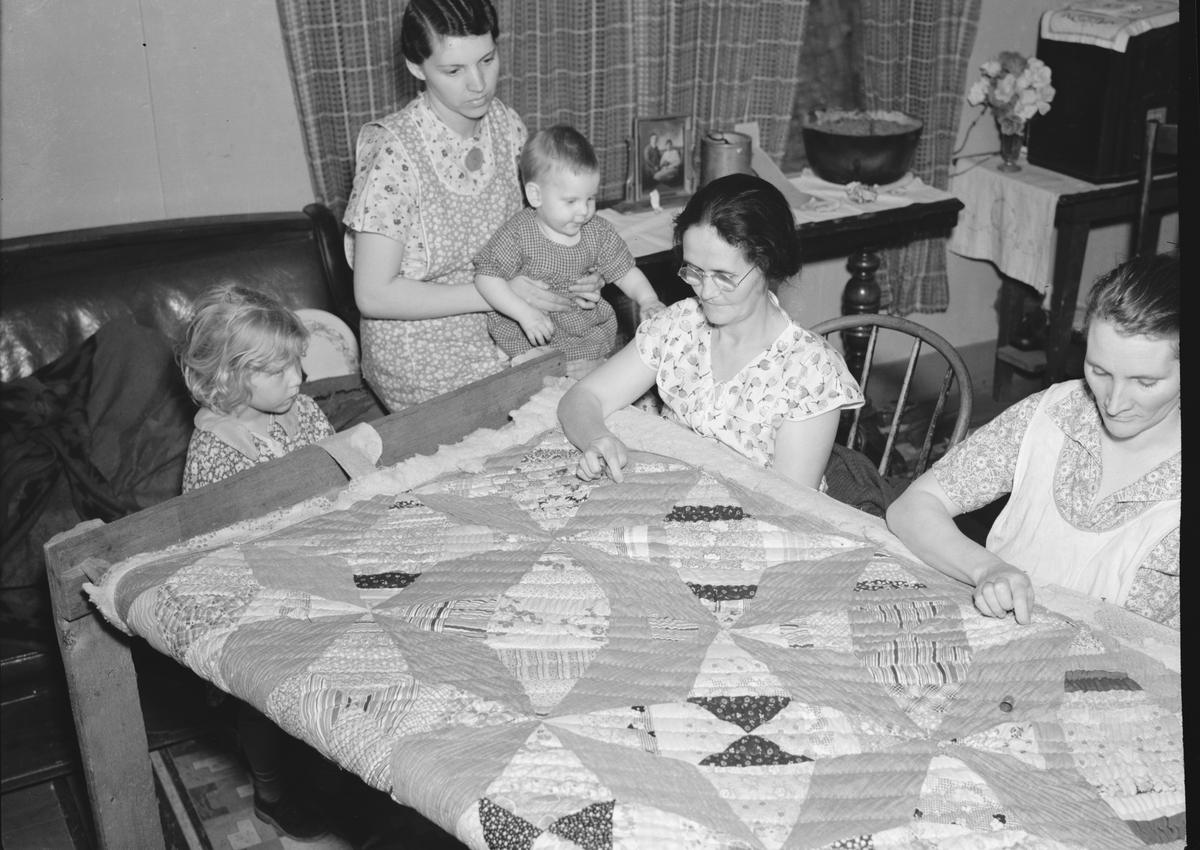
A black and white photograph of women and children quilting together around a quilt frame in a farmhouse
A quilting party in Alvin, Wisconsin, 1937. Russell Lee, A quilting party, Alvin, Wisconsin, 1937 · Library of Congress, FSA/OWI Collection

1971 – 1979

Quilts as art, and the rotary cutter

In 1971 the Whitney Museum of American Art in New York showed Abstract Design in American Quilts: 61 pieced quilts from the collection of Jonathan Holstein and Gail van der Hoof, hung on the walls like paintings. Its success helped the art world see quilts as art.

The 1976 US Bicentennial set off a nationwide wave of new quiltmakers. And in 1979 the Japanese company Olfa, founded by Yoshio Okada, introduced the first rotary cutter. With rulers and self-healing mats, it led to the fast strip-cutting methods most quilters use today.

A Center Diamond quilt: a blue diamond on a green field inside a plum frame
Center Diamond, about 1930, in the Lancaster Amish style. Center Diamond / Hals duch Eck, ca. 1930 · Smithsonian American Art Museum · CC0

October 11, 1987

The AIDS Memorial Quilt

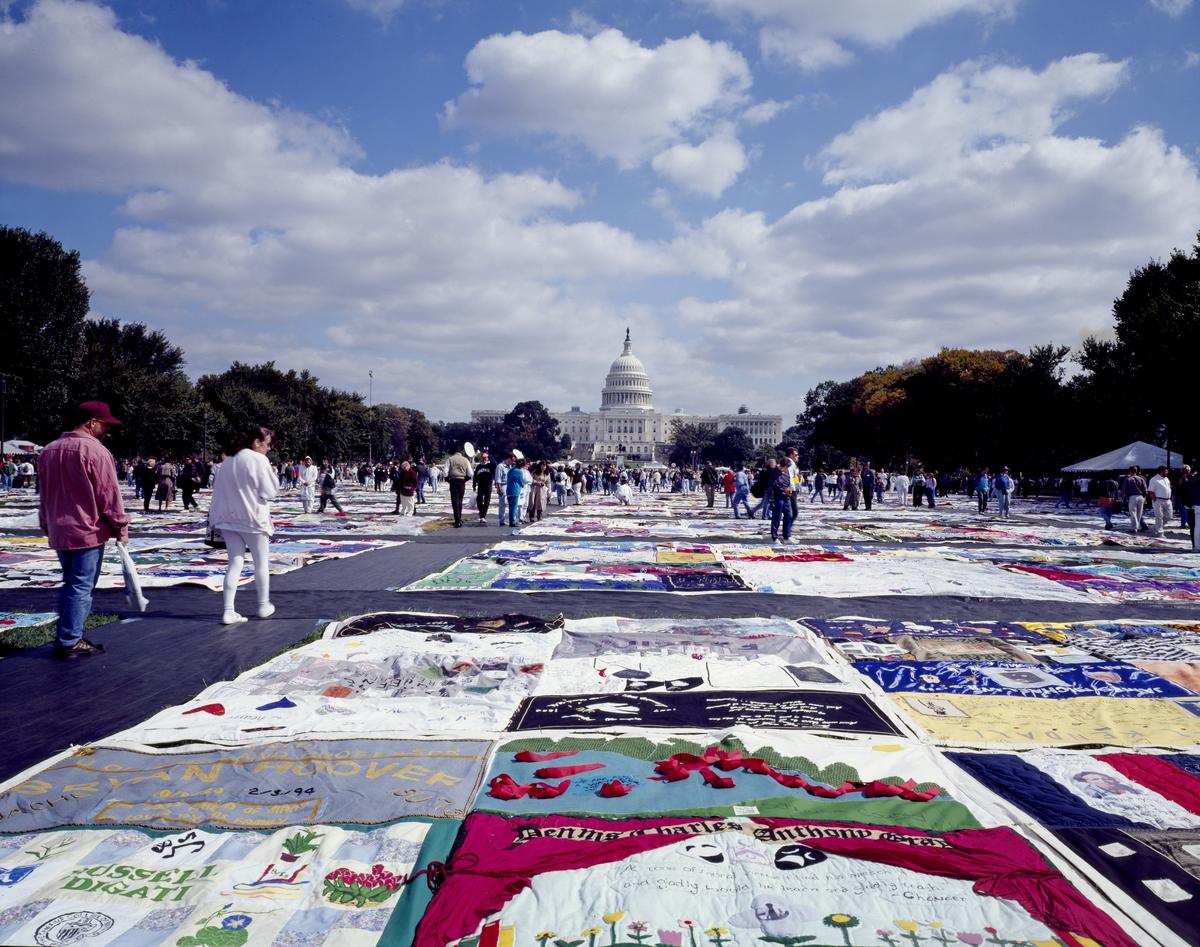
Begun by the NAMES Project in San Francisco, the AIDS Memorial Quilt was first displayed on the National Mall in Washington, D.C., on October 11, 1987. It had 1,920 panels, each remembering someone who had died of AIDS, and covered more ground than a football field.

By its October 1996 display on the Mall it had grown to more than 40,000 panels, and it became the largest piece of community folk art in the world.

Panels of the AIDS Memorial Quilt laid out on the National Mall, with visitors and the U.S. Capitol in the distance
The AIDS Memorial Quilt on the National Mall, Washington, D.C., 1996. Carol M. Highsmith, 1996 · Library of Congress, Carol M. Highsmith Archive

2002

The quilts of Gee's Bend

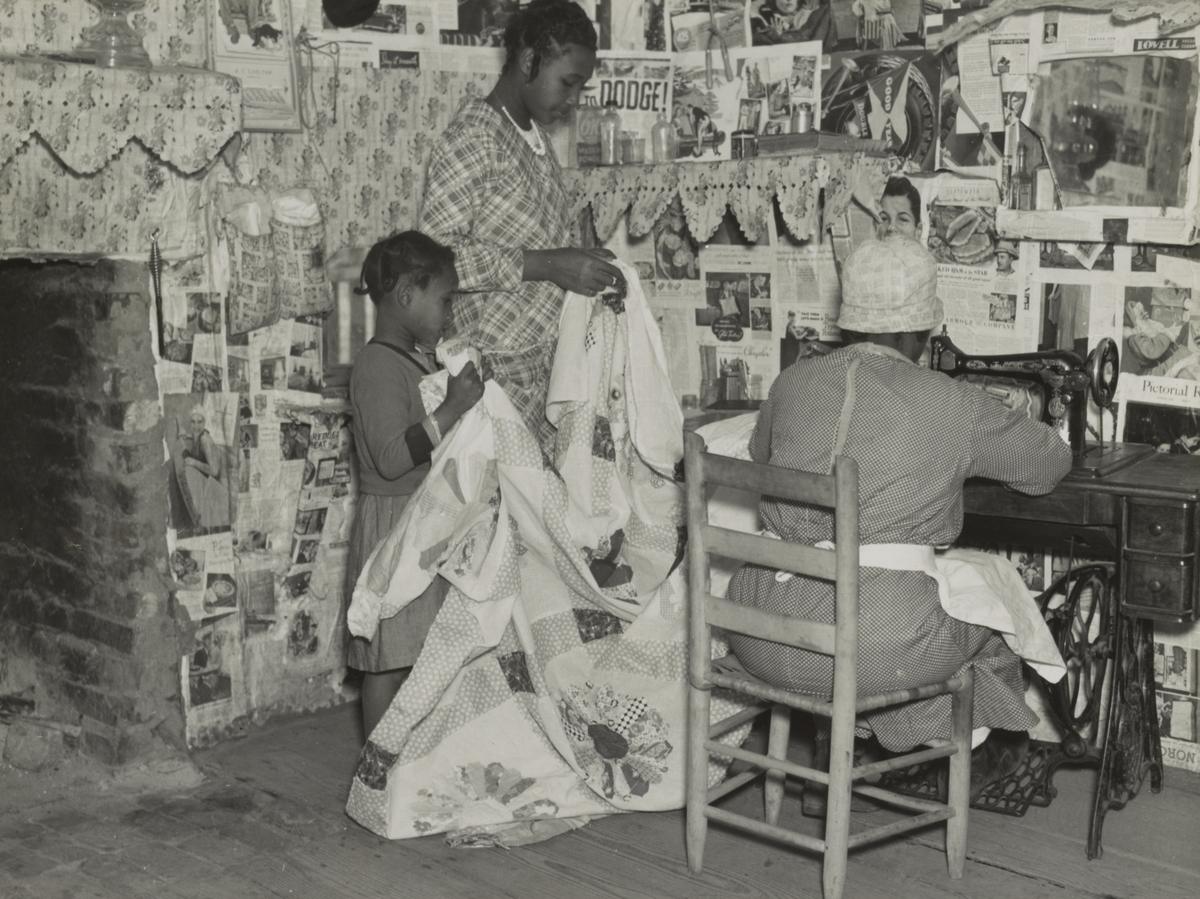
Women in the small, mostly African American community of Gee's Bend (Boykin), Alabama, have made bold, improvisational quilts for generations, often from work clothes and scraps. This photograph was taken there in 1937.

The Quilts of Gee's Bend, organized by the Museum of Fine Arts, Houston, with the Tinwood Alliance, opened in Houston in September 2002 and at the Whitney that November, then toured the country. Critics hailed the quilts as major works of American art.

Today

Quilting today

2000s – today

Modern quilting and digital design

Computer-guided longarm machines, online pattern shops, blogs and social media have opened quilting to a new generation. The Modern Quilt Guild, founded in Los Angeles in 2009 by Alissa Haight Carlton and Latifah Saafir, grew within about two years to more than a hundred chapters, celebrating bold color, negative space and graphic design.

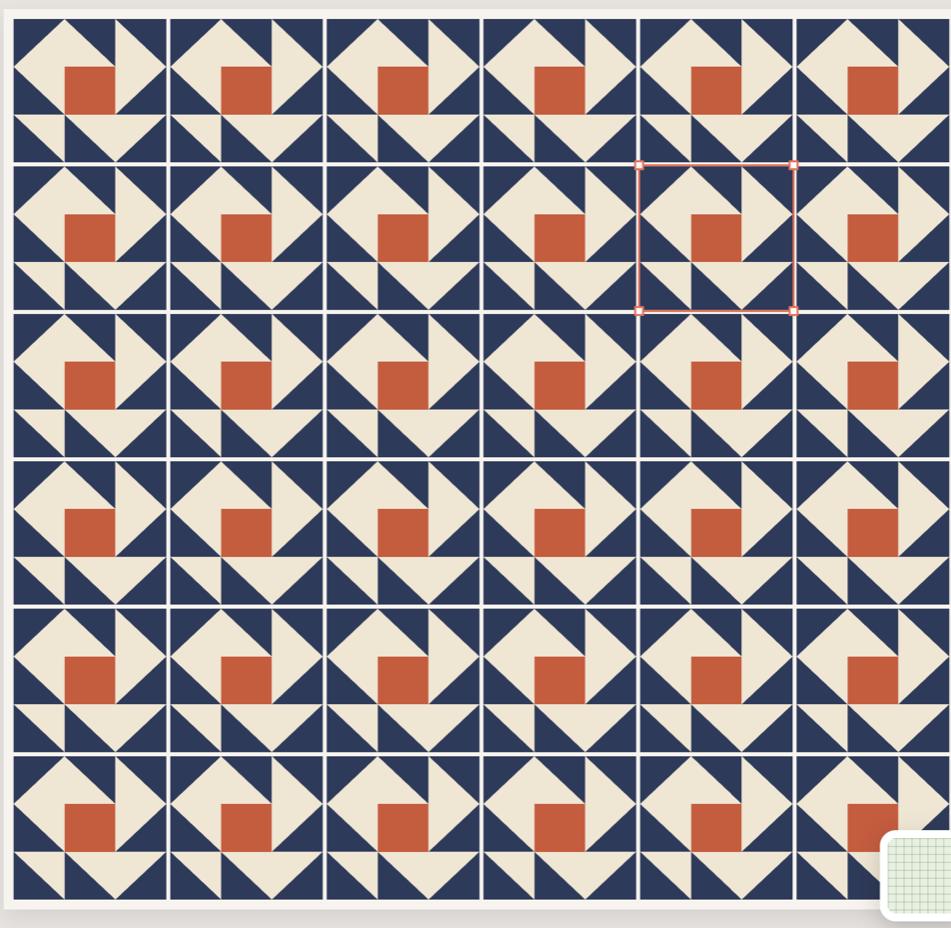
Many quilters now plan a quilt on a screen before they cut any fabric: trying blocks and layouts, auditioning fabric and working out the yardage. That's what Quiltler is for, and the blocks below, from Log Cabin to Sunshine and Shadow, are all in it.

An Ohio Star throw quilt designed in navy, cream and rust in the Quiltler app on an iPad
An Ohio Star throw, designed in Quiltler. Designed in Quiltler

Sew a piece of history

Many blocks in this timeline are still favorites. Each guide shows the block, its cutting sizes and how to design a whole quilt with it.

Quilting history questions

When was quilting invented?

No one knows exactly. Quilted cloth is at least about 2,000 years old: a quilted felt carpet from a Xiongnu burial at Noin-Ula in Mongolia, from around the 1st century BC to the 1st century AD, is one of the oldest that survive. An Egyptian ivory figure of about 3000 BC is often called the earliest picture of a quilted garment, but that reading is debated.

What is the oldest surviving quilt?

Among quilts made as bed covers, the Tristan Quilt from Sicily, from the late 14th century, is one of the oldest known. Parts of it are in the Victoria and Albert Museum in London and the Bargello in Florence. Older quilted textiles, such as the Noin-Ula carpet, survive from tombs.

When did patchwork quilts begin?

Patchwork was being made in Britain by the early 1700s. The 1718 Silk Patchwork Coverlet, pieced over paper templates, is one of the earliest dated patchworks known. Pieced and appliquéd quilts became common in America in the 1800s, when printed cotton became cheap.

Why were quilts made during the Civil War?

To keep soldiers warm and to raise money. Women's aid societies sent quilts to the US Sanitary Commission, which asked for cot-size quilts about 50 by 84 inches; historians estimate it distributed about 125,000 quilts and comforters. Few survive, because many were worn out or buried with the soldiers.

When was the rotary cutter invented?

In 1979, by the Japanese company Olfa, founded by Yoshio Okada. With an acrylic ruler and a self-healing mat, the rotary cutter made fast strip cutting possible and changed how most quilts are made.

What were feed sack quilts?

Quilts made from cotton flour and feed sacks, mostly in the 1920s to 1940s. Manufacturers began printing the sacks in colorful patterns so shoppers would come back for a matching one, and thrifty quilters turned them into quilts, dresses and aprons.

Go deeper

Ten chapters of this story in more detail, each with its own museum photographs, myths and a short film.

Sources and image credits

  1. British Museum: ivory statuette of a king, EA 37996
  2. University of Washington Silk Road: the Noin-Ula finds in the Hermitage
  3. Victoria and Albert Museum: The Tristan Quilt
  4. Victoria and Albert Museum: An introduction to quilting and patchwork
  5. The Quilt Museum and Gallery, York: the 1718 Coverlet
  6. Hawaiian Mission Houses: the first sewing circle, 1820
  7. National Gallery of Australia: The Rajah Quilt
  8. Smithsonian: Isaac Singer's sewing machine patent model
  9. Quilt Index: Civil War quilts and the Sanitary Commission
  10. Encyclopaedia Britannica: crazy quilt
  11. Smithsonian: Harriet Powers' Bible Quilt
  12. Museum of Fine Arts, Boston: Harriet Powers' Pictorial Quilt
  13. New Georgia Encyclopedia: Harriet Powers
  14. International Quilt Museum: quilts of the Great Depression
  15. Encyclopaedia Britannica: feedsack quilt
  16. Whitney Museum: Abstract Design in American Quilts (1971)
  17. OLFA: about OLFA
  18. National Park Service: the 1987 AIDS Memorial Quilt on the National Mall
  19. Smithsonian Institution Archives: the AIDS Memorial Quilt on the Mall
  20. Whitney Museum: The Quilts of Gee's Bend (2002)
  21. The Modern Quilt Guild: co-founder Alissa Haight Carlton on modern quilting

Every photograph is in the public domain or released under CC0 by its museum or archive; each picture's caption names the object and links to its record. The 1937 Gee's Bend and 1930s–40s farm photographs are U.S. government works in the Library of Congress's FSA/OWI collection, and the 1996 AIDS Memorial Quilt photograph is from the Carol M. Highsmith Archive, which she gave to the public. The quilt panels in it belong to their makers.