1862
Gunboat quilts in the Confederacy
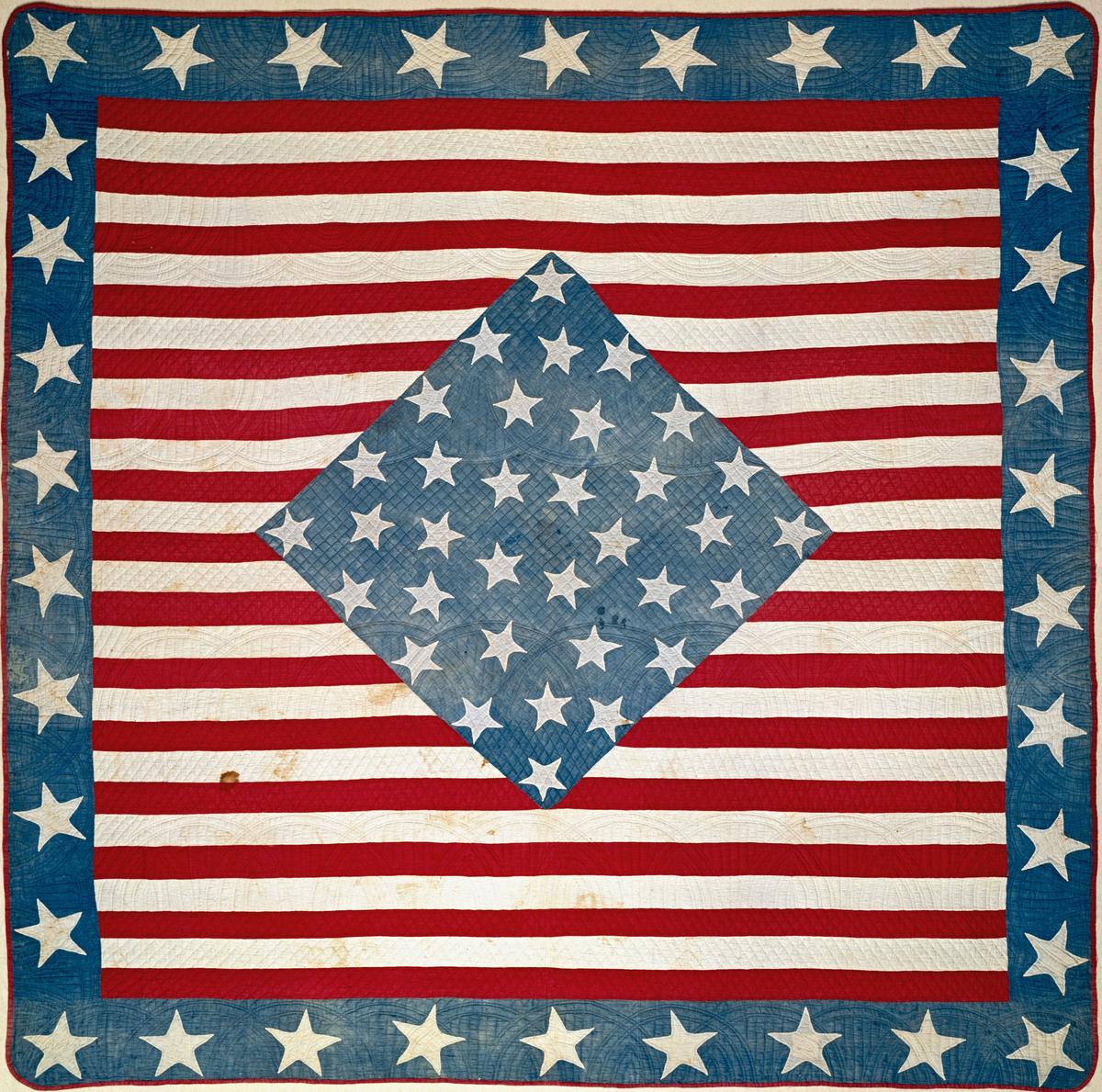
Southern women raised money for the Confederate navy through gunboat societies, and quilts were raffled and auctioned for the cause. Two red-and-green appliqué quilts attributed to Martha Jane Singleton Hatter Bullock of Greensboro, Alabama, survive: one at the Birmingham Museum of Art and one at the First White House of the Confederacy in Montgomery. Quilt historian Bryding Adams Henley studied them ("Alabama Gunboat Quilts," Uncoverings, 1987).
An 1899 newspaper story says the quilt was sold again and again and raised "several hundred thousand dollars" for the CSS Alabama. That claim is family and newspaper tradition, not documented fact: the ship was built at Birkenhead, England, under an 1861 contract for £47,500.
1862
1861 – 1865
Shortages and homemade bedding
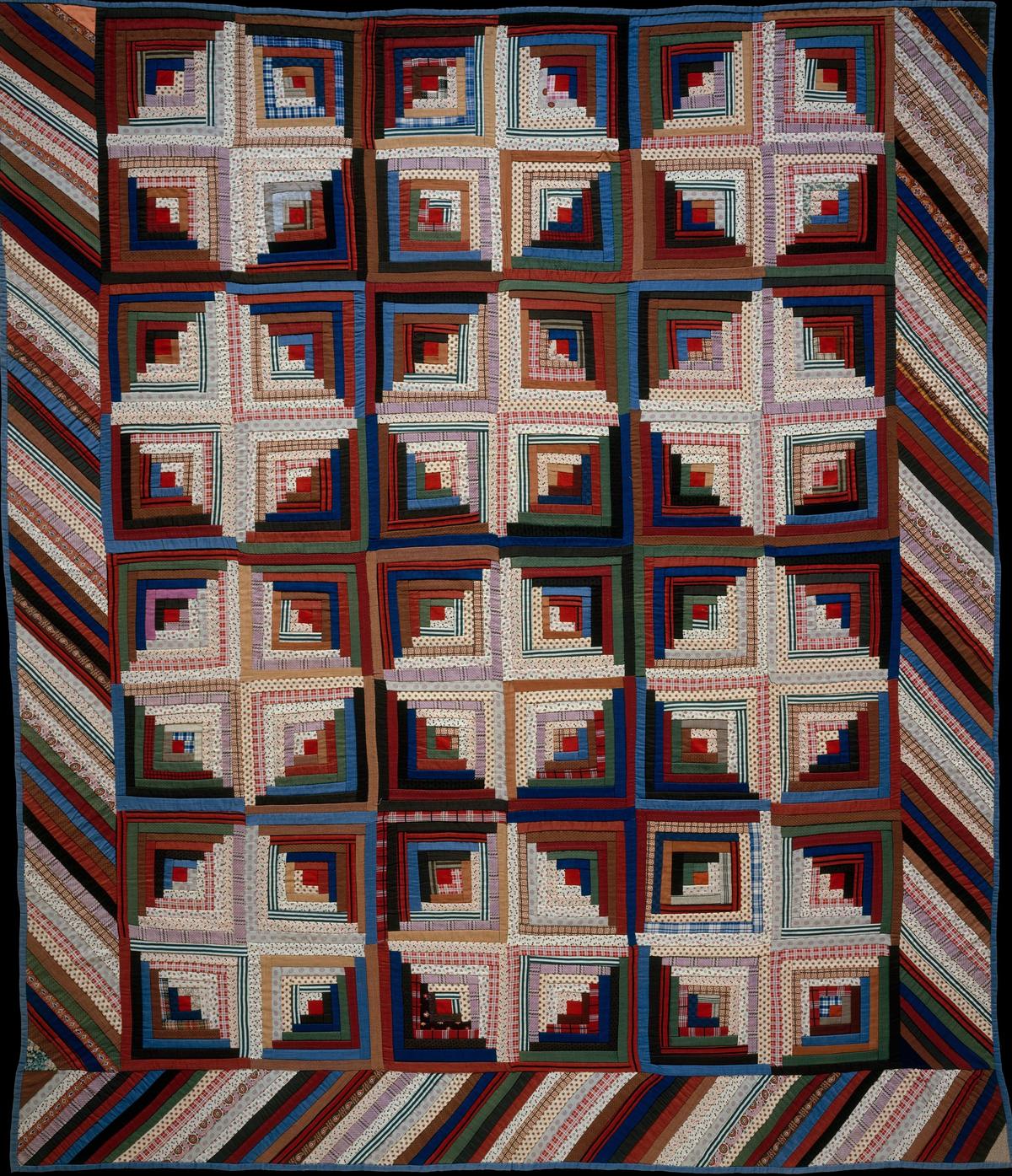
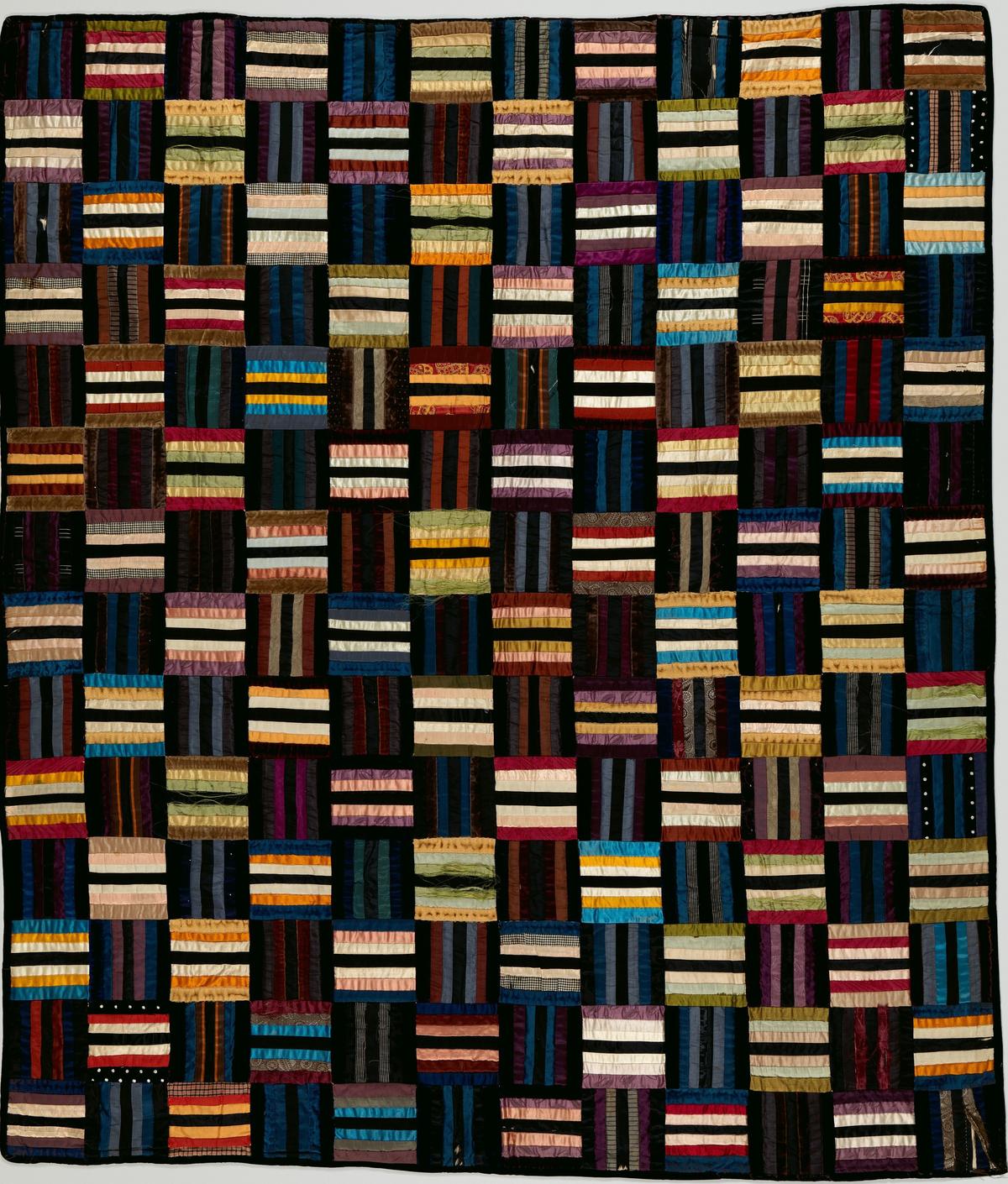
With the Union blockade and a smaller, scattered population, Southern aid societies had far fewer goods to give. Newspapers in 1862 urged women to cut up carpets for soldiers' blankets, and quilts from home went to the front.
Brackman cites an 1862 photograph of quilts the women of Selma, Alabama, sent to Confederate soldiers, and accounts of Confederate prisoners at Camp Douglas, Chicago, wrapped in carpets and old bed-quilts. Very little of this work survived the war.
1861 – 1865
1861 – 1865
Enslaved people's labor, and freedom
In the South much of the spinning, weaving, sewing and quilting for households, and for the war effort, was done by enslaved women; folklorist Gladys-Marie Fry documented enslaved seamstresses and quilters in Stitched from the Soul (1990).
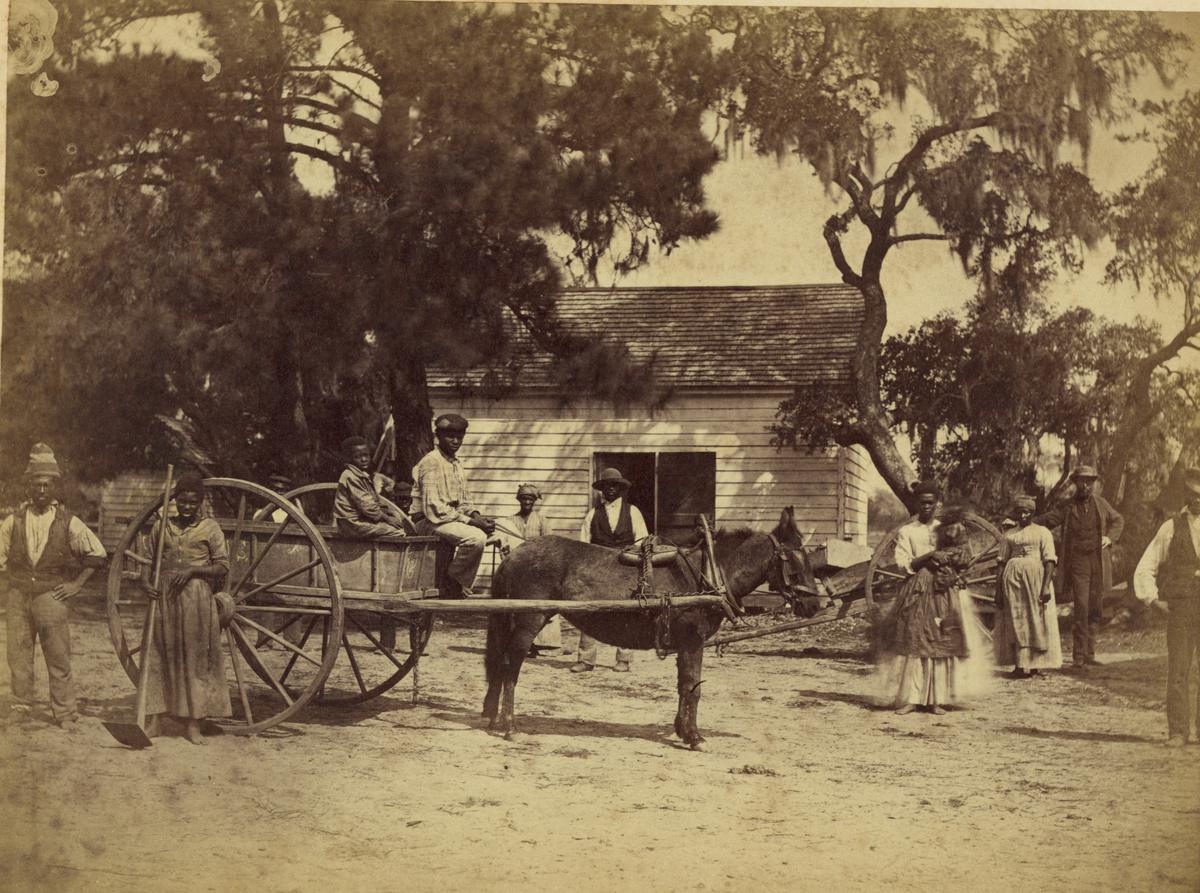
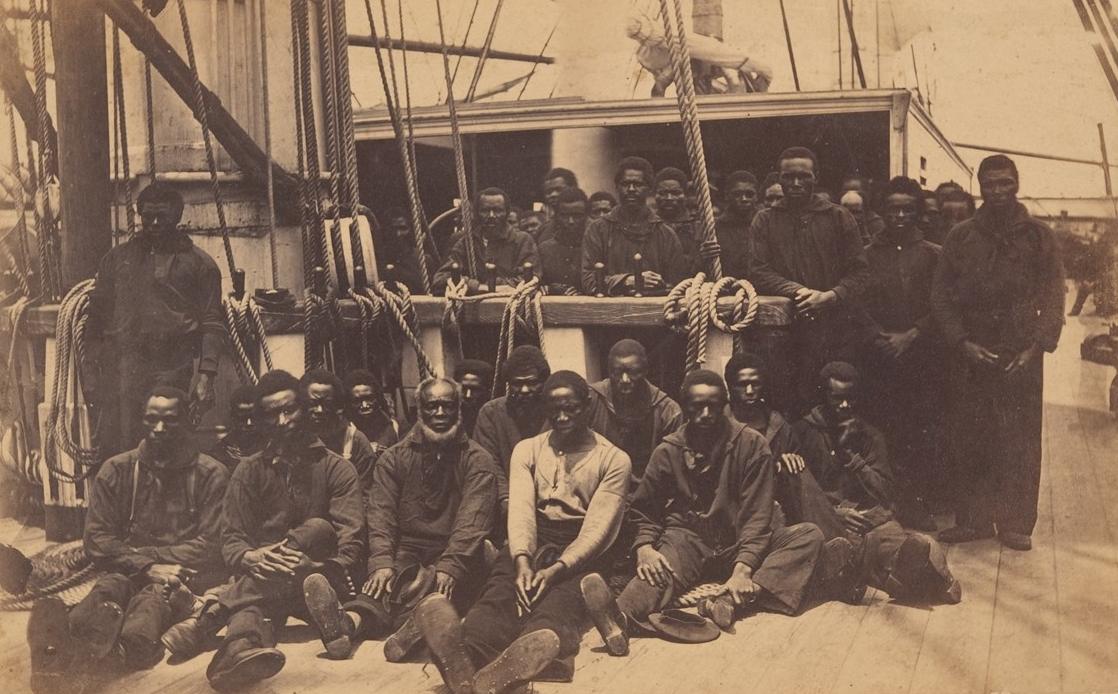
As Union troops occupied the Sea Islands of South Carolina, Henry P. Moore photographed enslaved and newly freed people at James Hopkinson's plantation on Edisto Island in 1862, and people who had escaped slavery to Union ships at Port Royal in 1861. His title for that photograph calls them "contrabands," the period term for people who reached Union lines, which treated them as enemy property taken in war. In June 1863 Harriet Tubman helped lead the Combahee River raid that freed more than 700 people.