Quilting history · Log Cabin quilts

The History of the Log Cabin Quilt

Strips around a square, from the 1860s to Gee's Bend

A square in the middle, strips of cloth around it, light on one side and dark on the other. Since the 1860s the Log Cabin has been one of America's best-loved quilt blocks, and one of the most storied. Here is what the record shows about where it came from, how quilters turned one block into dozens of quilts, and which famous stories hold up, with quilts from the Met, the Art Institute of Chicago, LACMA, the Smithsonian and the Museum of Fine Arts, Boston.

  • 13 moments
  • 1863 to today
  • 15 museum photographs
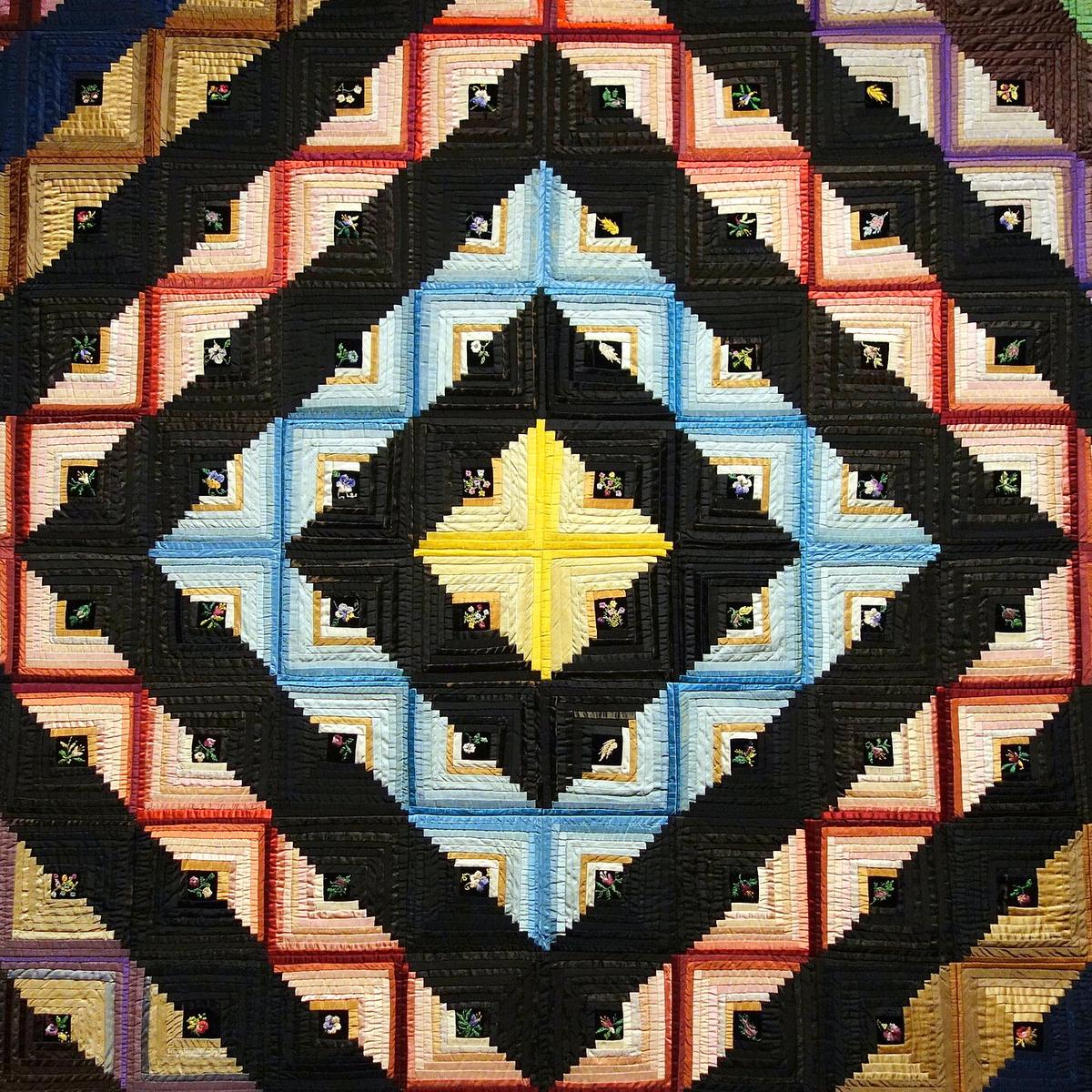
  • A silk Log Cabin quilt of black, pink, blue and gold diamonds rippling out from a yellow center, with a tiny embroidered flower in each block
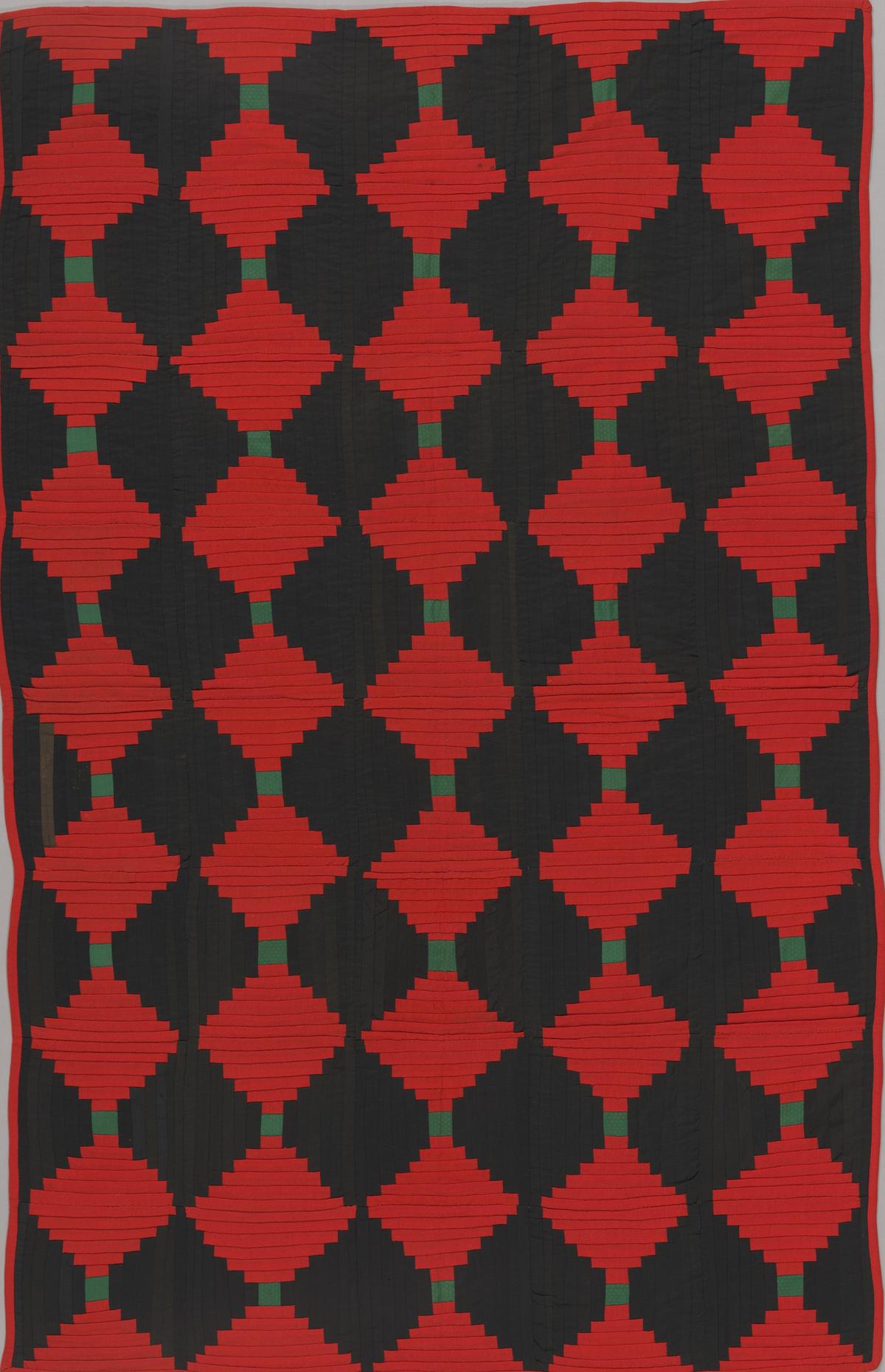
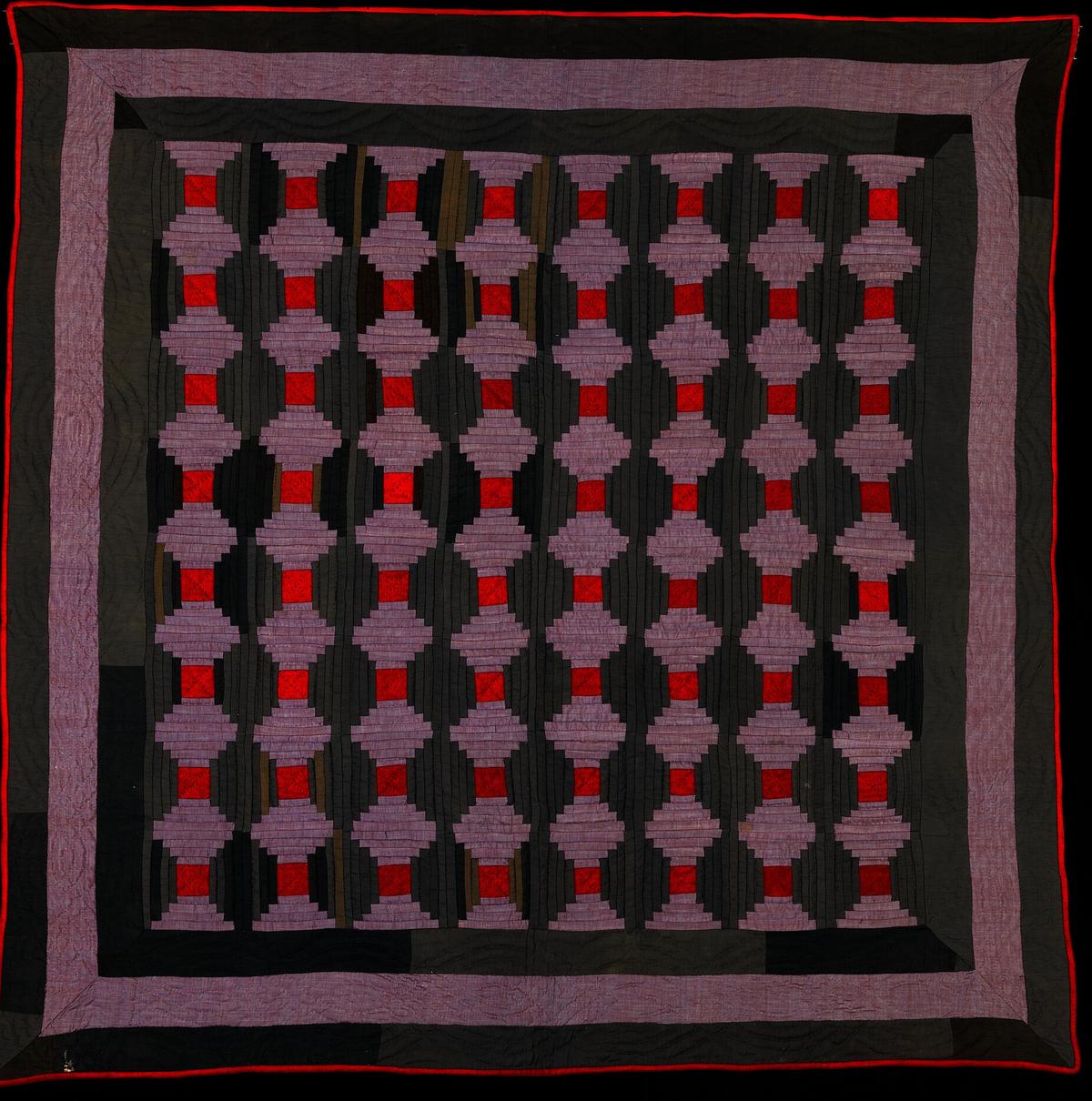
  • A tall wool quilt of red and black Courthouse Steps blocks that form stepped diamonds, with small green centers
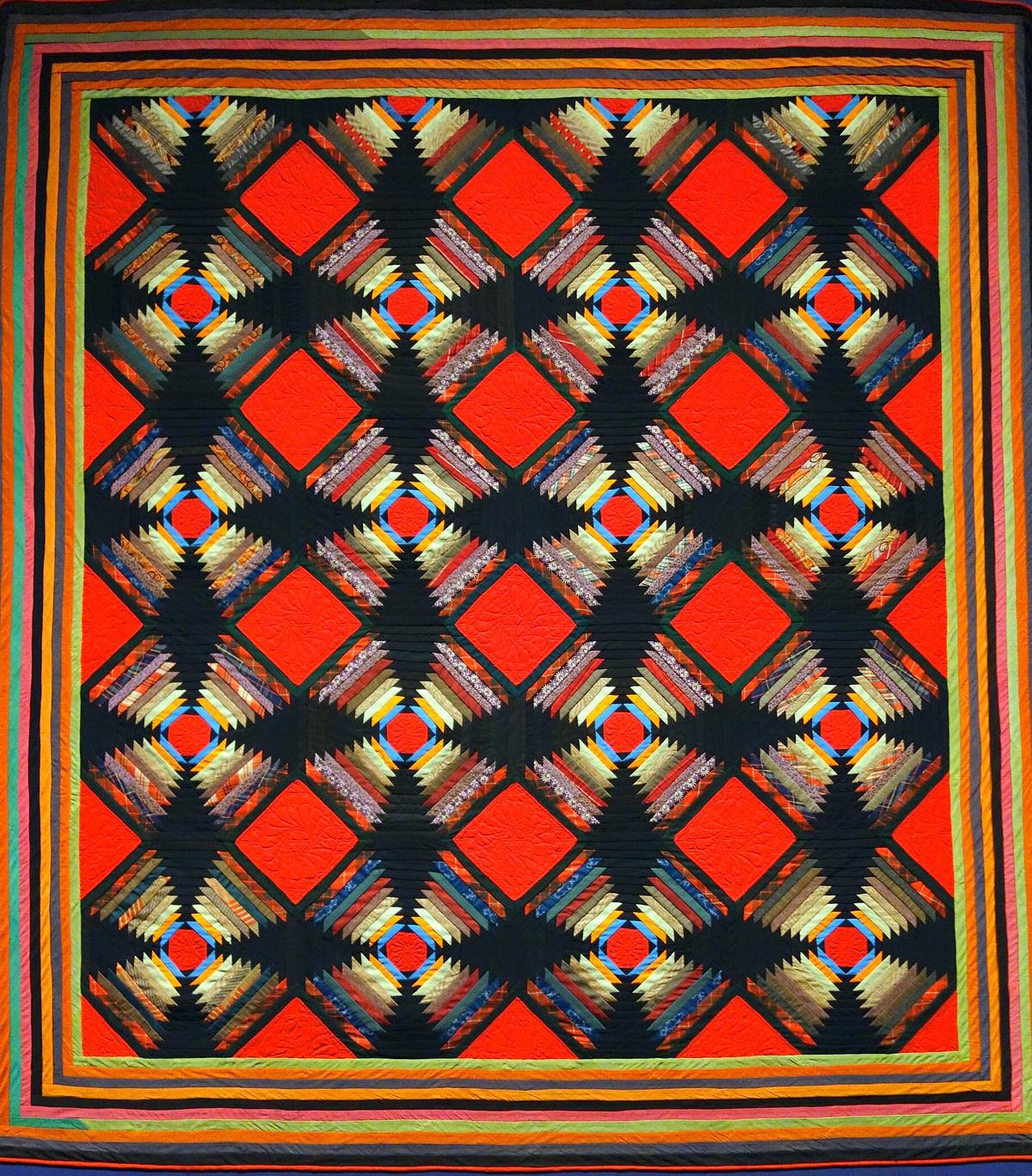
  • A Pineapple Log Cabin quilt of black blades and striped strips on bright red, inside many striped borders
  • A Log Cabin quilt of small printed blocks whose light and dark halves form concentric diamonds
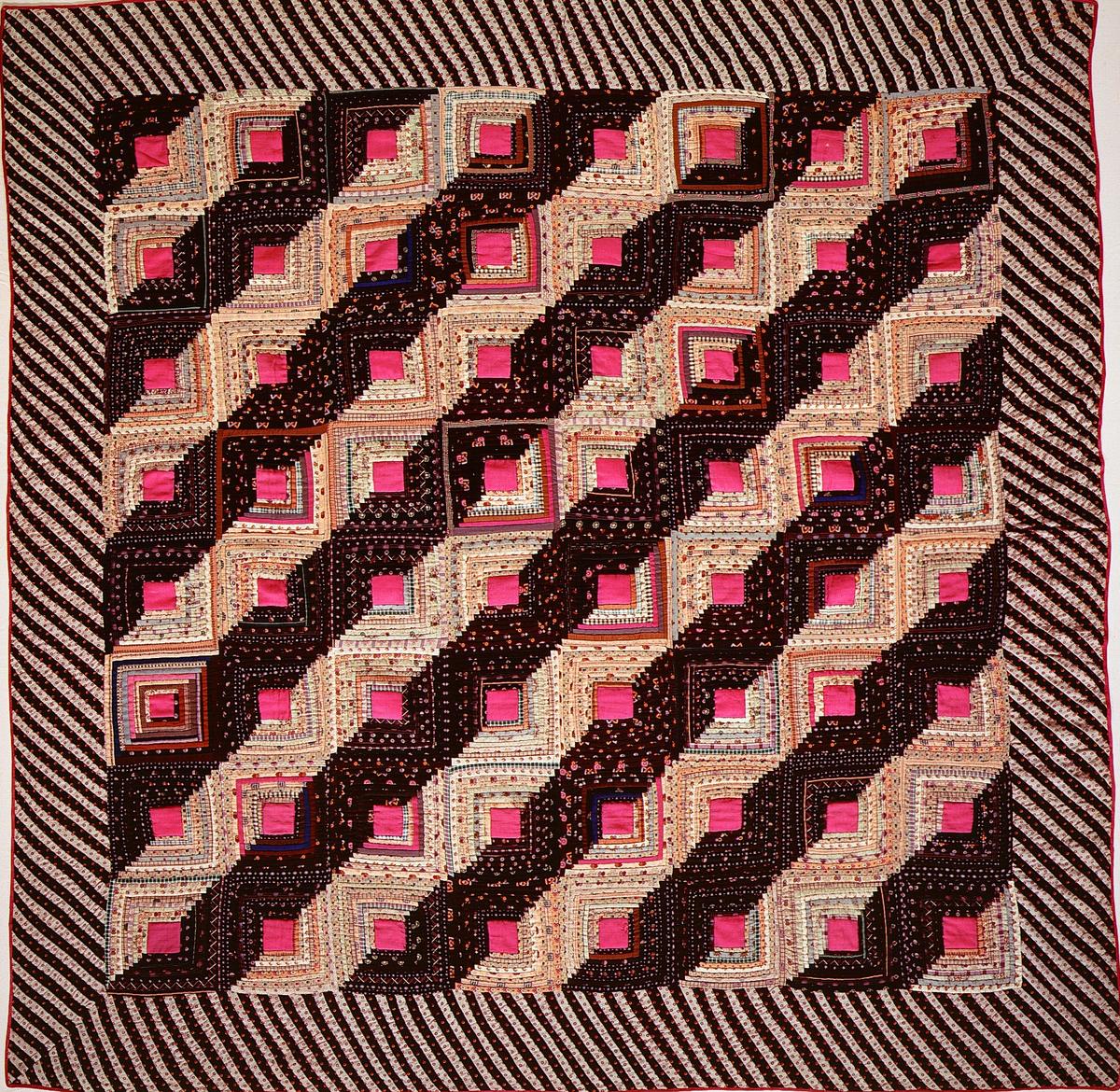
  • A Log Cabin quilt whose dark halves make diagonal stripes, with bright pink centers and a striped border
  • A dark green quilt of Pineapple blocks whose angled strips of many colors spin around each center

When was the Log Cabin quilt invented?

No one knows who made the first one, but the earliest firm American record of the name is from 1863, when textile historian Virginia Gunn found Log Cabin quilts commended at the Ohio State Fair. No documented American Log Cabin quilt is known from before the Civil War. The block became a true fad in the 1870s and 1880s. Strip blocks were sewn in Britain too, but claims that the pattern is centuries older, or began on the Isle of Man or in ancient Egypt, are unproven.

Before 1861

Before the name

The Log Cabin attracts origin stories. Here is what lies behind them, and how the log cabin itself became an American symbol.

332–30 BCE

Light and dark strips, two thousand years early

Some Egyptian animal mummies of the Ptolemaic and Roman periods were wrapped in bands of dyed and undyed linen laid in geometric patterns that look strikingly like light-and-dark Log Cabin piecing. This one at the Met, a canid, shows the effect.

Quilt writers noticed early: in 1897 a British book editor proposed calling the pattern "Mummy" or "Egyptian" patchwork. But quilt historian Barbara Brackman calls the comparison "just a parallel design idea," and nothing shows that one influenced the other. It is a resemblance, not an origin.
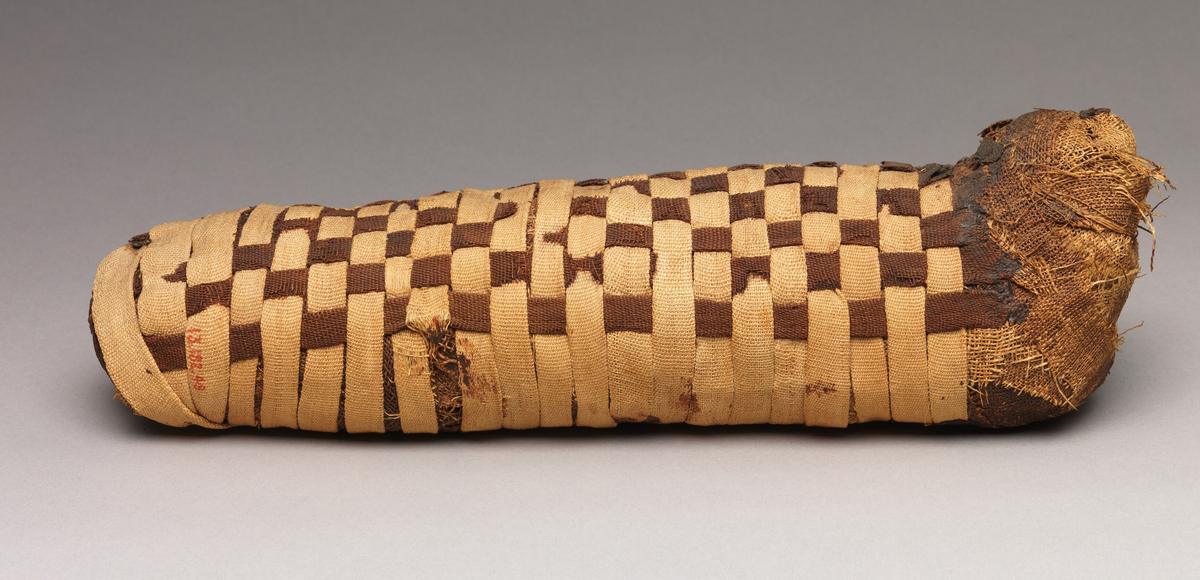
An Egyptian animal mummy wrapped in a checkerboard of dark and light linen strips
Sacred animal mummy of a canid, wrapped in dyed and undyed linen, Egypt, Ptolemaic Period, 332–30 BCE. The Metropolitan Museum of Art · Public domain

1800s (dates unproven)

British and Manx strip patchwork

Strip blocks built around a center square were also sewn in Britain. The Met notes that early British examples cited in two well-known books on British quilts led to the theory that the design began there and crossed the Atlantic.

On the Isle of Man, the Manx Museum holds Log Cabins whose strips are folded and pressed onto a foundation, a method sometimes called the "roof" pattern, but its dated example is from 1870–75. Averil Colby wrote of a Scottish family pattern going back to 1745, without a footnote, and it has never been verified. British books of the 1870s and 1880s treated the design as new and foreign, calling it "Canadian patchwork" or "Loghouse quilting."

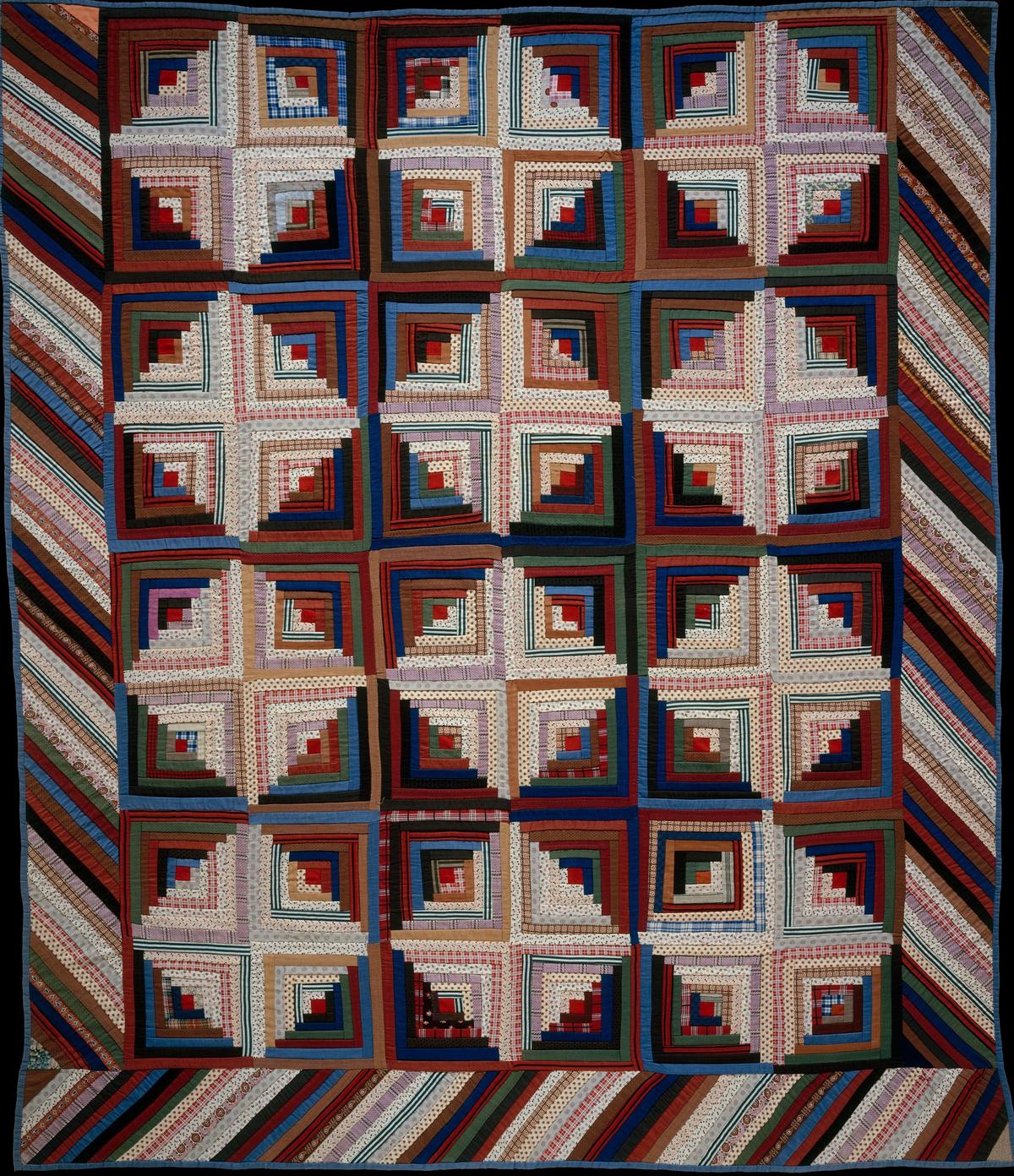
A Log Cabin quilt of square blocks with small red centers, framed by a border of diagonal strips
Log Cabin quilt, Light and Dark variation, United States, about 1865. The Metropolitan Museum of Art · Public domain

1840

The log cabin becomes an American symbol

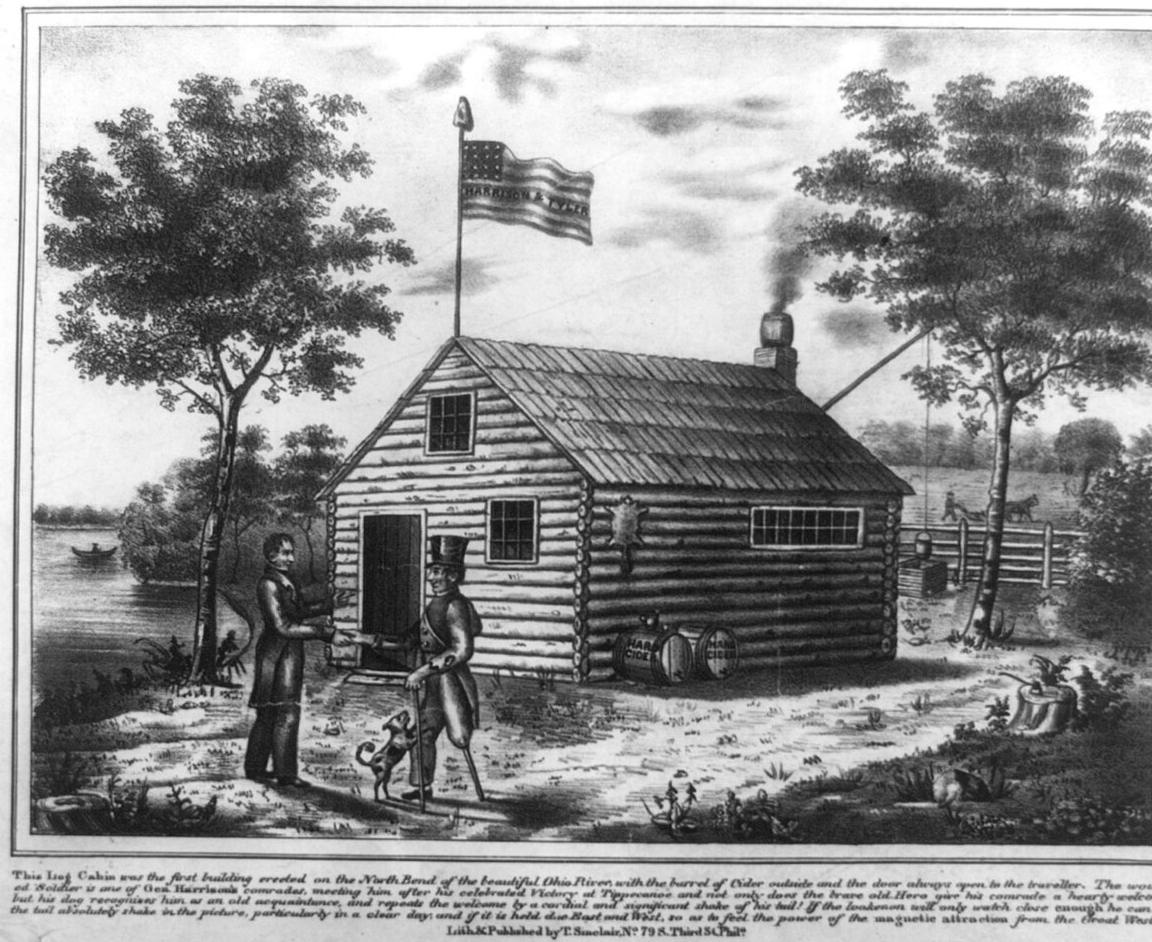
Two decades before the quilt appears in American records, the log cabin was a political emblem. William Henry Harrison's 1840 presidential campaign sold him as a plain man of the frontier, with songs, banners and prints of his cabin at North Bend, Ohio.

By the time quilters gave the name to a block of stacked strips, the humble cabin stood for American virtue.

A black-and-white lithograph of a log cabin flying an American flag, with figures at its door
Thomas Sinclair, Harrison at his log cabin on the North Bend of Ohio, campaign lithograph, Philadelphia, 1840. Library of Congress · Public domain

1860

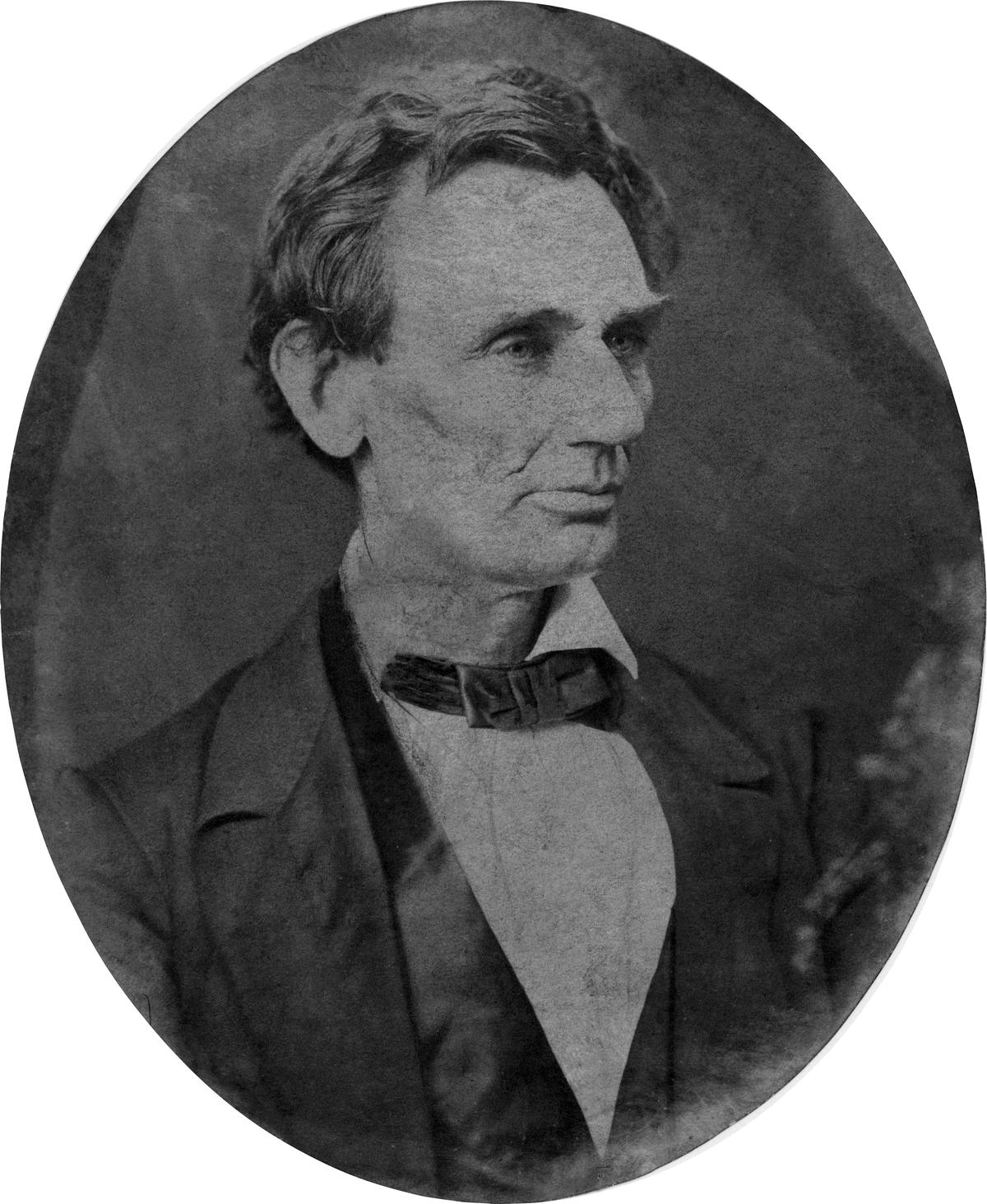
Lincoln, the log-cabin candidate

Abraham Lincoln, born in a one-room log cabin in Kentucky in 1809, ran for president in 1860 as the "Rail Splitter" who had risen from frontier poverty. Many writers link the quilt's sudden popularity to Lincoln and the Union cause, and Brackman notes the pattern seems to have begun with symbolism tied to him.

No document from the time says a quilter named the block for Lincoln, so the connection is best described as likely, not proven.

An oval photograph of a beardless Abraham Lincoln in 1860
Alexander Hesler, Abraham Lincoln, candidate for U.S. president, Springfield, Illinois, June 3, 1860. Library of Congress · Public domain

1861 – 1872

The first records

The name appears in the middle of the Civil War, and within a few years it was everywhere, North and South.

1863

First record by name: the Ohio State Fair

The earliest firm American record of the name comes from textile historian Virginia Gunn, who found Log Cabin quilts commended by name at the Ohio State Fair in 1863 and again in 1868.

During the war, Pennsylvania women in a Log Cabin Aid Society recorded making "1 log cabin quilt" for Union soldiers, and Brackman notes the design was used for Union fundraising. The American Folk Art Museum dates its earliest Log Cabin, a Barn Raising, to 1861–65. No documented American Log Cabin quilt is known from before the war years. See Civil War quilts.

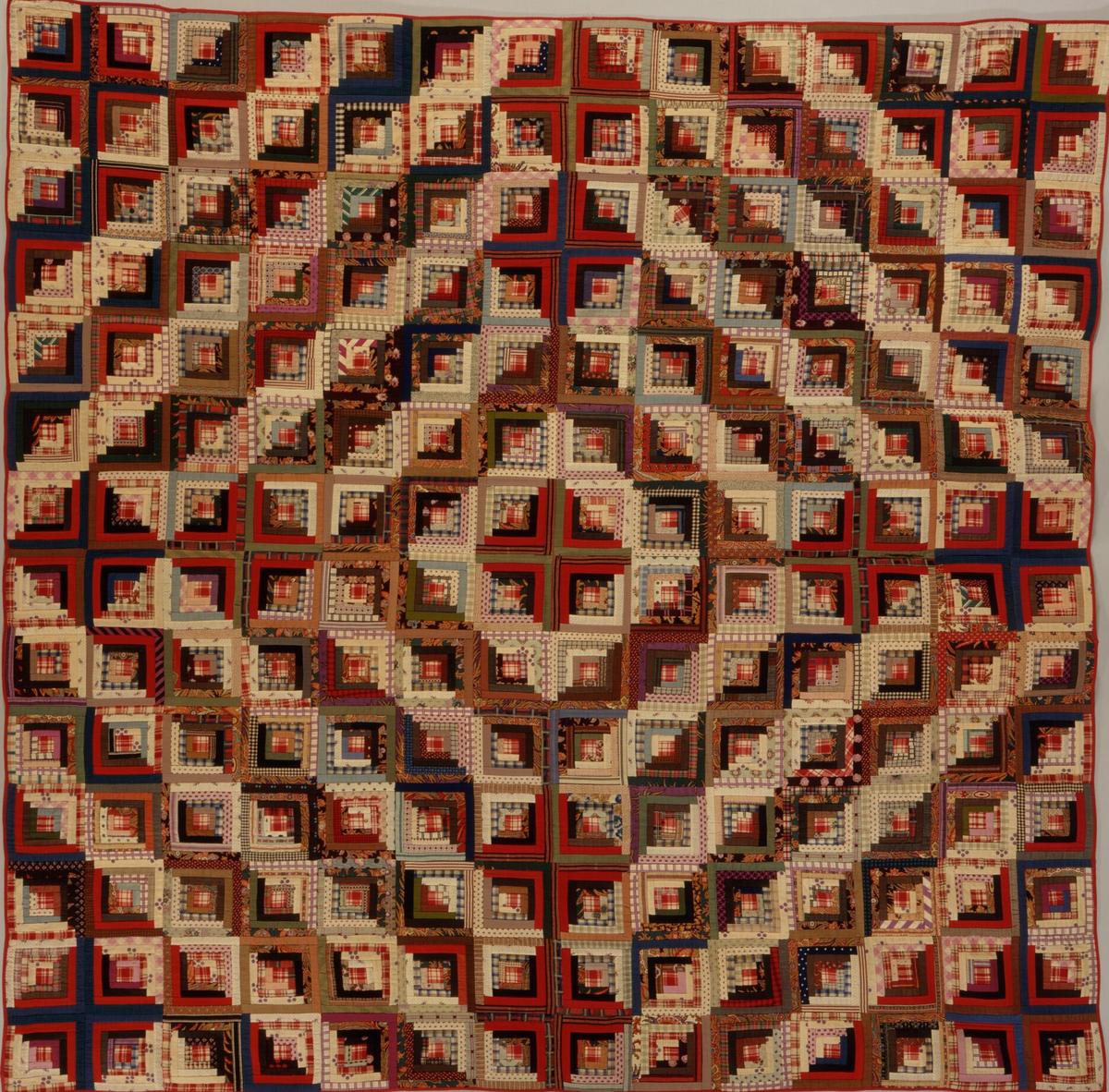
A Log Cabin quilt of small printed blocks whose light and dark halves form concentric diamonds
Log Cabin quilt, Barn Raising variation, wool, silk and printed cotton, Pennsylvania, about 1865. Los Angeles County Museum of Art · Public domain

1866 – 1872

In diaries and at Southern fairs

In June 1866 an Iowa diarist called Abbie "bought Delaine for my log cabin" and spent July working on it, one of the first personal mentions of the pattern.

After the war Southern quilters took it up too. A silk Log Cabin was shown at a Tennessee fair in 1868, Alice Johnston of Spartanburg won $5 at the South Carolina State Fair in 1869, and in 1872 Mrs. J. Hilton of Richland entered one with 6,336 pieces. Whatever its political origins, the pattern quickly crossed North and South.

1870s – 1900

A true fad

In the last quarter of the 1800s the Log Cabin was everywhere, and quilters found that one simple block could make dozens of different quilts.

1870s – 1880s

Strip by strip, on a foundation

Brackman calls the Log Cabin "a true fad in the 1870s and '80s," and fairs between 1870 and 1900 opened whole categories for it. The Shelburne Museum likewise places its greatest popularity in the last quarter of the century.

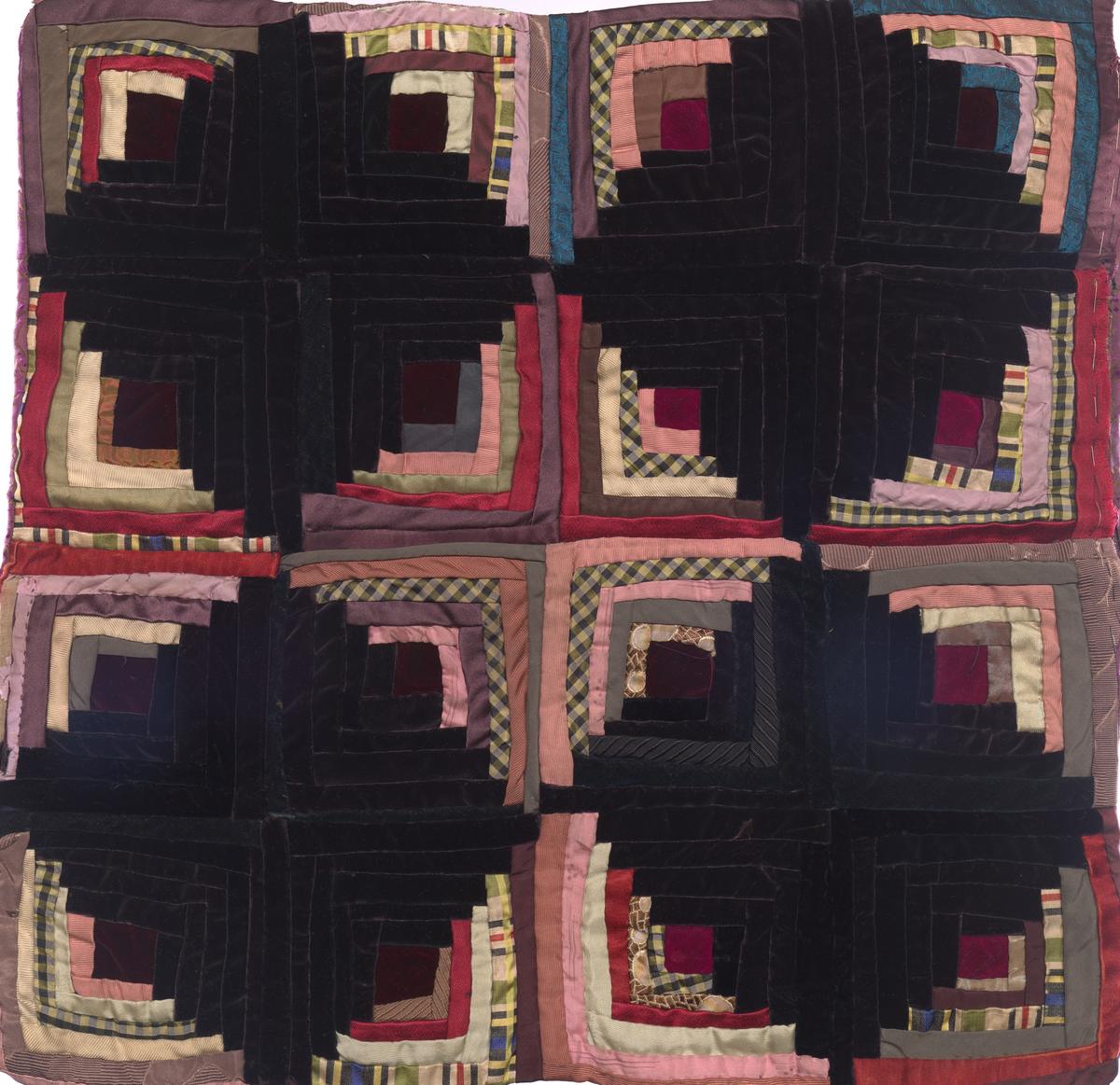
Many were sewn strip by strip onto a foundation square, which made them ideal for small scraps of wool, cotton, silk and velvet; silk and velvet versions served as showy parlor throws. Early dated examples include one embroidered 1874 at the Smithsonian and one dated 1875 found in the United Kingdom. The same decades saw the crazy quilt, also sewn onto foundations.

Close view of Log Cabin blocks in silk and velvet strips, their dark halves meeting in large dark shapes
"Log Cabin" quilt block, silk and velvet, probably Pennsylvania, 1875–1900. Art Institute of Chicago · Public domain

1860s – 1900

One block, many layouts

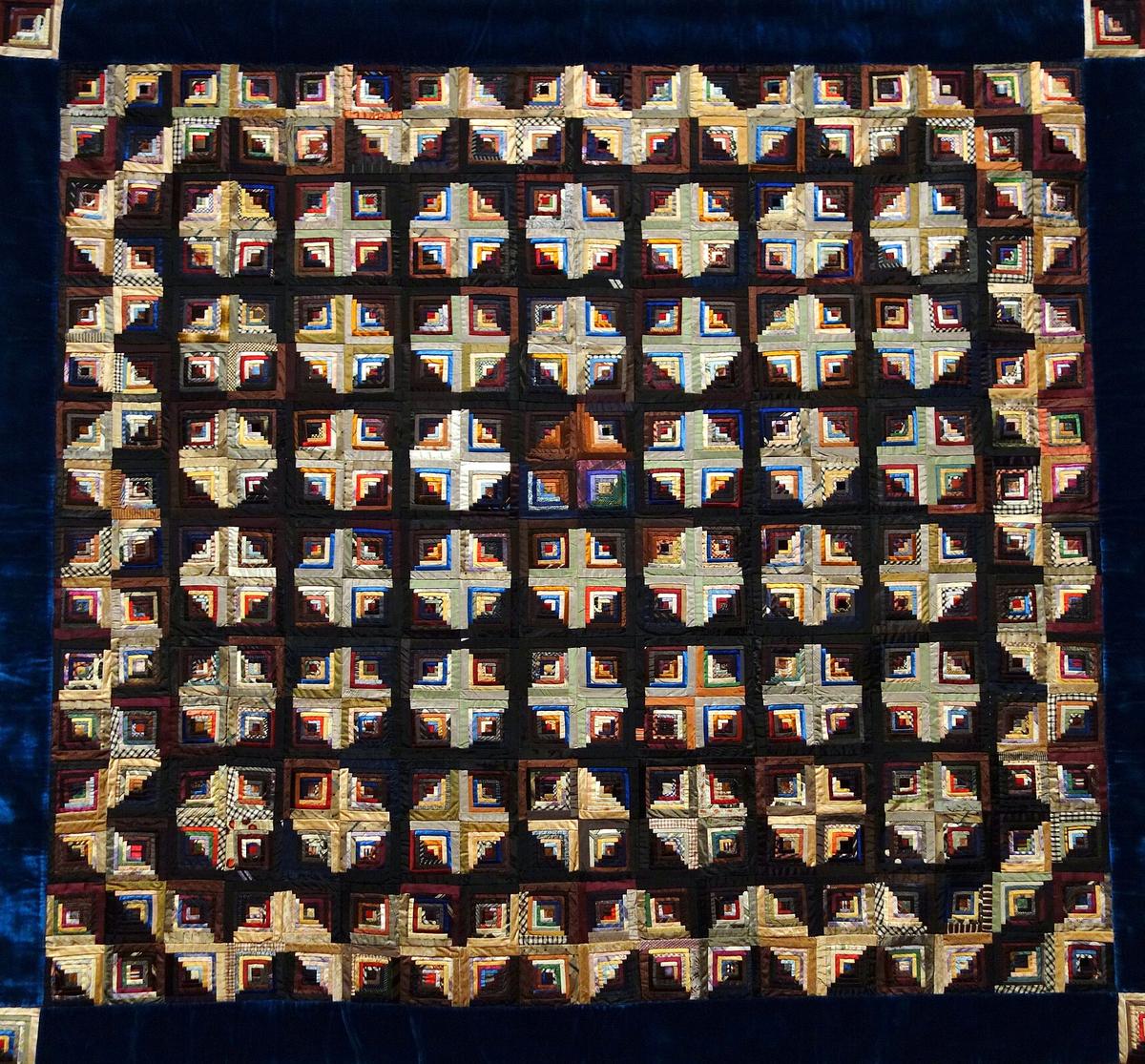
Each Log Cabin block is split on the diagonal into a light half and a dark half, so turning the blocks creates very different quilts. Concentric diamonds radiating from the center became Barn Raising; diagonal stripes became Straight Furrow; blocks grouped into light and dark shapes became Light and Dark, also called Sunshine and Shadow.

Mrs. Herrick of Massachusetts, born in 1798, set her silk Barn Raising in 1879, at about 81. The Met's Straight Furrow of about 1875 runs its stripes in wool and cotton around bright pink centers, and Rebexy Gray of Lincoln, Illinois, made a Sunshine and Shadow in silk and velvet. Brackman cautions that these set names are modern standards whose origins "haven't been studied," so we can't be sure 1870s quilters used them. Try the layouts with the Log Cabin block.

A silk Log Cabin quilt of black, pink, blue and gold diamonds rippling out from a yellow center, with a tiny embroidered flower in each block
Mrs. Herrick (born 1798), Log Cabin quilt, Barn Raising variation, Massachusetts, 1879 (the center of the quilt). Photographed at the Museum of Fine Arts, Boston. Museum of Fine Arts, Boston · Photo: Daderot, CC0
A Log Cabin quilt whose dark halves make diagonal stripes, with bright pink centers and a striped border
Log Cabin quilt, Straight Furrow variation, wool and cotton, Pennsylvania, about 1875. The Metropolitan Museum of Art · Public domain
A silk and velvet Log Cabin quilt with its light halves grouped into crosses on dark, inside a deep blue border
Rebexy Gray, Log Cabin quilt, Sunshine and Shadow variation, Lincoln, Illinois, 1870s. Photographed at the Museum of Fine Arts, Boston. Museum of Fine Arts, Boston · Photo: Daderot, CC0

1850s – 1900

Courthouse Steps

Quilters also changed the block itself. In Courthouse Steps, strips of the same color are added to opposite sides of the center, so the block reads as steps rather than a diagonal split. See the Courthouse Steps block.

The Art Institute of Chicago dates a red and black wool example from New York to about 1850–90, a broad range, and the Smithsonian American Art Museum holds a lavender, black and red one from Pennsylvania of about 1876–1900.

A tall wool quilt of red and black Courthouse Steps blocks that form stepped diamonds, with small green centers
"Log Cabin" quilt, Courthouse Steps variation, wool, New York, about 1850–90. Art Institute of Chicago · Public domain
A wool quilt of lavender and black Courthouse Steps blocks with red centers, inside black and lavender borders
Courthouse Steps quilt, wool, Pennsylvania, about 1876–1900. Smithsonian American Art Museum · CC0

1880s – 1890s

Pineapple, or Windmill Blades

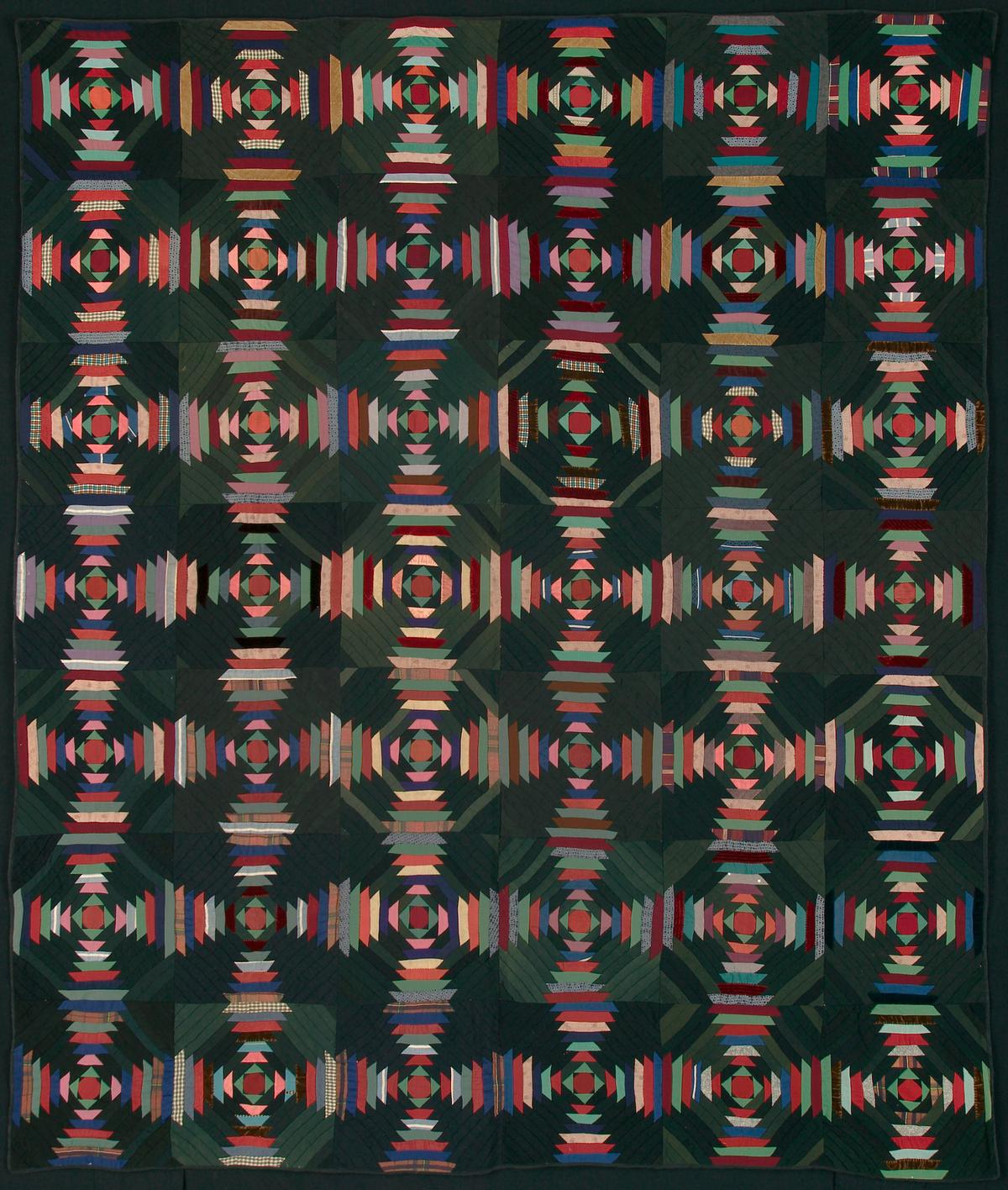
In the Pineapple, also called Windmill Blades, strips are laid at angles around the center to make spinning blades. The Art Institute's Indiana example of the 1880s mixes wool, cotton, silk and velvet, and an Ohio one of about 1890 sets black blades against bright red.

Meanwhile the basic block went mail order: in 1889 the Ladies' Art Company catalog sold it as "Log Patch."

A dark green quilt of Pineapple blocks whose angled strips of many colors spin around each center
Pineapple or Windmill Blades Log Cabin quilt, wool, cotton, silk and velvet, Indiana, 1880s. Art Institute of Chicago · Public domain
A Pineapple Log Cabin quilt of black blades and striped strips on bright red, inside many striped borders
Log Cabin quilt, Windmill Blades variation, Ohio, about 1890. Photographed at the Museum of Fine Arts, Boston. Museum of Fine Arts, Boston · Photo: Daderot, CC0

1900 – today

A lasting favorite

1935 – 1942

Painted for the Index of American Design

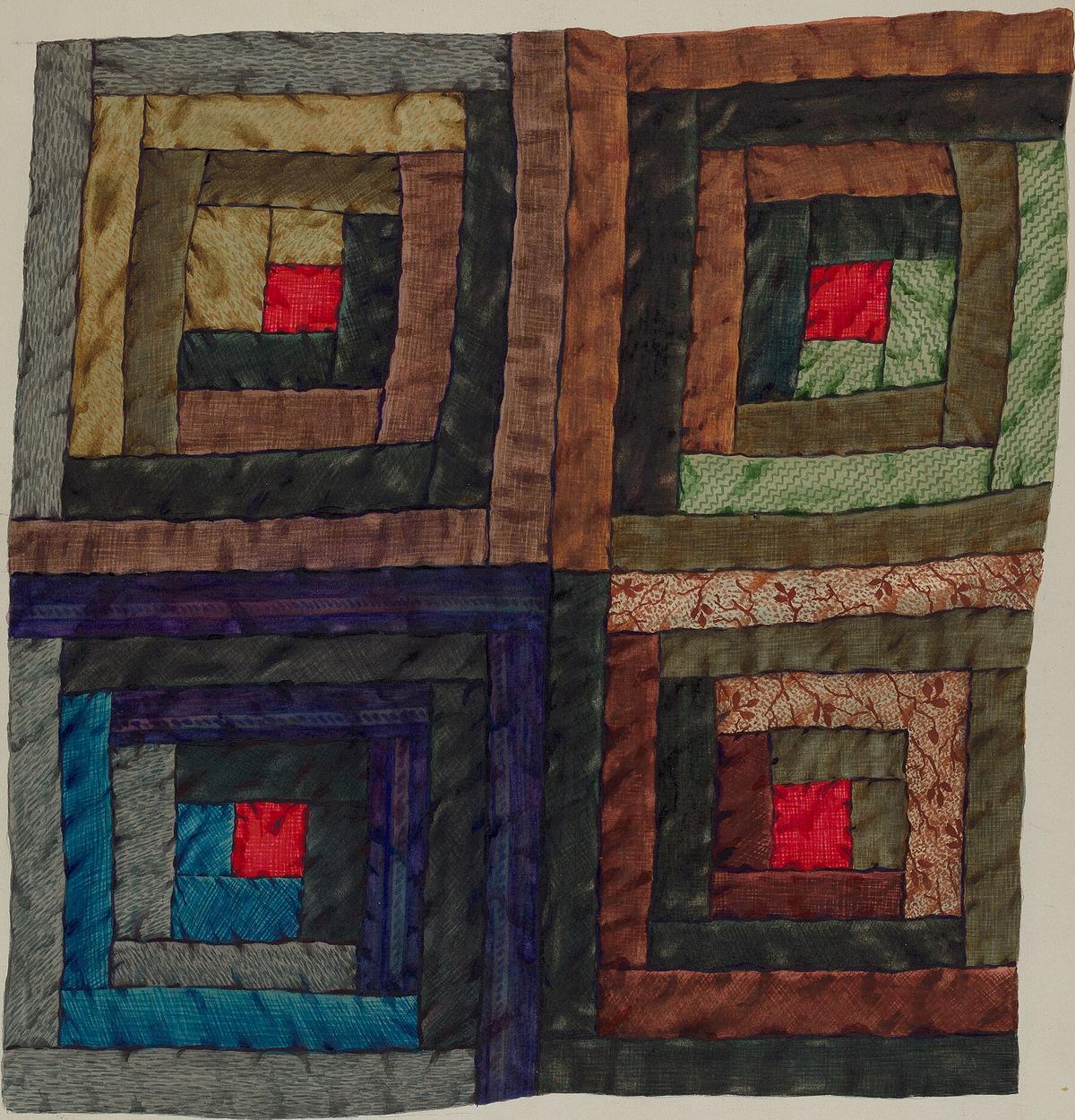
The Log Cabin stayed in steady use into the new century as fashions moved from wool and silk back to cotton. During the Depression, the Federal Art Project's Index of American Design paid artists to record American decorative arts in exact watercolors rather than photographs.

Almost 700 of its renderings show quilts or quilt fabrics, including several Log Cabins such as Ruth M. Barnes's painting of about 1937. The program ended in 1942, and its more than 18,000 watercolors went to the National Gallery of Art in 1943.

A watercolor painting of four Log Cabin blocks in dark silks around red centers
Ruth M. Barnes, Log Cabin Quilt, watercolor for the Index of American Design, about 1937. National Gallery of Art, Washington · CC0

1937 – 2002

Gee's Bend: Housetop and Bricklayer

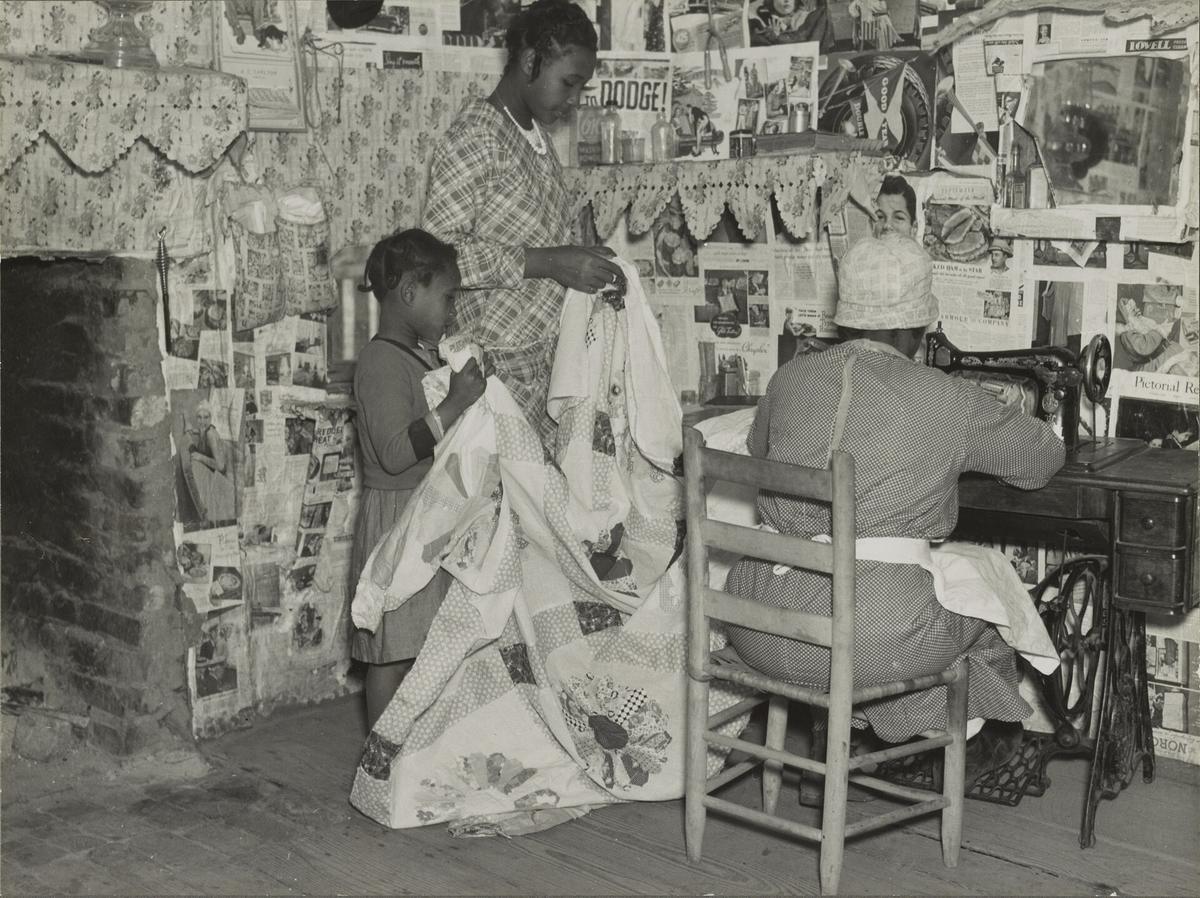
In April 1937 the Farm Security Administration photographer Arthur Rothstein photographed women sewing quilts in Gee's Bend, Alabama. The quilters there built a tradition on Log Cabin ideas: Housetop, one of their most-used patterns, is a concentric-square relative of the Log Cabin often catalogued as a half-log-cabin variation, and Bricklayer is their local name for Courthouse Steps.

The exhibition The Quilts of Gee's Bend opened at the Museum of Fine Arts, Houston in 2002 and at the Whitney Museum of American Art that November, bringing these improvised Log Cabin variations to the art world.

Women and a girl in a room papered with newspapers, sewing a quilt, one of them at a treadle sewing machine
Arthur Rothstein, "Sewing a quilt. Gee's Bend, Alabama," April 1937: women of the Gee's Bend community at work. The quilt they are sewing is not a Log Cabin. Library of Congress, FSA/OWI Collection · Public domain

Today

Still the first block many quilters learn

More than 150 years after the Ohio State Fair, the Log Cabin is still a staple, because it needs only strips and a center square and its light and dark halves can be turned into endless layouts. Museums now collect Gee's Bend Housetops, such as Jessie T. Pettway's of about 1975 at the Art Institute of Chicago and Lucy P. Pettway's at the National Gallery of Art, beside 19th-century Barn Raisings.

Today's improvised "wonky" Log Cabins follow the same idea of building a block outward from the center, strip by strip. In Quiltler you can try a Log Cabin, an Off-Center Log Cabin or a Courthouse Steps and turn the blocks into any layout before you cut a strip.

Log Cabin myths

Few blocks carry as many stories as the Log Cabin. Here is what quilt historians and museum records actually say.

Myth

The Log Cabin pattern comes from Egyptian mummy wrappings.

A resemblance, not an origin. Some animal mummies have light-and-dark linen strips in similar patterns, and an 1897 editor even suggested calling the quilt "Mummy" patchwork, but nothing connects the wrappings to 19th-century quilters.
Unproven

The Log Cabin began on the Isle of Man, or in Scotland in 1745.

Manx folded-strip quilts are real, but the Manx Museum's dated example is from 1870–75, and the 1745 Scottish claim has never been verified. British manuals of the 1870s and 1880s called the design new and Canadian.

Not supported

Pioneers living in log cabins invented the quilt in the early 1800s.

The name and pattern appear in American records only in the 1860s, and the great fad came in the 1870s and 1880s, often in silks and velvets for the parlor rather than the frontier cabin.

Likely, not proven

Log Cabin quilts were made in honor of Abraham Lincoln.

The pattern appears in records from 1863, during Lincoln's presidency, and the log cabin was a powerful political symbol, but no period source says the block was named for him. Southern quilters adopted it eagerly after the war.

A story, not a record

A red center stands for the hearth, and a yellow one for a light in the window.

Red centers were common, and the Met calls the hearth reading "commonly accepted," but one scholar argues the red square is the sun on the fields instead. No 19th-century source explains what the center meant.

Myth

A Log Cabin with a black center, hung on a line, marked an Underground Railroad safe house.

The idea comes from a 1999 book based on one family's account. Historians have found no 19th-century source for quilt signals, and no American Log Cabin is documented before the Civil War, when the Underground Railroad was ending. See the Underground Railroad quilt code.

Sew a Log Cabin of your own

Every guide has a cutting chart in three sizes and shows how to set the blocks into a whole quilt.

Log Cabin quilt questions

When was the Log Cabin quilt invented?

No one knows who made the first one. The earliest firm American record of the name is from the Ohio State Fair in 1863, found by textile historian Virginia Gunn, and no documented American Log Cabin is known from before the Civil War. The block was a true fad in the 1870s and 1880s.

Why is it called a Log Cabin quilt?

Its strips are called logs, and quilters named the block of stacked strips after the log cabin, which by the 1860s was a strong American symbol: William Henry Harrison campaigned on one in 1840, and Abraham Lincoln was born in one. Many writers link the name to Lincoln, which is likely but not proven.

What does the red center of a Log Cabin quilt mean?

You'll often read that a red center stands for the hearth and a yellow one for a light in the window. Red centers were common, and the Met calls the hearth reading "commonly accepted," but no 19th-century source explains them, and one scholar reads the red square as the sun on the fields. Treat the meaning as a story, not a record.

Were Log Cabin quilts used on the Underground Railroad?

There is no evidence that they were. The story of a black-centered Log Cabin hung out to mark a safe house comes from a 1999 book based on one family's account. Historians have found no 19th-century source for quilt signals, and no American Log Cabin is documented before the Civil War. More on the Underground Railroad quilt code.

What are the Log Cabin quilt layouts?

Because each block is half light and half dark, turning the blocks makes different quilts: Barn Raising (diamonds rippling out from the center), Straight Furrow (diagonal stripes) and Light and Dark, also called Sunshine and Shadow. Changing the block gives Courthouse Steps and Pineapple, also called Windmill Blades. These layout names are modern standards; 19th-century records mostly just say "log cabin."

What is the oldest Log Cabin quilt?

The American Folk Art Museum dates its earliest Log Cabin, a Barn Raising, to 1861–65, and LACMA and the Met hold examples from about 1865. Early dated pieces include one embroidered 1874 at the Smithsonian and one dated 1875 found in the United Kingdom. Be wary of any lone date much earlier than the 1860s.

What is a Gee's Bend Housetop quilt?

Housetop is one of the most-used patterns of the quilters of Gee's Bend, Alabama: squares inside squares, a relative of the Log Cabin often catalogued as a half-log-cabin variation. Their name for Courthouse Steps is Bricklayer. The exhibition The Quilts of Gee's Bend brought them to the art world in 2002.

More quilt history

Sources and image credits

  1. Barbara Brackman, "Log Cabin: How Old Is the Name?" (Quilts & Fabric: Past & Present, 2010)
  2. Barbara Brackman, "Southern Log Cabin Quilts After the War" (Civil War Quilts blog, 2020)
  3. Barbara Brackman, "Cat Mummies & Log Cabins" (2021)
  4. The Quilters' Guild (UK), "Research as Inspiration: Log Cabin"
  5. The Met: Quilt, Log Cabin pattern, Light and Dark variation, about 1865
  6. The Met: Quilt, Log Cabin pattern, Straight Furrow variation, about 1875
  7. The Met: Sacred animal mummy of a canid, Ptolemaic Period
  8. Manx National Heritage iMuseum: Log Cabin Quilt, 1870–75
  9. Library of Congress: Harrison's log cabin at North Bend, lithograph, 1840
  10. National Park Service: Abraham Lincoln Birthplace National Historical Park
  11. American Folk Art Museum: Log Cabin quilt, Barn Raising variation, 1861–65
  12. LACMA: Quilt, Log Cabin (Barn Raising variation), about 1865
  13. Shelburne Museum: Log Cabin Quilts
  14. Art Institute of Chicago: "Log Cabin" quilt, Courthouse Steps variation, about 1850–90
  15. Art Institute of Chicago: Pineapple or Windmill Blades Log Cabin quilt, 1880s
  16. National Gallery of Art: Creating the Index of American Design
  17. International Quilt Museum: World Quilts, Index of American Design
  18. Souls Grown Deep: "Log Cabin"—"Courthouse Steps" variation (local name: "Bricklayer")
  19. National Gallery of Art: Lucy P. Pettway, Housetop—Nine-Block Half-Log Cabin Variation
  20. Whitney Museum of American Art: The Quilts of Gee's Bend, 2002–03
  21. National Gallery of Art: Quilts Embody the Legacy of Black America
  22. NPR: The enduring story of Underground Railroad quilts (2024)
  23. Smithsonian Folklife Magazine: Underground Railroad Quilt Codes

Every picture is in the public domain or released under CC0: the Metropolitan Museum of Art, the Art Institute of Chicago, the Los Angeles County Museum of Art, the Smithsonian American Art Museum, the National Gallery of Art and the Library of Congress. Three quilts at the Museum of Fine Arts, Boston are shown in a visitor's gallery photographs, released under CC0. Each caption names the object and links to its record.