Quilting history · Amish quilts

The History of Amish Quilts

Plain colors, bold shapes, fine stitches

Big shapes, solid colors and the finest quilting in the plain spaces. Amish women came late to quilting, and for decades their quilts stayed on farmhouse beds. Then, in the 1970s, collectors and critics decided they were art. Here is the story, from Lancaster County and the Midwest to the Smithsonian, with quilts from the Minneapolis Institute of Art, the Smithsonian, the Met and the Art Institute of Chicago.

  • 15 moments
  • 1860s to today
  • 18 museum photographs
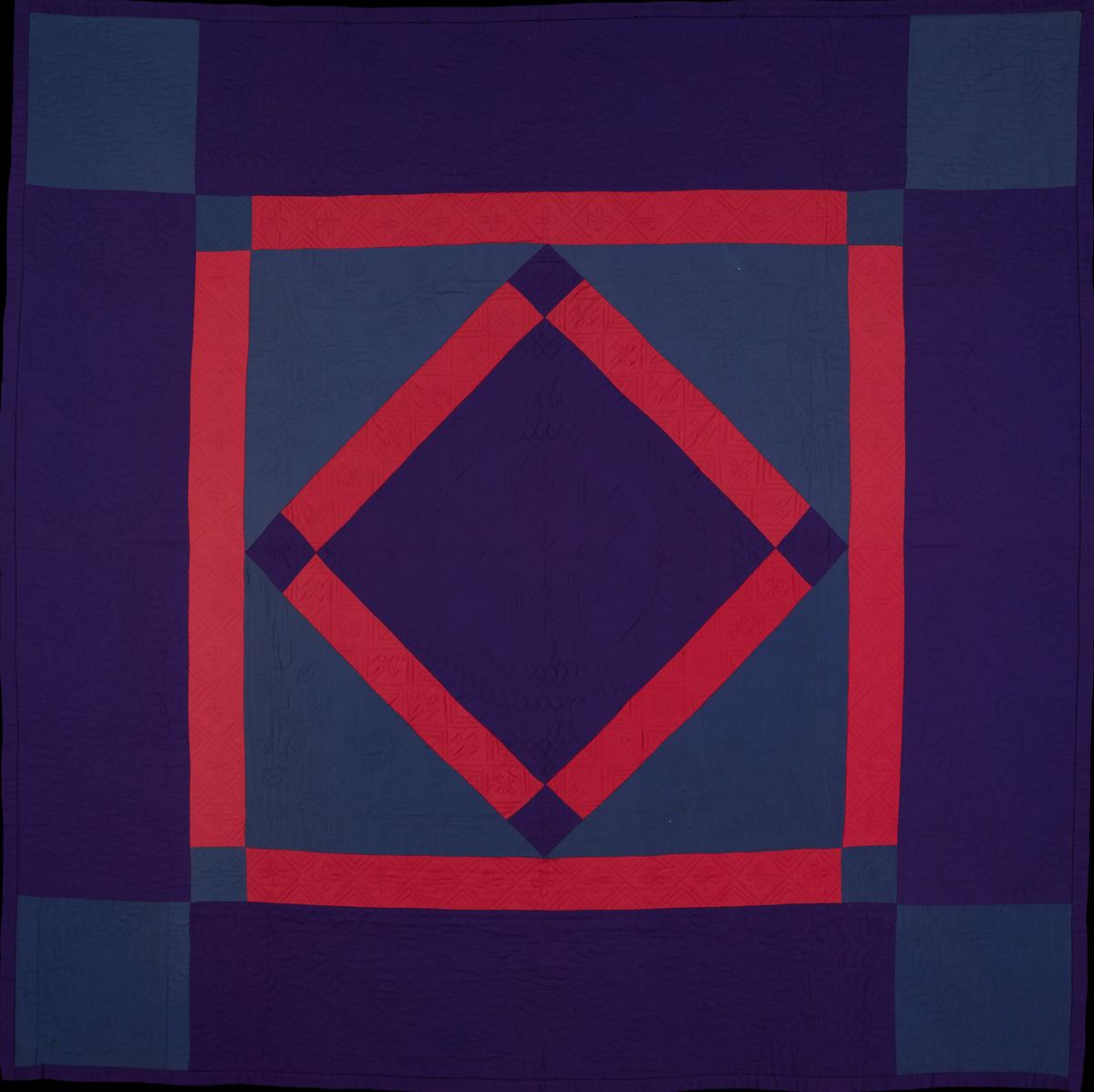
  • An Amish quilt with a purple diamond inside a blue square, framed by red bars and a wide purple border with blue corner blocks
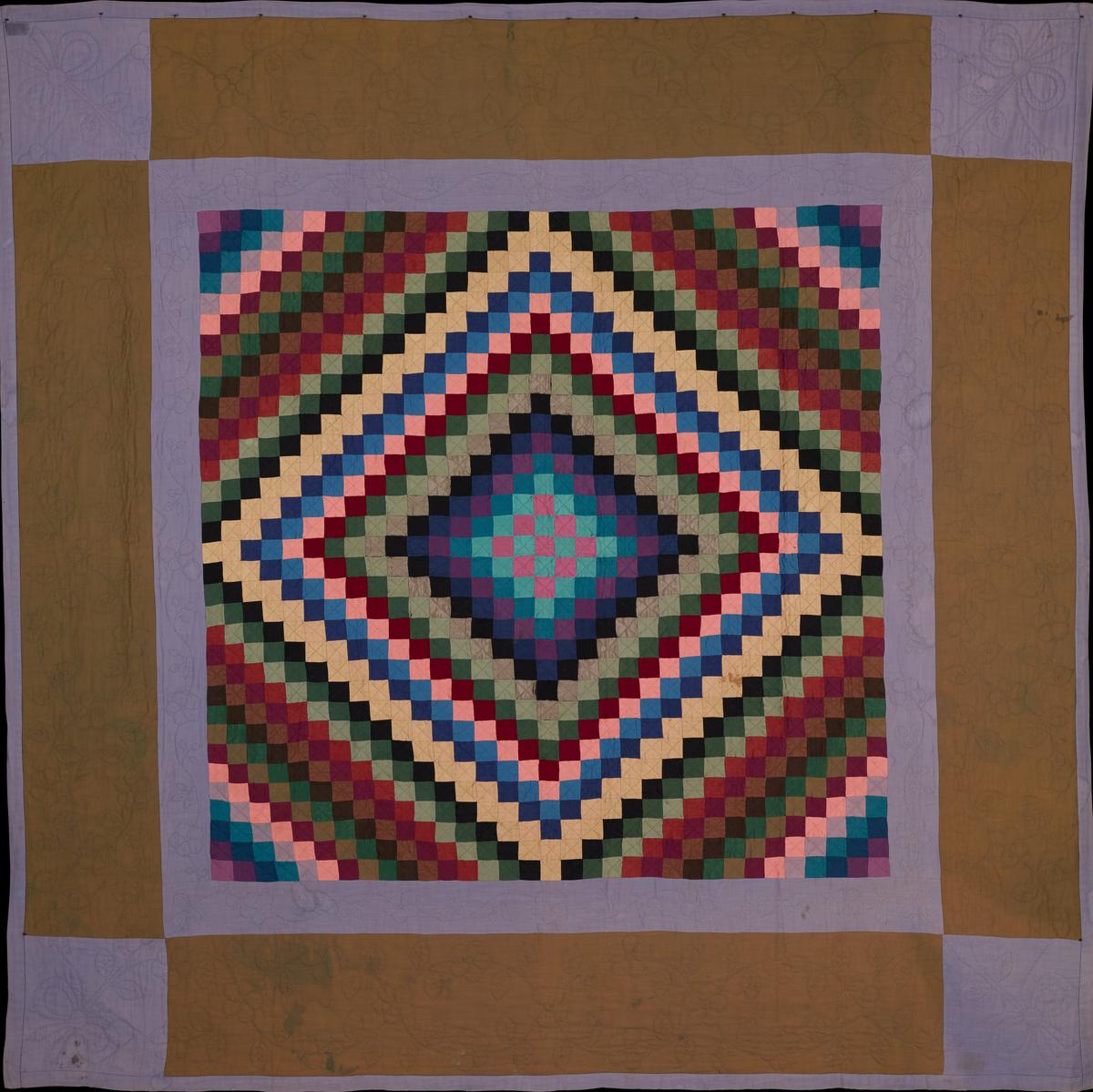
  • A Sunshine and Shadow quilt of small squares set in rings of color around the center, in lavender and olive borders
  • A cotton crazy quilt of bold black, yellow, red and blue strips in square blocks, inside a border of slanted stripes on black
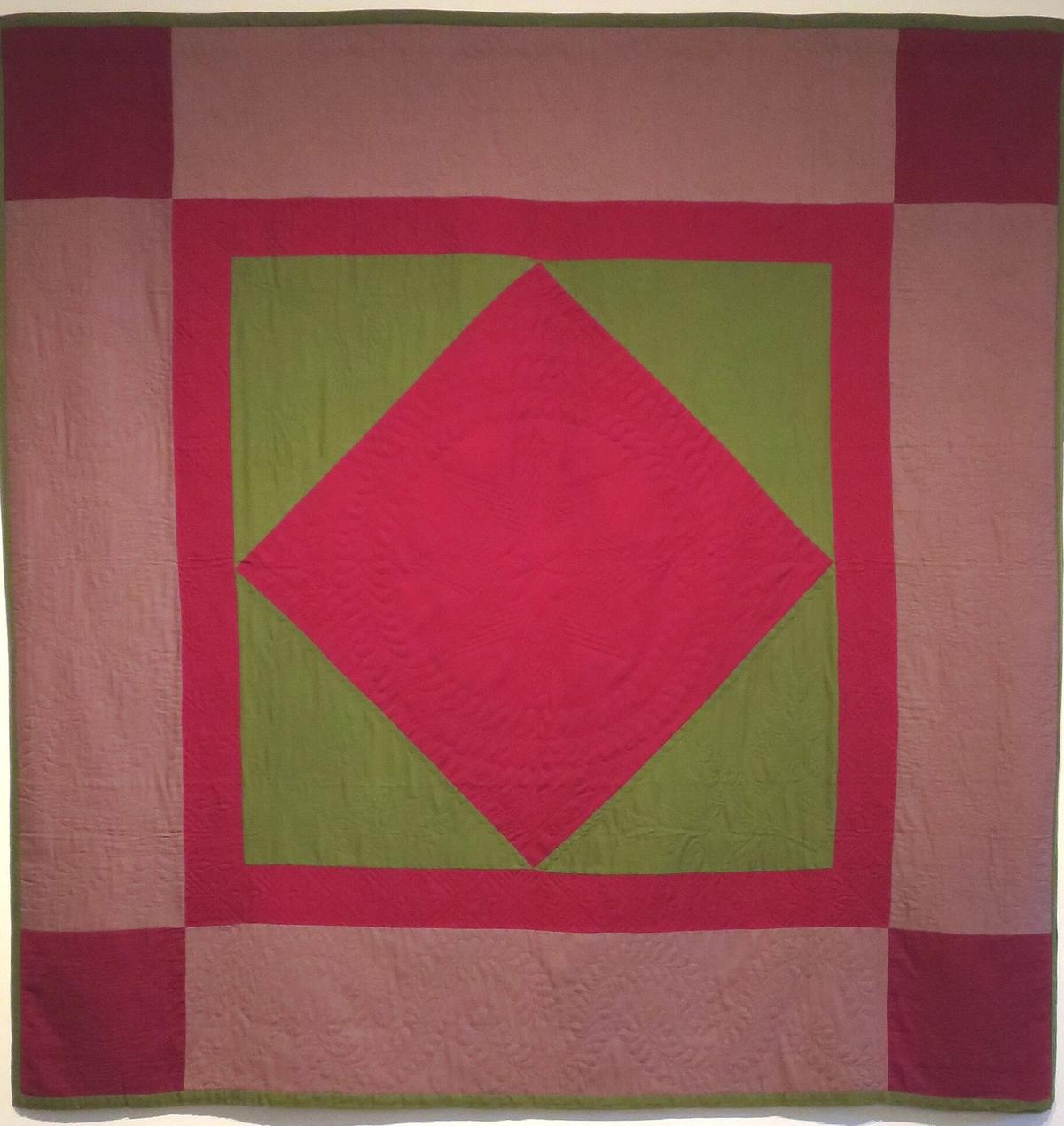
  • A wool Amish quilt with a large red diamond on a green square, framed in red and wide pink borders with dark corner blocks
  • A quilt of small multicolored triangles forming a lattice around black squares, with a pink inner border and a wide black outer border
  • An Amish quilt with a deep red diamond inside a pink frame on blue, set in a wide green border with blue corner blocks

When did the Amish start making quilts?

Amish women began making quilts in significant numbers only in the mid-to-late 1800s, later than many of their non-Amish neighbors, even though the Amish had been in Pennsylvania since the 1700s. The first Amish quilts with stitched-in dates come from the 1860s and 1870s. The "classic" Amish quilts that collectors prize date from about 1870–1880 to the 1940s or 1950s, and Amish women still make quilts today.

1690s – 1890s

Where Amish quilts came from

The Amish came to Pennsylvania in the 1700s. Their quilts came more than a century later.

1690s – 1700s

Who the Amish are

The Amish take their name from Jacob Amman, a conservative Swiss Anabaptist leader who split from the Mennonites in the 1690s over church discipline. Amish families emigrated to Pennsylvania in the 1700s, and the Lancaster County settlement grew into one of the largest in the world.

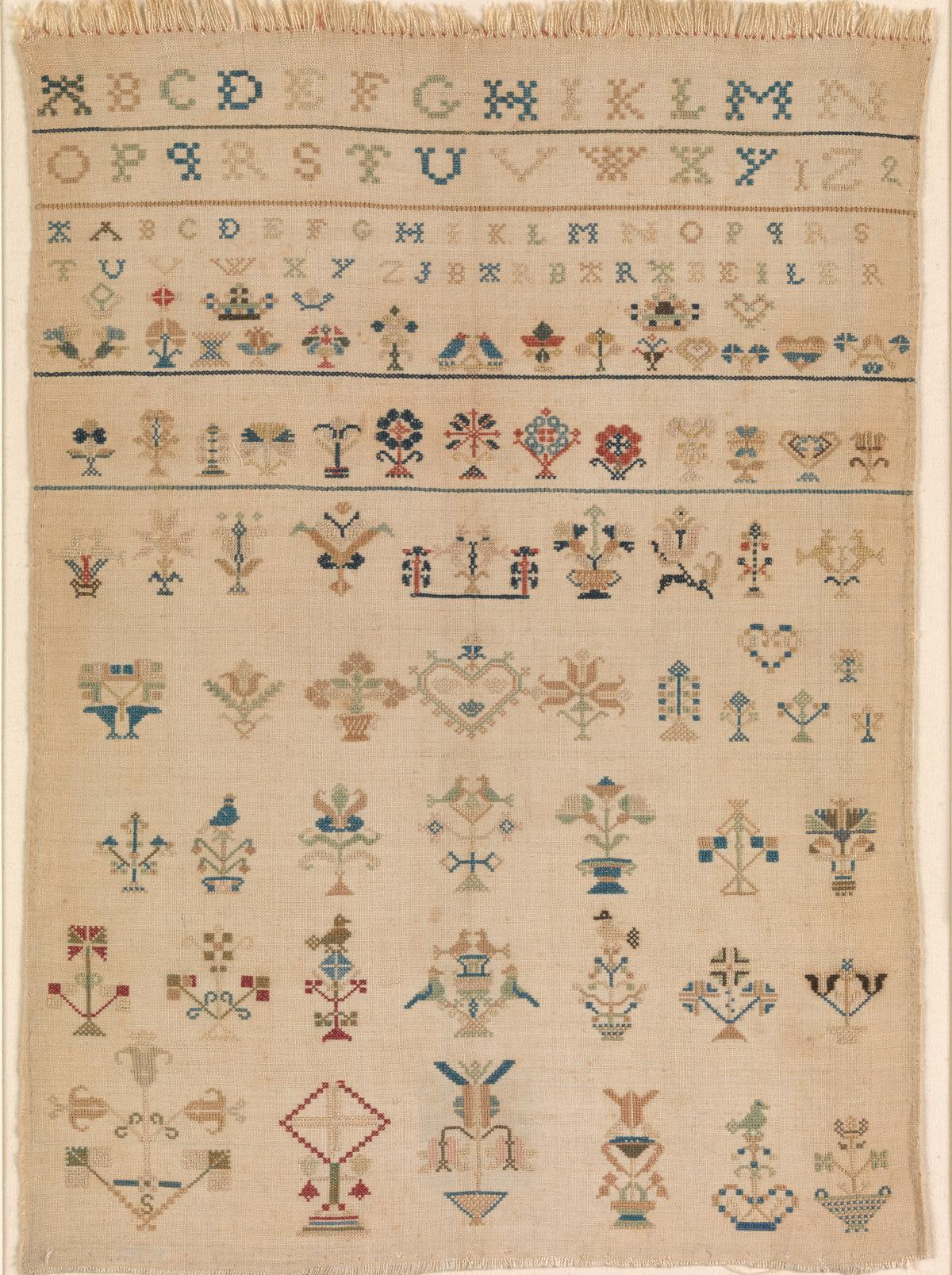
They shared a Pennsylvania German needlework culture with their neighbors. Early in the 1800s an Amish girl, Barbara Beiler, stitched a sampler of alphabets and 73 motifs that is now at the Met.

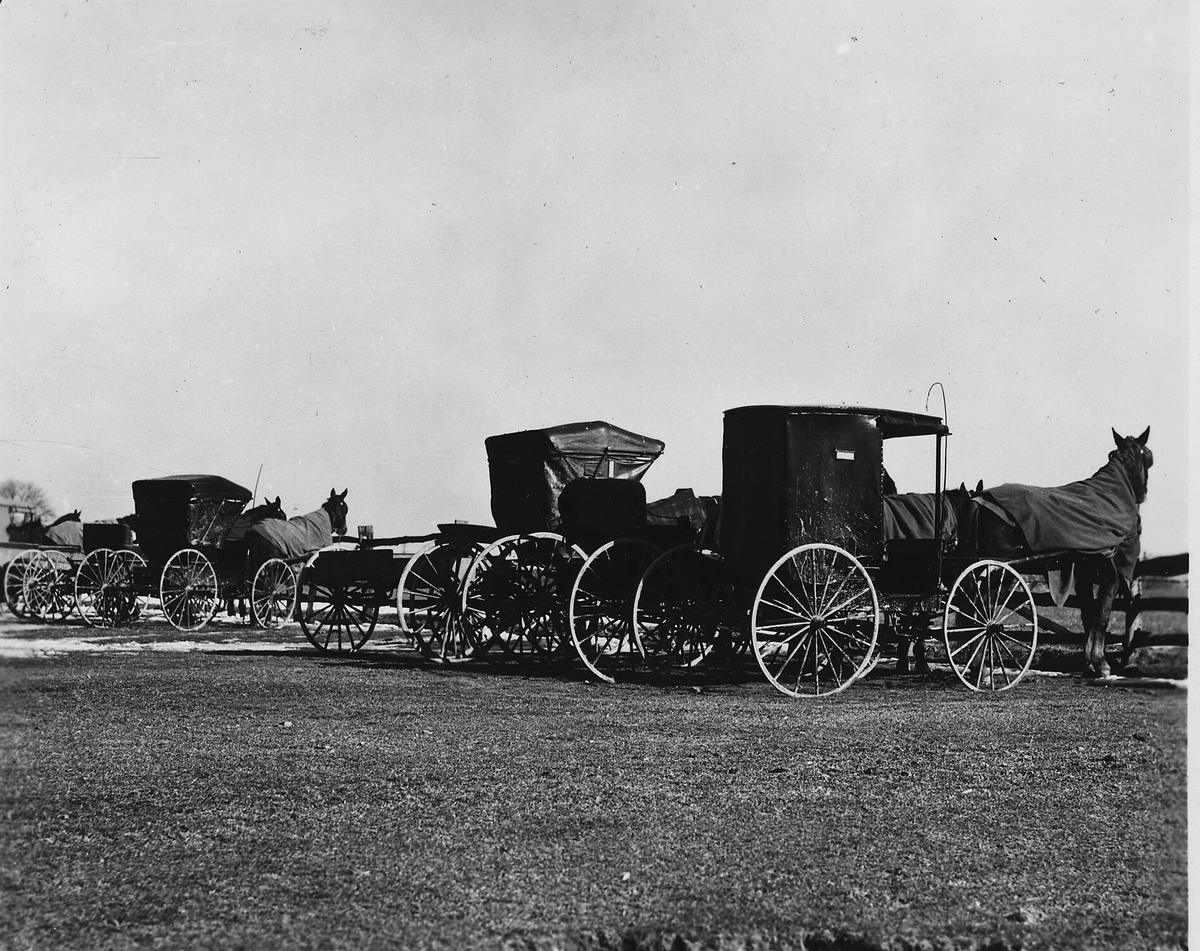
A row of horse-drawn carriages and horses standing in a field
Irving Rusinow, Amish and Mennonite carriages, Lancaster County, Pennsylvania, 1941. U.S. National Archives · Public domain
A linen sampler embroidered with alphabets, numbers and rows of small Pennsylvania German flowers, birds and trees
Barbara Beiler, Amish sampler, Lancaster County, Pennsylvania, early 19th century. The Metropolitan Museum of Art · Public domain

Mid-to-late 1800s

The Amish take up quilting

Amish women began making quilts in significant numbers only in the mid-to-late nineteenth century, later than many of their non-Amish neighbors. The first Amish quilts with stitched-in dates come from the 1860s and 1870s.

Quiltmaking seems to have spread slowly, and somewhat independently, through the settlements in Pennsylvania, Ohio, Indiana and Illinois. In 1900 there were only about 4,800 Amish, in fewer than twenty settlements. Many of the earliest identified Amish quilts include machine stitching.

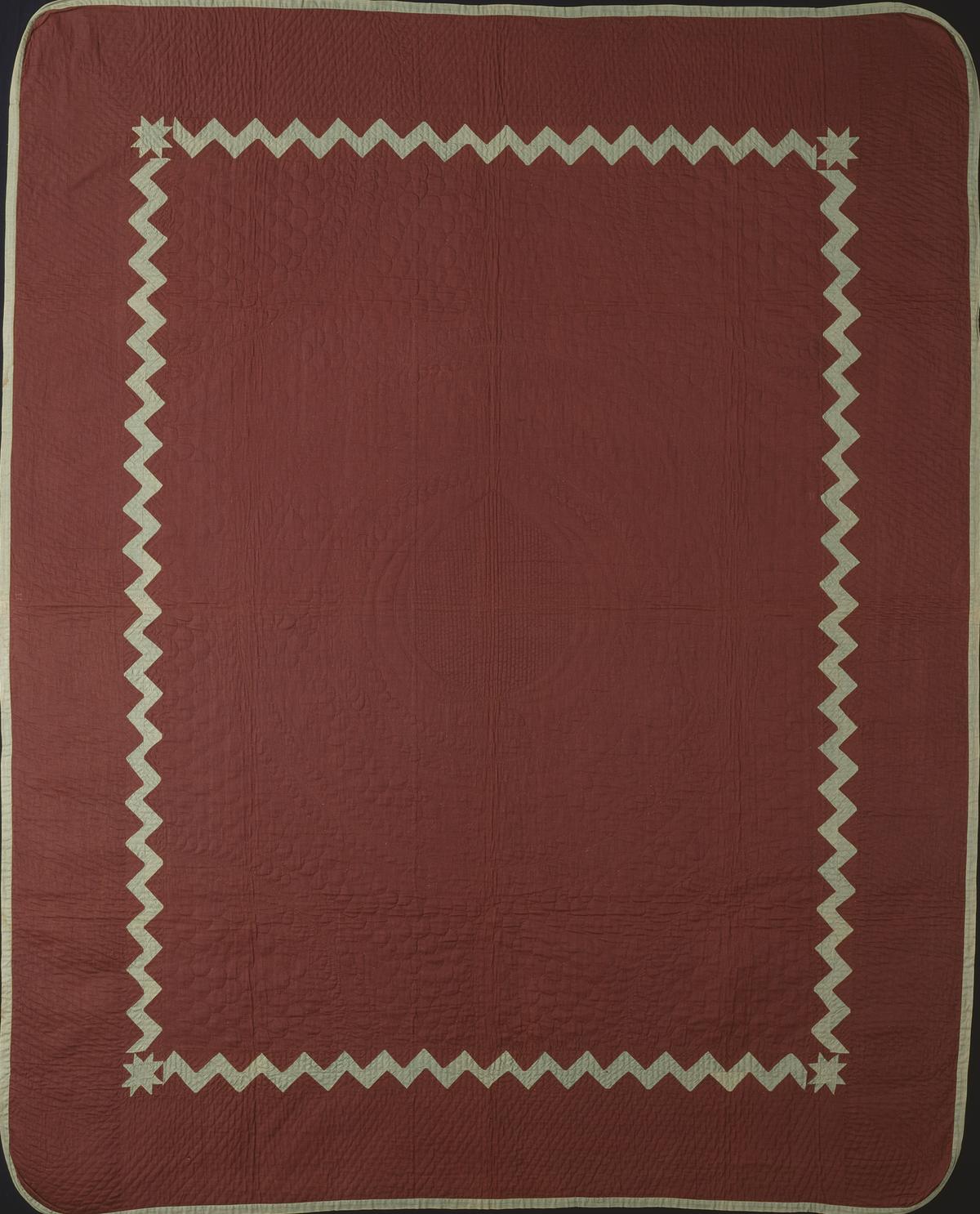
A plain dark red cotton quilt with a narrow white sawtooth border inside a wide red frame
'Amish Plain' quilt, Holmes County, Ohio, about 1890. Art Institute of Chicago · Public domain

1892

A rare dated Lancaster quilt

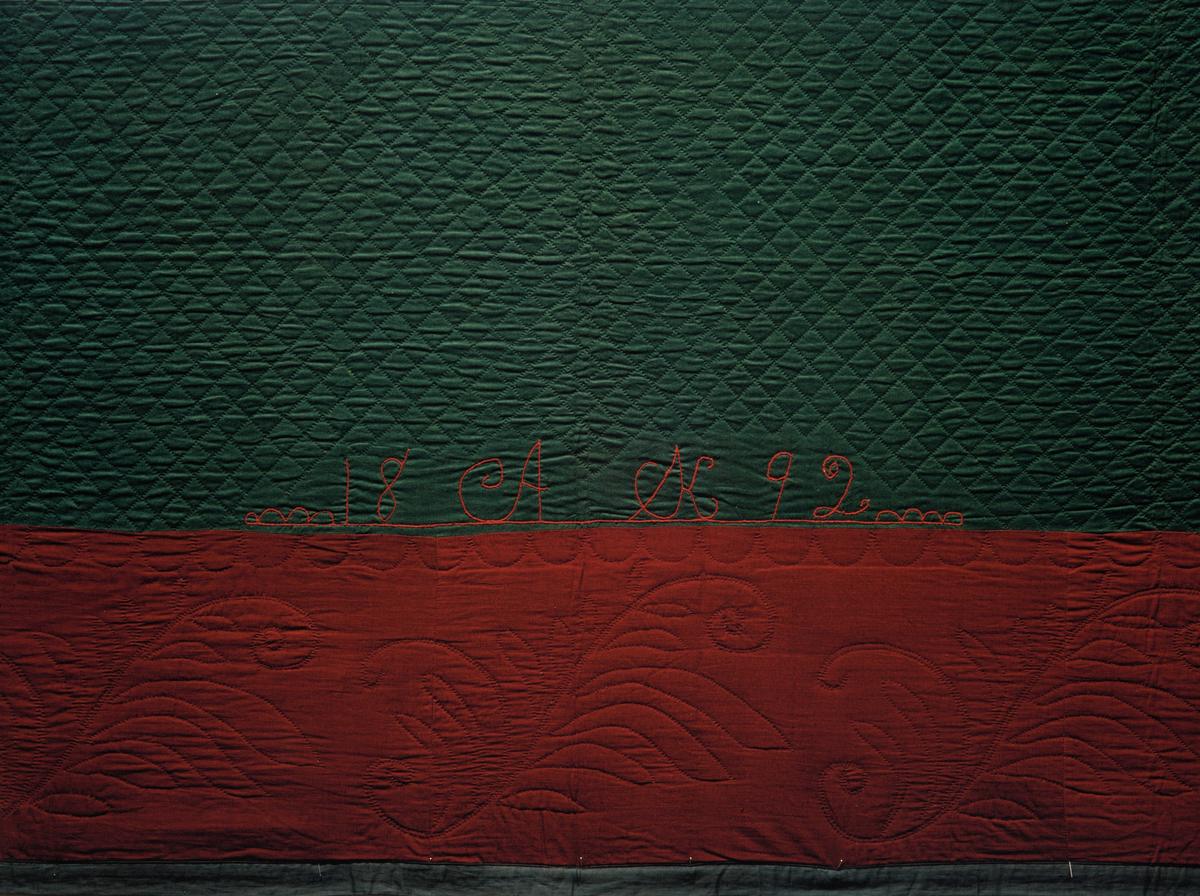
Pennsylvania Amish quilts were rarely signed or dated, which makes a Center Square and Bars quilt at the Met unusual: "18 A K 92" is embroidered in red wool chain stitch at the bottom of its green center. The Met calls it one of the few Amish quilts that can be properly documented to the nineteenth century.

Its simple layout, a center panel framed by bars and borders, is an early form of the centrally focused patterns Lancaster quilters favored.

Close-up of a green wool quilt center finely quilted in diamonds, with 18 A K 92 embroidered in red above a red border quilted with feathers
Detail of a Center Square and Bars quilt, Lancaster County, Pennsylvania, 1892: "18 A K 92" in red wool chain stitch. The Metropolitan Museum of Art · Public domain

About 1880 – 1940s

The classic Amish quilt

Two families of style grew up: the big, centered wool quilts of Lancaster County, and the block quilts of the Midwest.

About 1880 – 1940

The Lancaster County look

Lancaster County Amish quilts use a small set of large, centered designs: Center Diamond (also called Diamond in the Square), Bars and Split Bars, Center Square, Sunshine and Shadow, and a few block patterns such as the Double Nine Patch. The Met notes that fewer than ten designs were considered acceptable under the Ordnung, the community's rules.

They are typically square, with wide borders and corner blocks, pieced from large pieces of solid wool in deep, saturated colors; the Met notes that center-diamond quilts were sewn from large pieces likely bought with the quilt in mind. The plain spaces carry the most elaborate quilting: feather wreaths, stars, tulips, roses and feather vines.

A wool Amish quilt with a large red diamond on a green square, framed in red and wide pink borders with dark corner blocks
Diamond in the Square quilt, Lancaster County, Pennsylvania, about 1910 (Honolulu Museum of Art). Honolulu Museum of Art · photo Hiart, CC0
An Amish quilt with a purple diamond inside a blue square, framed by red bars and a wide purple border with blue corner blocks
Diamond in Square quilt, Pennsylvania Amish, about 1910. Minneapolis Institute of Art · Public domain

1880s – 1950s

Solid colors, from wool to cotton and beyond

The classic Lancaster quilts are wool, while Midwestern quilts more often used cotton. Over the twentieth century makers added satins and synthetics: the Minneapolis Institute of Art's Sunshine and Shadow quilt mixes cottons, satins, fine dress wools and synthetics.

Collectors and museums usually date the "classic" Amish quilts from about 1870–1880 to the 1940s or 1950s.

A Sunshine and Shadow quilt of small squares set in rings of color around the center, in lavender and olive borders
Sunshine and Shadow quilt, Pennsylvania Amish, about 1920. Minneapolis Institute of Art · Public domain
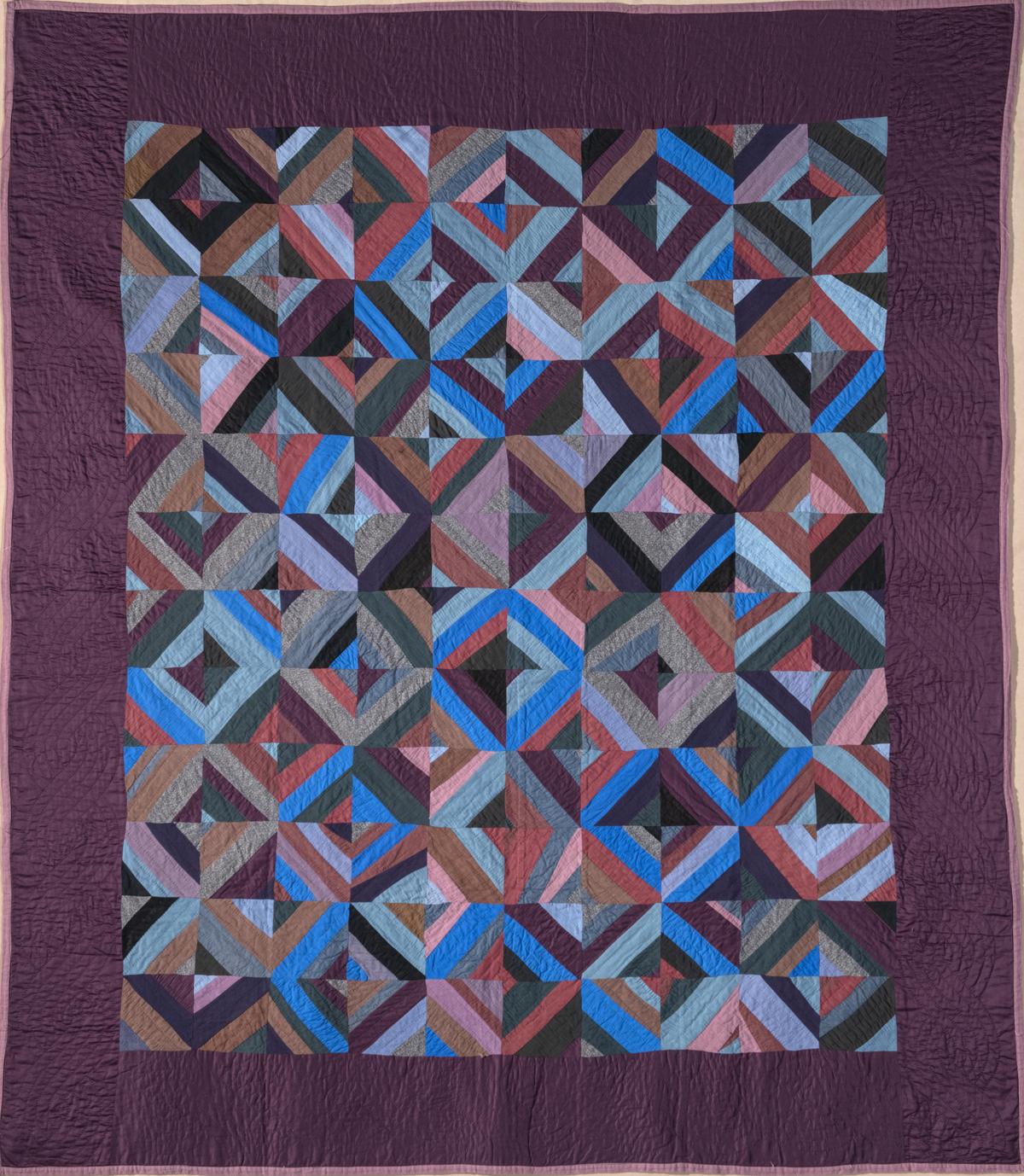
A quilt of striped triangle blocks in blues, grays and pinks inside a wide purple border
Roman Stripes variation, about 1940, from the Faith and Stephen Brown collection of Amish quilts. Smithsonian American Art Museum, Gift of Faith and Stephen Brown · CC0

1880s – 1940s

Why no prints?

Amish quilt tops are pieced from solid, unpatterned fabrics in simple geometric shapes. The Minneapolis Institute of Art notes that Amish codes rejected ostentation, so quilters avoided appliqué; printed cottons sometimes appear on the backs.

The International Quilt Museum sees two Amish values in the quilts: Gelassenheit, yielding to God and community, and careful adaptation.

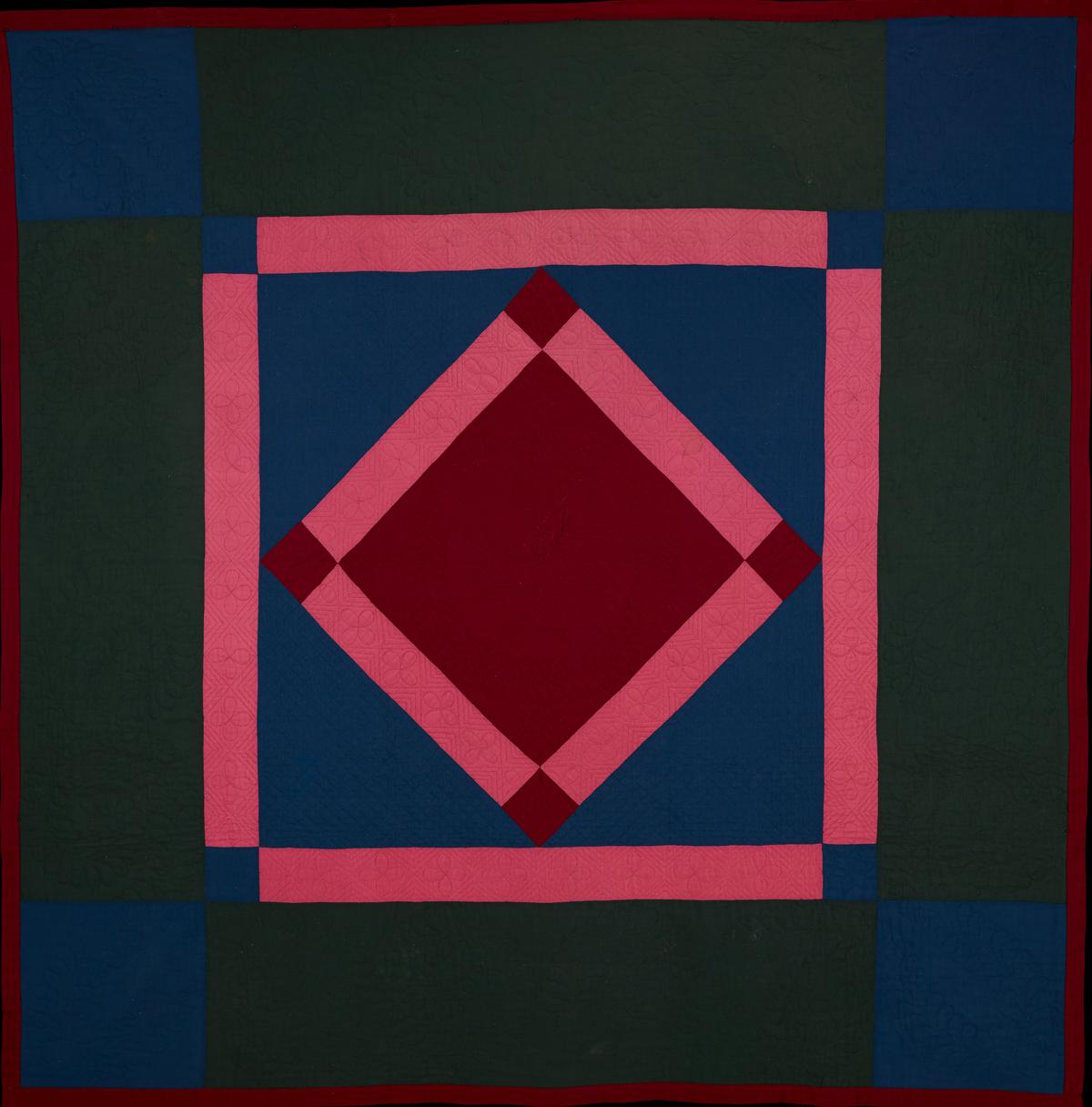
An Amish quilt with a deep red diamond inside a pink frame on blue, set in a wide green border with blue corner blocks
Diamond and Square quilt, Pennsylvania Amish, about 1910–20. Minneapolis Institute of Art · Public domain

About 1880 – 1940

Midwestern Amish quilts

Amish families who moved west to Ohio, Indiana, Illinois and Iowa made quilts that look quite different. The Met describes them as pieced in a great variety of block patterns, many borrowed from the outside world, often on blue or black backgrounds, and sometimes initialed and dated. Cotton was common, and families moved between settlements, so regional styles blur.

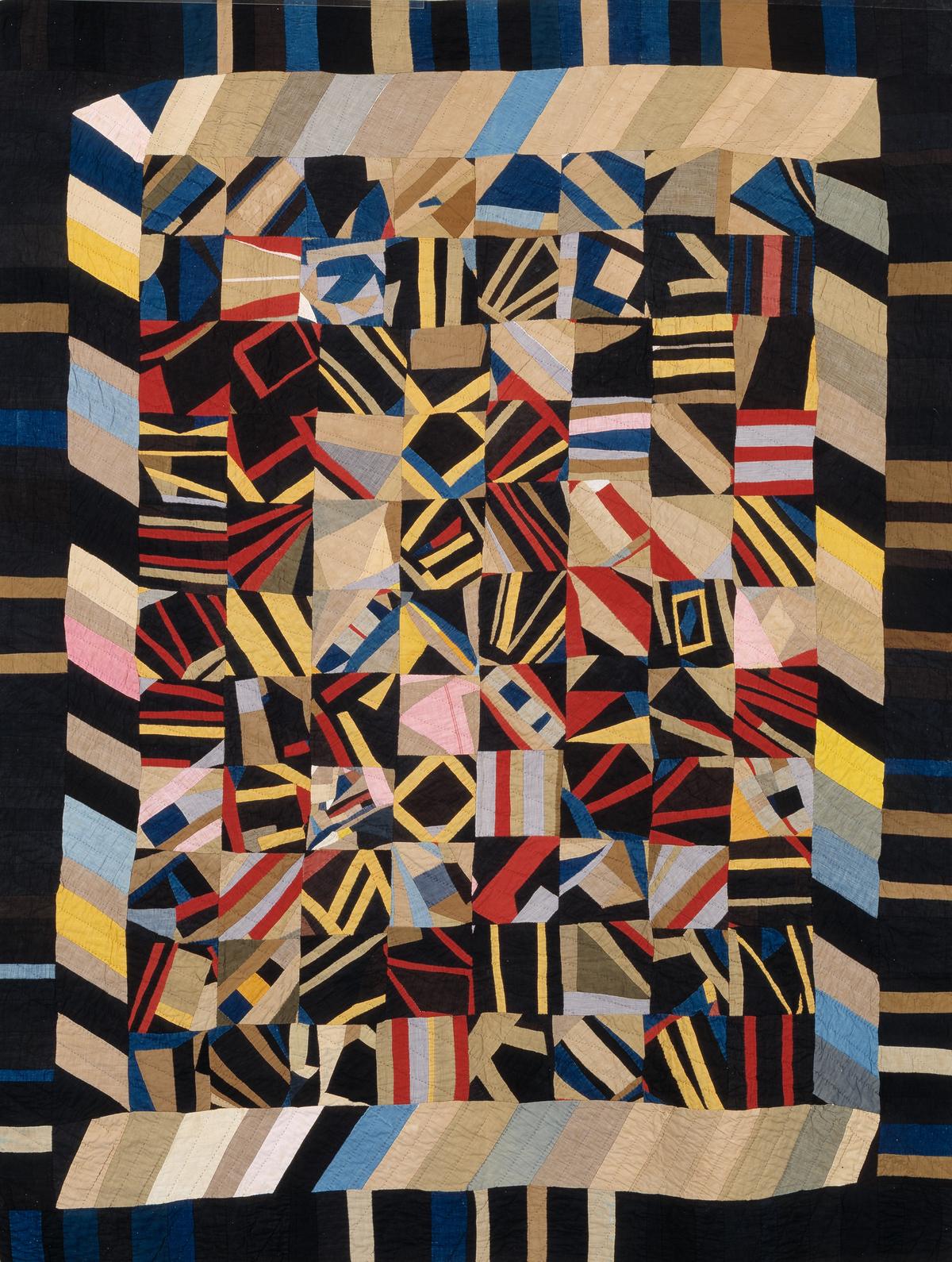
The Amish of Arthur, Illinois, settled in 1865, are known for a group of eccentric early-twentieth-century crazy-pattern quilts, like Lydia Beachy's. See the history of crazy quilts.

A cotton crazy quilt of bold black, yellow, red and blue strips in square blocks, inside a border of slanted stripes on black
Lydia Beachy, Amish Crazy Quilt, Arthur, Illinois, 1910–1920. Smithsonian American Art Museum · CC0
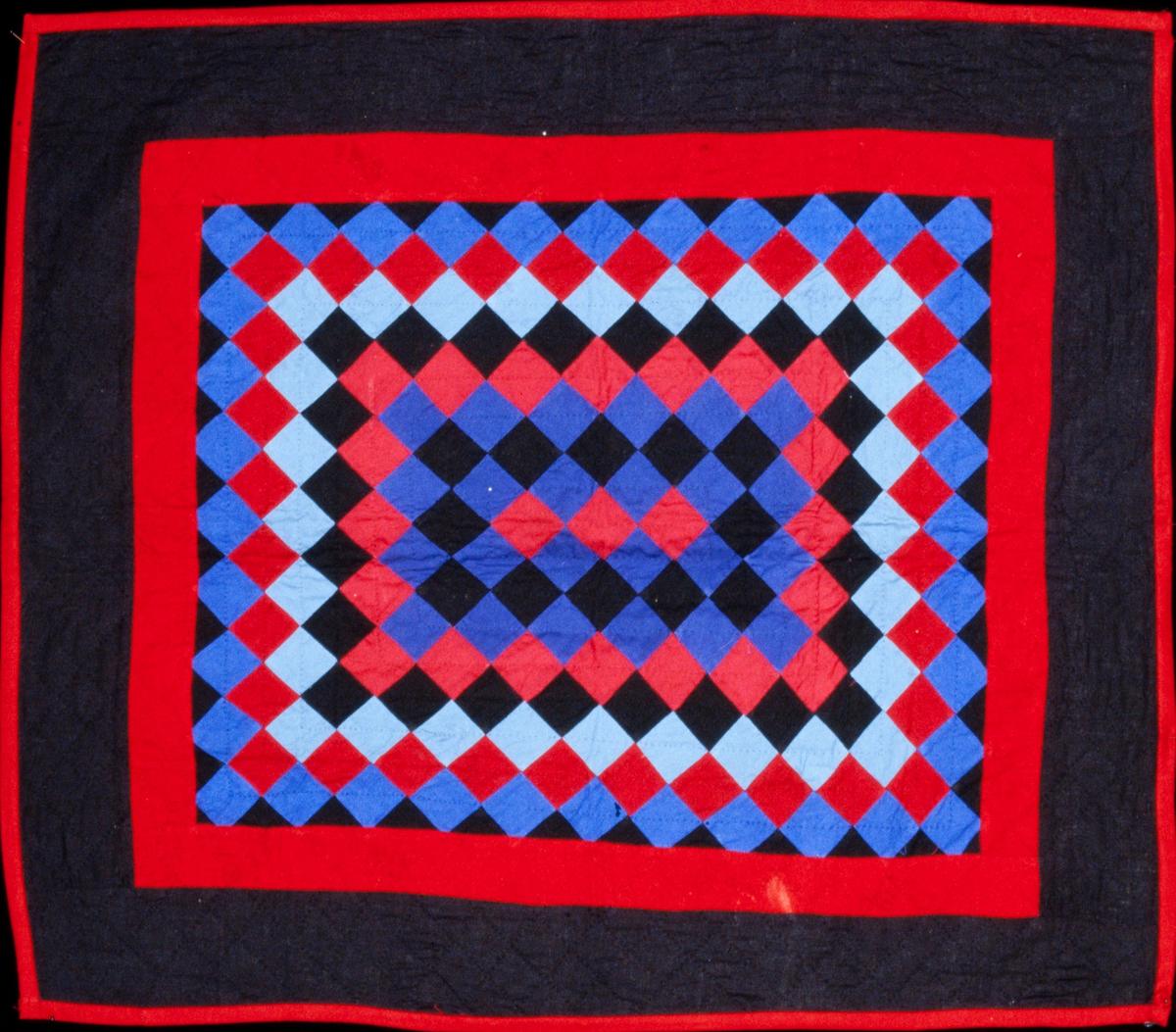
A small crib quilt of blue, red and black diamonds in rings, inside red and navy borders
Amish crib quilt, Canada, 1930. Minneapolis Institute of Art · Public domain

March 1941

A government photographer in Lancaster County

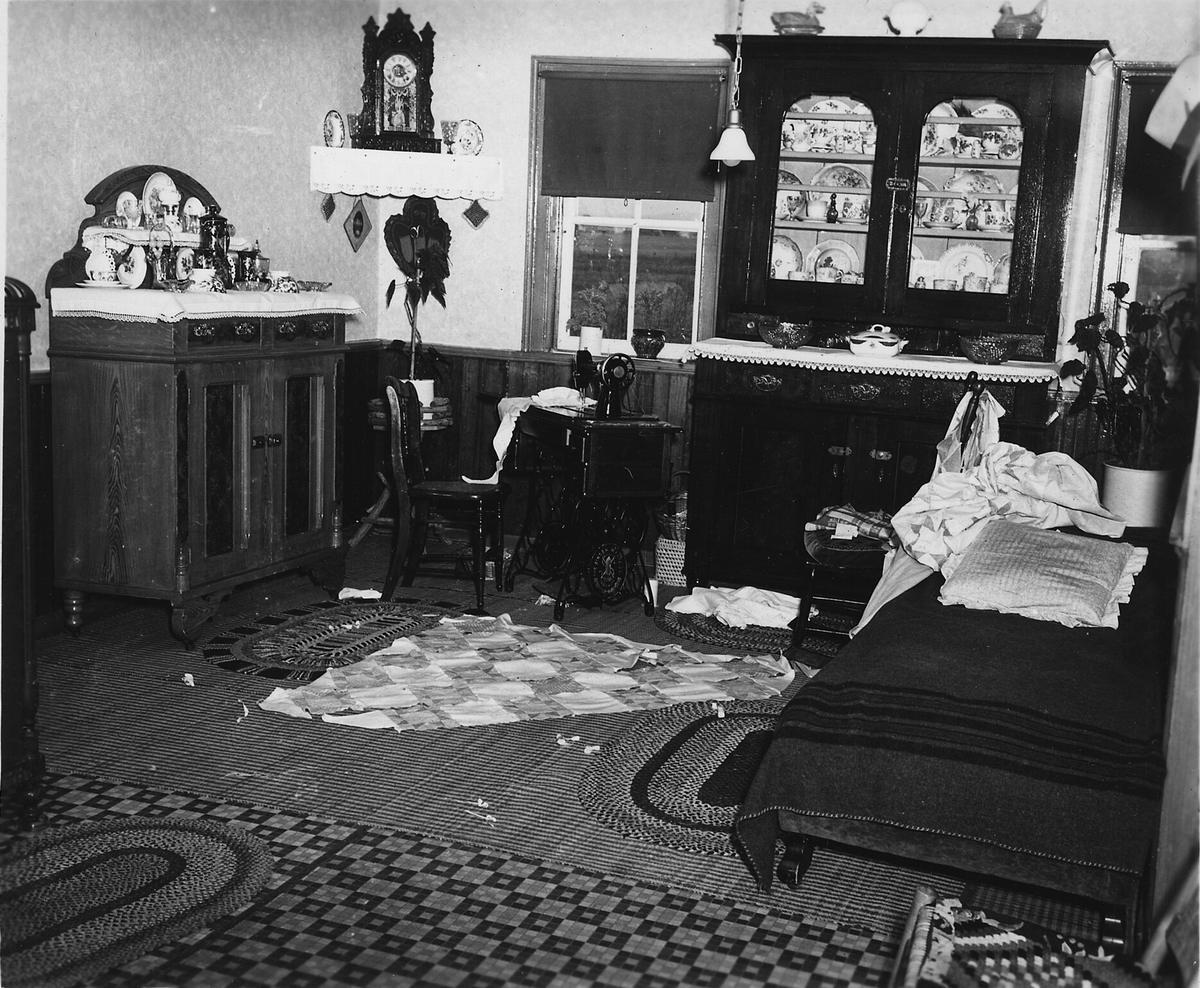
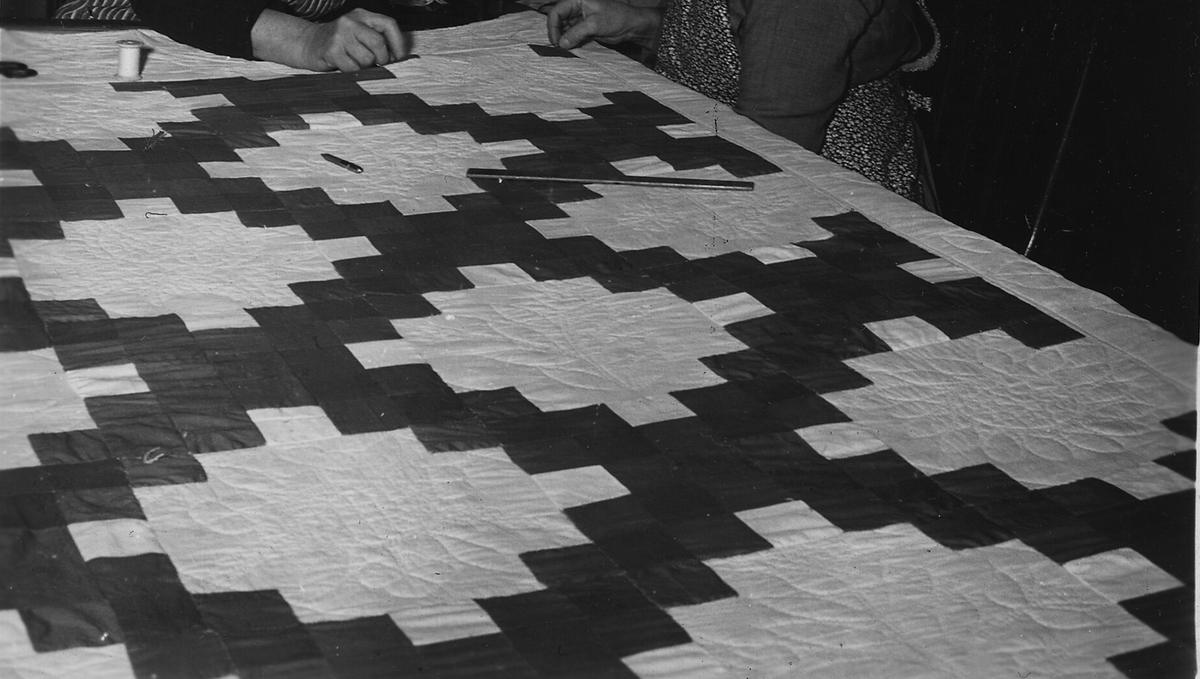
In March 1941 Irving Rusinow photographed the Old Order and Church Amish of Lancaster County for the U.S. Department of Agriculture's Bureau of Agricultural Economics. His pictures, now in the National Archives, show farms, carriages, a home interior with rag rugs and a sewing machine, and two women at a quilt in the frame.

They are a rare look at quilts in the setting they were made for, decades before collectors arrived.

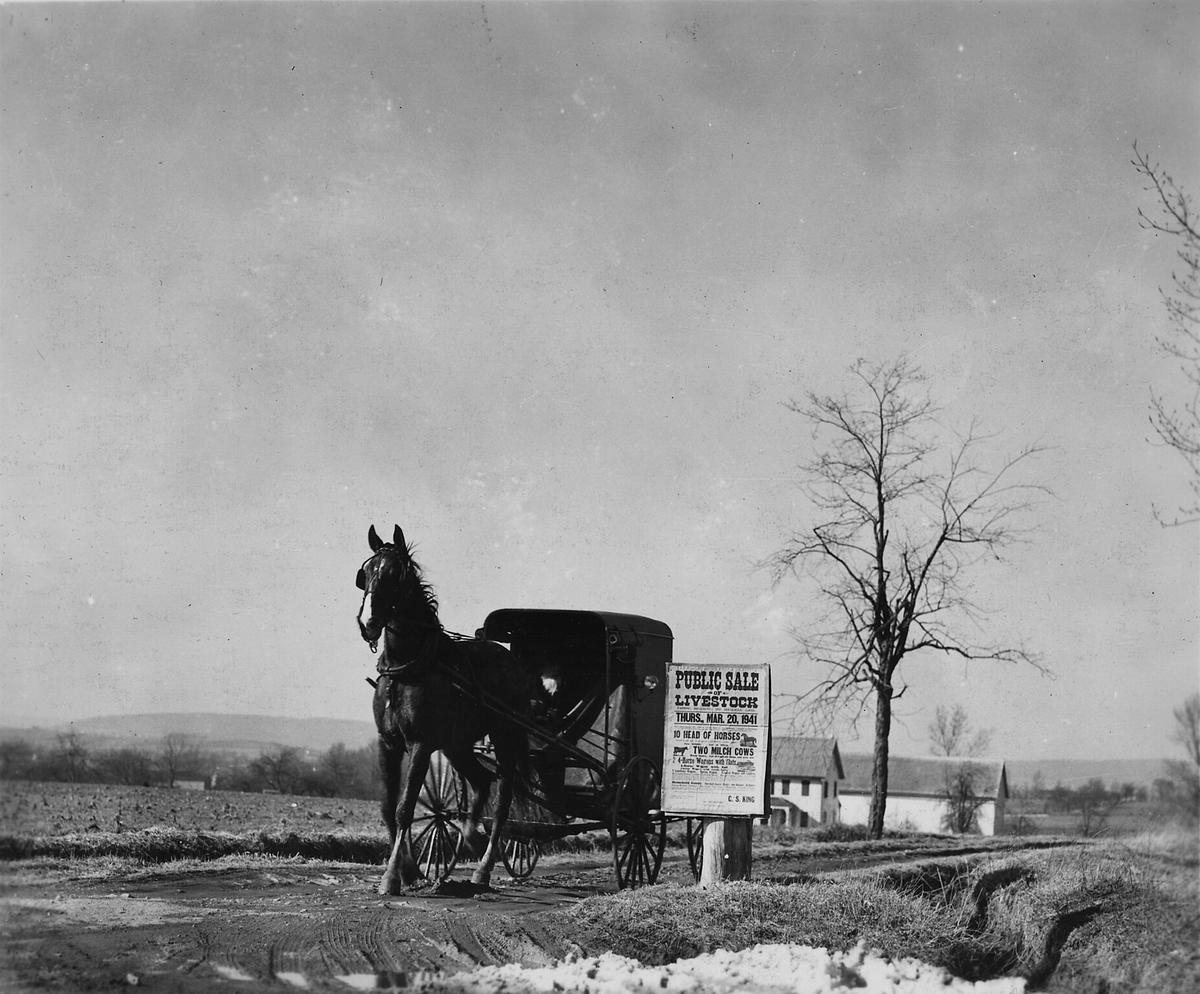
A horse and closed carriage on a muddy country road beside a public sale sign, with a farmhouse and bare trees behind
Irving Rusinow, an Old Order Amish carriage, Lancaster County, Pennsylvania, March 1941. U.S. National Archives · Public domain
A room with braided rag rugs, a treadle sewing machine by the window, a china cupboard and a day bed
Irving Rusinow, inside a Church Amish home, Lancaster County, Pennsylvania, 1941. U.S. National Archives · Public domain
Hands stitching a dark and light pieced quilt stretched in a quilting frame
Irving Rusinow, two Church Amish women quilting at a frame, Lancaster County, Pennsylvania, March 1941 (detail). U.S. National Archives · Public domain

1971 – 2001

Discovered as art

In the 1970s the outside world came looking for Amish quilts, and changed how everyone saw them.

July 1971

Quilts on the walls of the Whitney

Collectors Jonathan Holstein and Gail van der Hoof proposed a quilt show to the Whitney Museum of American Art in April 1971. Abstract Design in American Quilts opened on July 1 with 61 pieced quilts hung like paintings. In early July, New York Times critic Hilton Kramer wrote that anonymous quiltmakers had created "a remarkable succession of visual masterpieces" that anticipated abstract painting, and the Whitney extended the run.

It was not an Amish exhibition: Amish quilts were a small part of it, and the International Quilt Museum's 2021 recreation includes one Amish Bars quilt from Lancaster County. But it taught collectors to see bold, plain quilts as abstract art, and Amish quilts became the prime example.

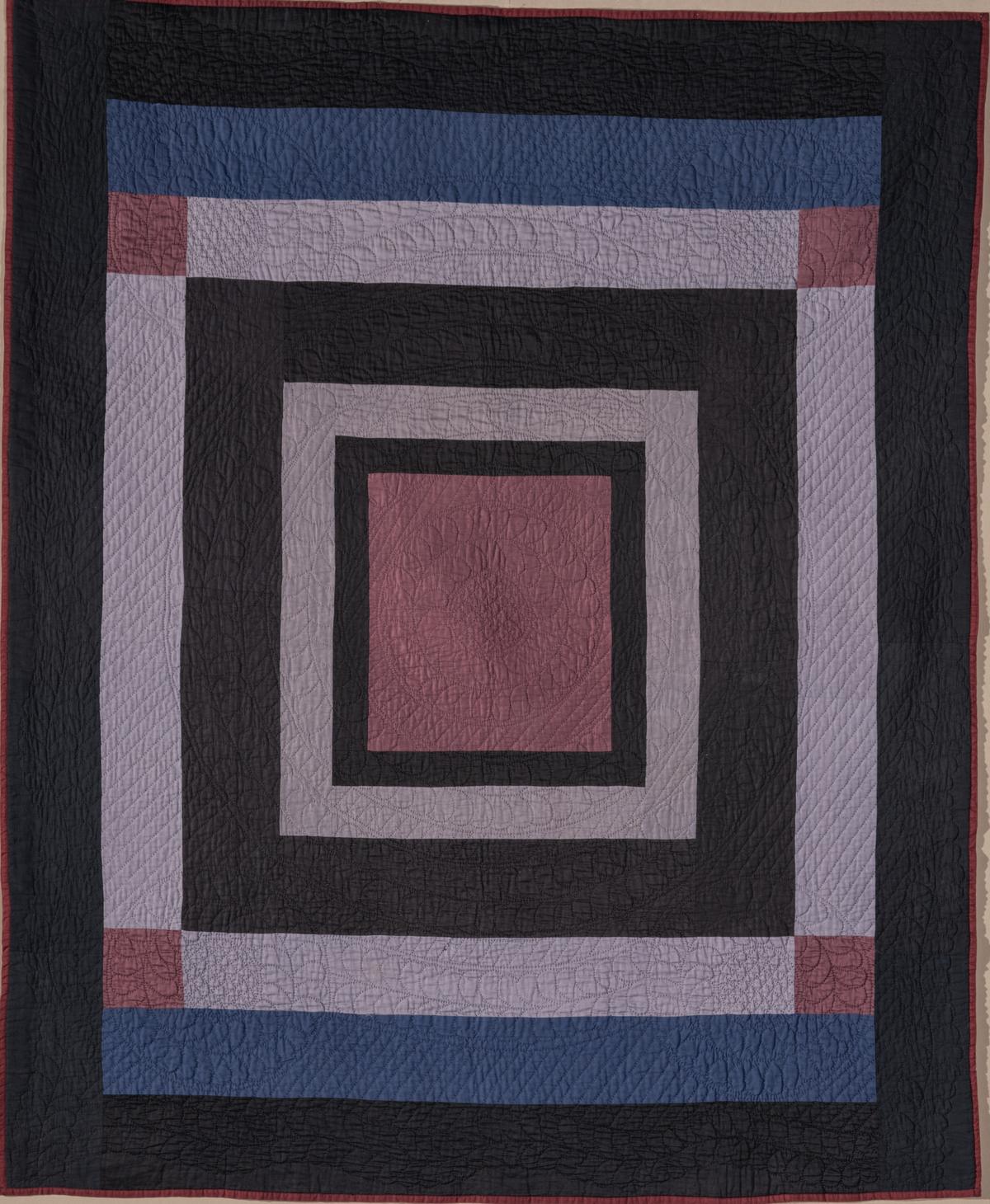
A quilt of concentric squares in black, lavender, blue and plum, with small corner blocks
Center Square quilt, about 1930, from the Faith and Stephen Brown collection of Amish quilts. Smithsonian American Art Museum, Gift of Faith and Stephen Brown · CC0

1970s – 1980s

Pickers and dealers

In the 1970s pickers knocked on Amish farmhouse doors to buy old quilts, often for little; van der Hoof recalled that an offer "enough for a new water pump" could close a deal. Dealers used church directories and plat maps, and quilts passed through several hands before reaching city galleries.

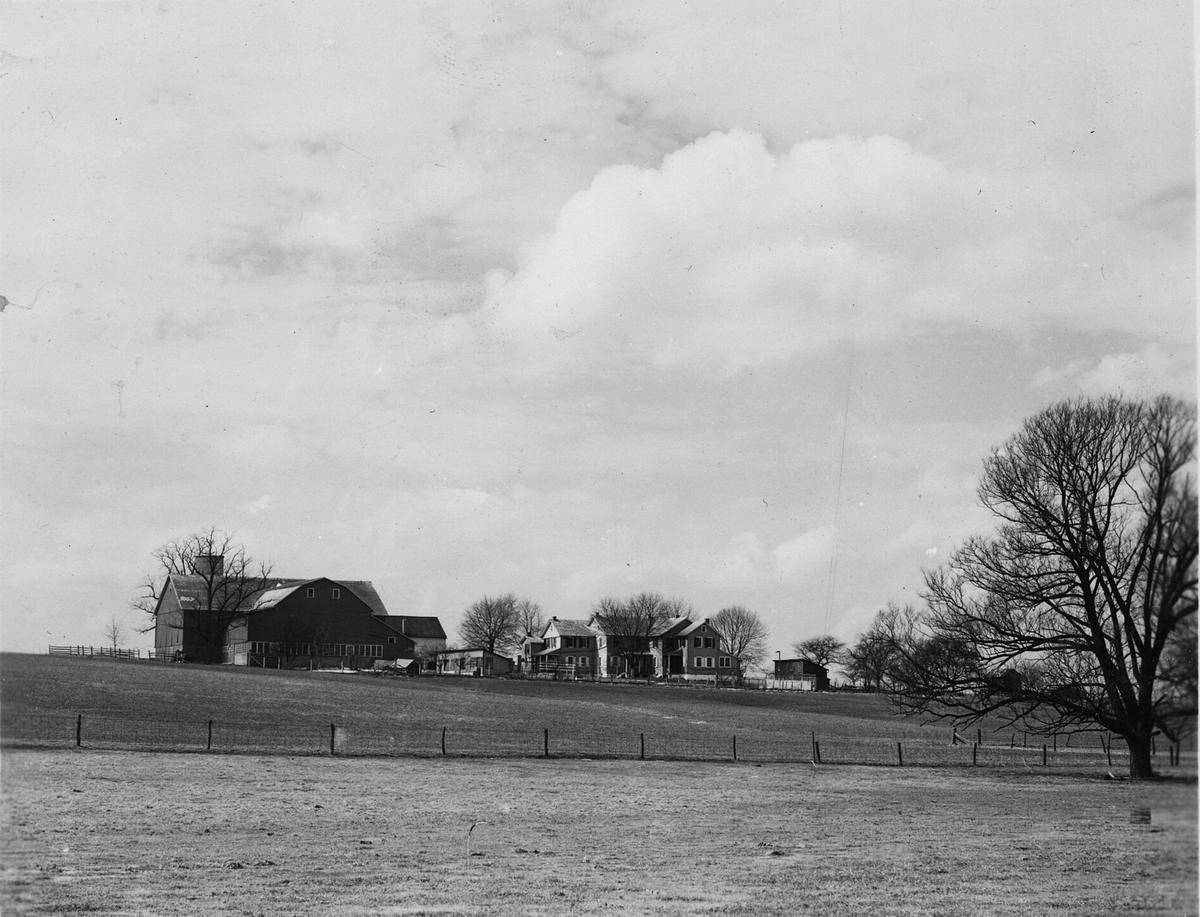
A farm with a large barn and houses across a wide field under a cloudy sky
Irving Rusinow, an Old Order Amish farm, Lancaster County, Pennsylvania, 1941. U.S. National Archives · Public domain

Late 1970s – 1990

The Esprit collection

Doug Tompkins, co-founder of the San Francisco clothing company Esprit, saw the 1971 Whitney show, bought a Center Diamond and a Sunshine and Shadow from Lancaster County, and by the late 1970s had covered Esprit's headquarters walls with Amish quilts, curated by Julie Silber.

A selection was shown as Amish: The Art of the Quilt at San Francisco's de Young Museum in 1990.

1980s – 2001

An American icon

By the late 1980s Amish quilts had become icons of simplicity and heritage, used in advertising and decor. Art critic Robert Hughes called them "inescapably modern," and museum labels still note that mainstream critics praised their bold designs as outstanding works of abstract art.

In 2001 the U.S. Postal Service issued four Amish Quilts stamps showing Lancaster County wool quilts, the first of its American Treasures series.

1970s – today

From farmhouse to museum, and still quilting

1970s – today

Quilts for the market

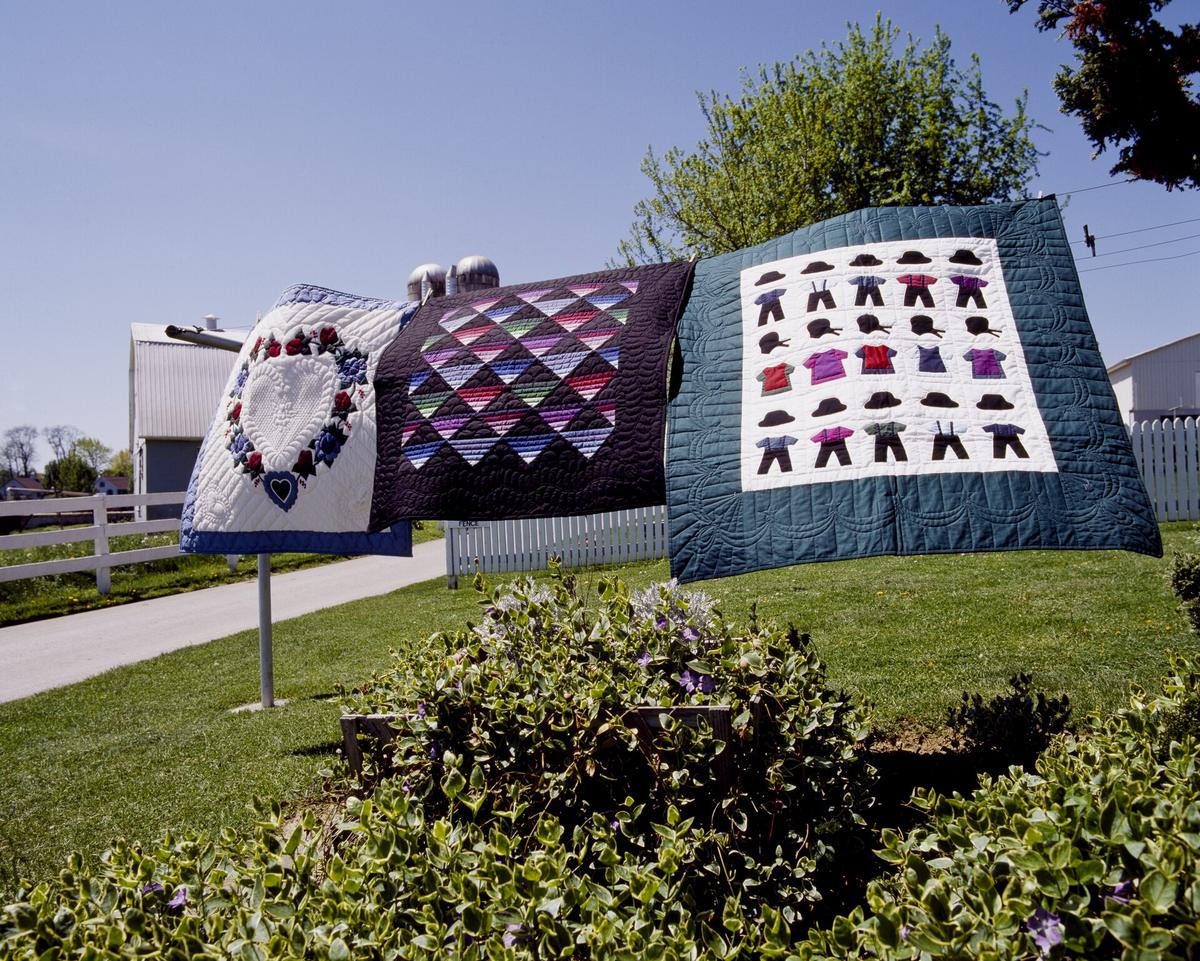
The first Amish-run quilt businesses opened in Lancaster County in the early 1970s; Hannah Stoltzfoos sold 20 quilts on consignment in 1972 and 500 in 1976. Shops made new styles and colors for tourists and mail-order buyers, and settlements that draw tourists became quilt centers.

Not every "Amish" quilt is Amish-made: by 1987 one estimate held that Hmong women in southeastern Pennsylvania, and relatives in Asia, did 99 percent of the appliqué work sold in Lancaster County shops.

Three new quilts hung outdoors for sale on a lawn: a heart, rows of small triangles and appliquéd children's clothes
Carol M. Highsmith, Amish Country quilts for sale, Lancaster, Pennsylvania, between 1980 and 2006. Library of Congress · Public domain

1997 – 2024

Into the museums

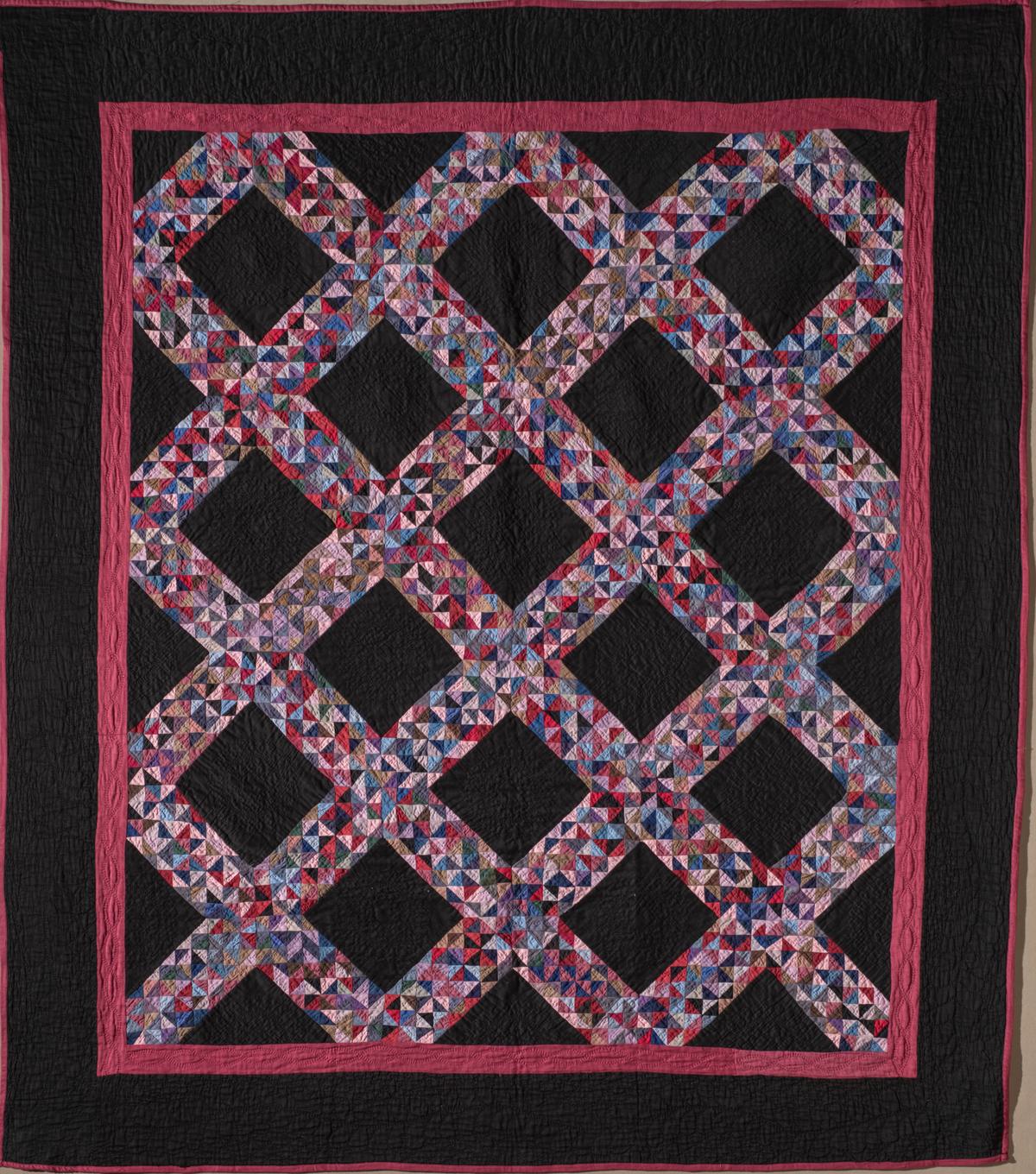
The International Quilt Study Center and Museum at the University of Nebraska–Lincoln grew from Ardis and Robert James's 1997 gift and now holds Amish quilts including the Holstein collection's Lancaster Bars. In 2002 the Heritage Center Museum of Lancaster County bought 82 Lancaster Amish quilts from the Esprit collection for $1 million; they are now cared for by LancasterHistory.

In 2021 Faith and Stephen Brown, who began collecting in 1977 after seeing Amish quilts at the Renwick Gallery, pledged about 130 Amish quilts from the 1880s to the 1940s to the Smithsonian American Art Museum, which showed them in Pattern and Paradox: The Quilts of Amish Women in 2024.

A quilt of small multicolored triangles forming a lattice around black squares, with a pink inner border and a wide black outer border
Ocean Waves quilt, about 1920, from the Faith and Stephen Brown collection of Amish quilts. Smithsonian American Art Museum, Gift of Faith and Stephen Brown · CC0

Today

A living tradition

The Amish population of North America is about 411,000 in 2025, roughly doubling every twenty years, with about 44,000 in the Lancaster County settlement. Quilts are still passed between generations, given to people in need, sold, and auctioned for community causes, often in new colors and patterns and with modern fabrics.

The International Quilt Museum stresses adaptation: Amish quiltmaking has taken in synthetic fabrics, new patterns and new tools while staying rooted in community rules. To try the classic shapes yourself, start with the Amish Diamond in Quiltler and add wide borders with corner blocks.

Amish quilt myths

Amish quilts gather stories the way crazy quilts do. Here is what museum records and quilt historians actually say.

Myth

Amish quilters sew in a deliberate mistake, because only God is perfect.

Undocumented. Quilt historians trace the "humility block" to vague modern lore, and Amish women asked about it said they first heard it from outsiders.

Myth

Amish quilts go back to colonial times.

The Amish arrived in the 1700s, but they took up quilting in numbers only in the mid-to-late 1800s. The first Amish quilts with stitched dates are from the 1860s and 1870s.

Overstated

Amish quilts were made from homespun cloth colored with natural dyes.

Even some museum labels say so, but records describe commercially made wools, cottons and later synthetics, often bought in large pieces for the quilt. Some fabrics may have been home-dyed; "homespun" isn't supported for the classic period.

Myth

The Amish don't use sewing machines, so Amish quilts are all handmade.

Many early Amish quilts include machine stitching, and Amish women have long used treadle machines. The quilting itself is usually done by hand.

Myth

The 1971 Whitney show was an exhibition of Amish quilts.

It showed 61 American pieced quilts, and Amish quilts were a small part of it. Its importance for Amish quilts was indirect: it inspired collectors such as Doug Tompkins of Esprit.

No evidence

Amish quilts influenced abstract painters like Rothko and Albers.

Critics from Hilton Kramer in 1971 on compared the quilts to abstract painting. The comparison was made after the fact by outsiders, not by the makers or the painters.

Sew an Amish classic

The great Amish designs are simple shapes in solid colors, so they are easy to try on screen first.

Amish quilt questions

Why do Amish quilts use solid colors?

Classic Amish quilt tops are pieced from solid, unpatterned fabrics because Amish codes rejected ostentation, so quilters also avoided appliqué. Printed cottons sometimes turn up on the backs. The colors are often deep and saturated rather than drab: purples, blues, greens and reds, set against black or blue in many Midwestern quilts.

Do Amish quilts have a mistake on purpose?

There is no evidence for it. The idea of a "humility block" sewn in because only God is perfect is modern lore, and Amish women asked about it said they first heard it from outsiders.

Are Amish quilts wool or cotton?

Both. The classic Lancaster County quilts are mostly wool, while Midwestern Amish quilts more often used cotton. Over the twentieth century makers added satins and synthetics, and many quilts mix several fabrics.

What's the difference between Lancaster and Ohio Amish quilts?

Lancaster County quilts use a few large, centered designs, such as Center Diamond, Bars and Sunshine and Shadow, usually square with wide borders and corner blocks, in wool. Amish quilters in Ohio and the rest of the Midwest used many block patterns borrowed from the outside world, often on black or blue grounds, more often in cotton, and sometimes initialed and dated. Families moved between settlements, so the styles blur.

How old is my Amish quilt?

Most "classic" Amish quilts date from about 1880 to the 1940s or 1950s; dated ones are rare, especially from Pennsylvania. Satins and synthetic fabrics point to later in the twentieth century. Many old Amish quilts include machine stitching, and since the 1970s many quilts have been made for sale, not all by Amish women, so ask a quilt appraiser for a firm answer.

What was the 1971 Whitney quilt show?

Abstract Design in American Quilts opened at the Whitney Museum of American Art in New York on July 1, 1971, with 61 pieced quilts from Jonathan Holstein and Gail van der Hoof's collection hung like paintings. It wasn't an Amish show, but it taught collectors to see quilts as abstract art, and Amish quilts became the prime example.

Where can I see Amish quilts?

LancasterHistory in Lancaster, Pennsylvania, cares for 82 Lancaster quilts from the Esprit collection. The Smithsonian American Art Museum in Washington holds about 130 from Faith and Stephen Brown, and the International Quilt Museum in Lincoln, Nebraska, the Met and the Minneapolis Institute of Art also hold Amish quilts.

More quilt history

Sources and image credits

  1. The Met, Quilt, Diamond in the Square pattern, Lancaster County, ca. 1920
  2. The Met, Amish sampler, Barbara Beiler, early 19th century
  3. Young Center for Anabaptist and Pietist Studies, Elizabethtown College, Amish Population Profile 2025
  4. International Quilt Museum: The Amish Quilt Story, Quilts in Amish Culture
  5. International Quilt Museum: The Amish Quilt Story, Origin Stories
  6. Amish America, Q&A with Janneken Smucker
  7. The Met, Quilt, Center Square and Bars pattern, 1892
  8. The Met, Quilt, Split Bars pattern, Lancaster County, ca. 1930
  9. The Met, Amish Double Nine-patch quilt, Lancaster County, ca. 1930
  10. Minneapolis Institute of Art, Diamond in Square quilt, Pennsylvania Amish, c. 1910
  11. The Met, Quilt, Pinwheel or Fly pattern, Indiana, 1930
  12. The Met, Quilt, Double T pattern, Kalona, Iowa, 1924
  13. The Met, Tumblers Crazy Quilt, Arthur, Illinois, ca. 1910–20
  14. Art Institute of Chicago, 'Amish Plain' Quilt, Holmes County, Ohio, c. 1890
  15. Smithsonian American Art Museum, Amish Crazy Quilt, Lydia Beachy (1863–1925), 1910–1920
  16. Minneapolis Institute of Art, Sunshine and Shadow Quilt, c. 1920
  17. Antiques and The Arts Weekly, 'Amish Quilts from the Esprit Collection Return to Lancaster' (July 30, 2002)
  18. Smithsonian American Art Museum gift announcement, March 10, 2021
  19. U.S. National Archives, Bureau of Agricultural Economics photographs of Lancaster County by Irving Rusinow, March 1941
  20. International Quilt Museum: The 1971 Whitney exhibition story
  21. International Quilt Museum, Abstract Design in American Quilts at 50 (2021 exhibition)
  22. Whitney Museum of American Art, Abstract Design in American Quilts (exhibition page)
  23. International Quilt Museum: The Amish Quilt Story, Buying and Selling
  24. International Quilt Museum: The Amish Quilt Story, The Esprit Quilt Collection
  25. Janneken Smucker, Amish Quilts: Crafting an American Icon (Johns Hopkins University Press, 2013)
  26. International Quilt Museum: The Amish Quilt Story, The Iconic Amish Quilt
  27. Minneapolis Institute of Art, Diamond and Square quilt, c. 1910–20
  28. U.S. Postal Service, 2001 Amish Quilts stamps release
  29. International Quilt Museum: The Amish Quilt Story, Amish Quilt Businesses
  30. International Quilt Museum: The Amish Quilt Story, Hmong Needlework
  31. International Quilt Museum, the Ardis and Robert James story (founding gift, 1997)
  32. Lancaster Chamber, LancasterHistory 'Collections Up Close' features the Esprit quilts
  33. Smithsonian American Art Museum, Pattern and Paradox: The Quilts of Amish Women (2024)
  34. Barbara Brackman, 'Hoo-Doo, Humility and Deliberate Mistakes'
  35. The Met, Quilt, Bars pattern, ca. 1900–1950

Every photograph is in the public domain or released under CC0: quilts from the Minneapolis Institute of Art, the Smithsonian American Art Museum, the Metropolitan Museum of Art, the Art Institute of Chicago and the Honolulu Museum of Art (a CC0 gallery photo), and photographs from the U.S. National Archives and the Library of Congress. Out of respect, no one's face is shown. Each caption names the object and links to its record.