Quilting history · Feed sack quilts

The History of Feed Sack Quilts

How flour and feed sacks became dresses and quilts

For about seventy years, American flour, sugar and feed came in cotton bags, and thrifty women turned the cloth into towels, dresses, curtains and quilts. Here is how a shipping sack became dress goods, what the Depression and the war had to do with it, and why most 1930s quilts weren't made from sacks at all, told with photographs from the Library of Congress and a contest dress in the Smithsonian.

  • 13 moments
  • 1890s to 1960s
  • 19 museum photographs
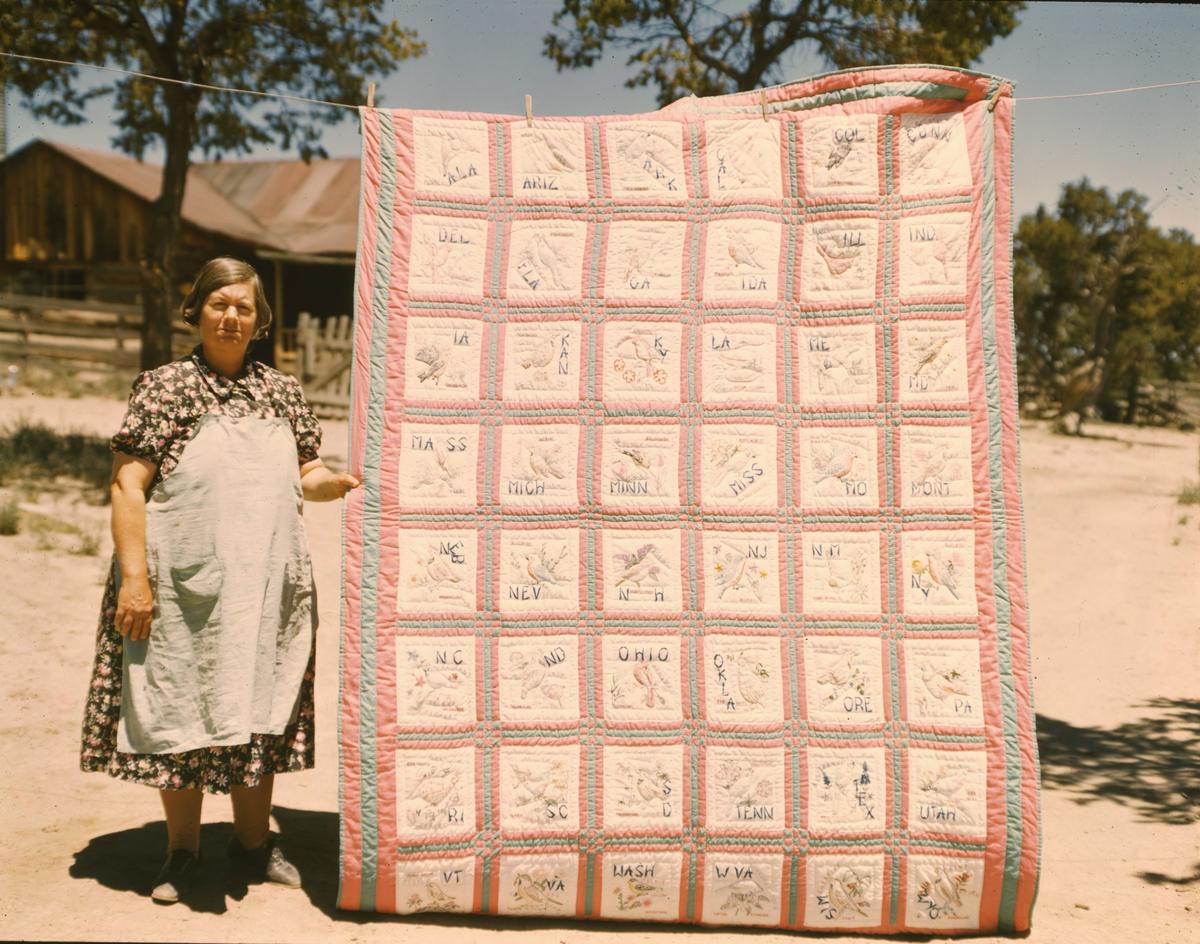
  • A 1940 color photograph of a homesteader in a print dress and apron beside her pink and white embroidered state quilt hung on a line
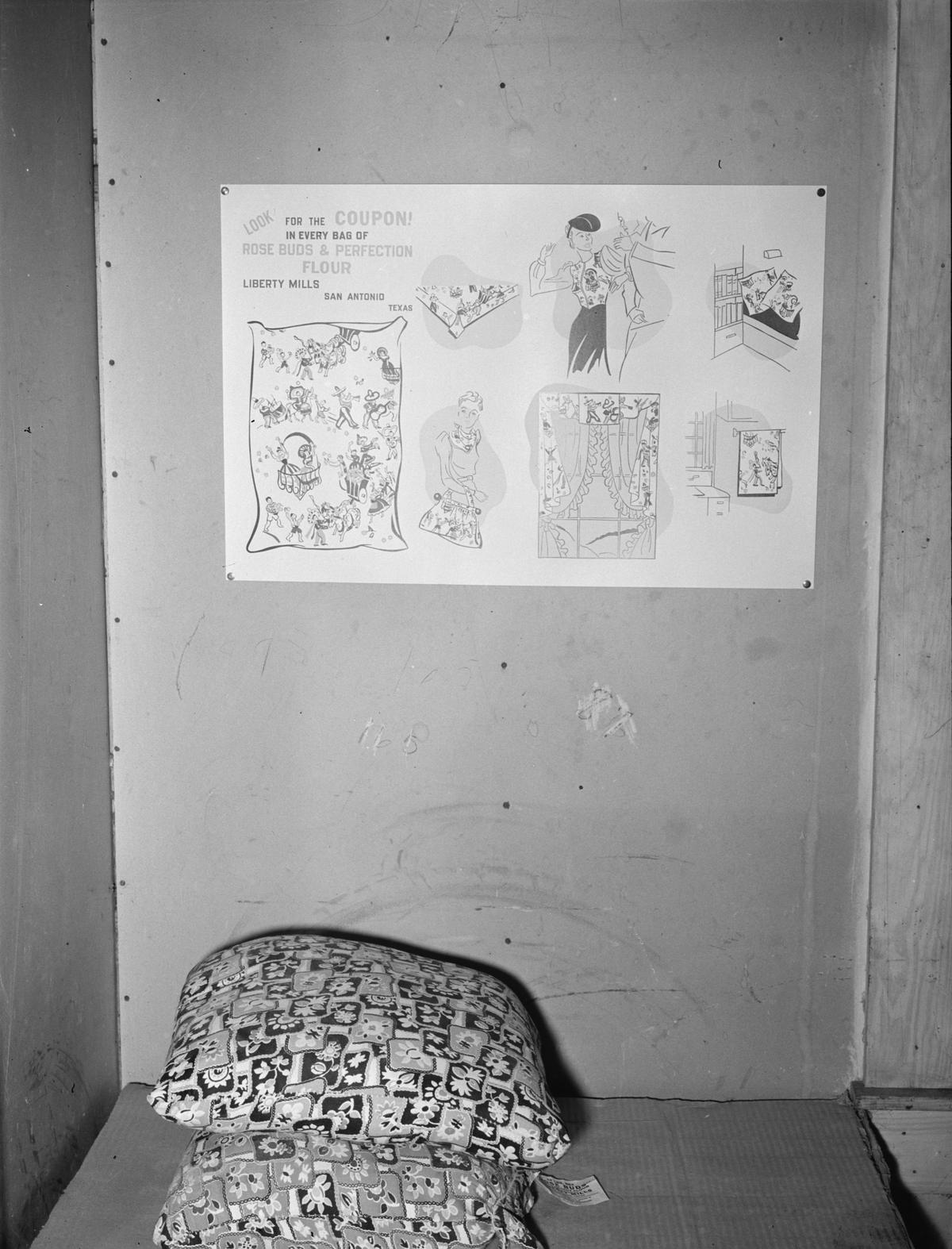
  • Two sacks of flour in bold printed cotton below a Liberty Mills poster showing the prints made into an apron, curtains and a quilt
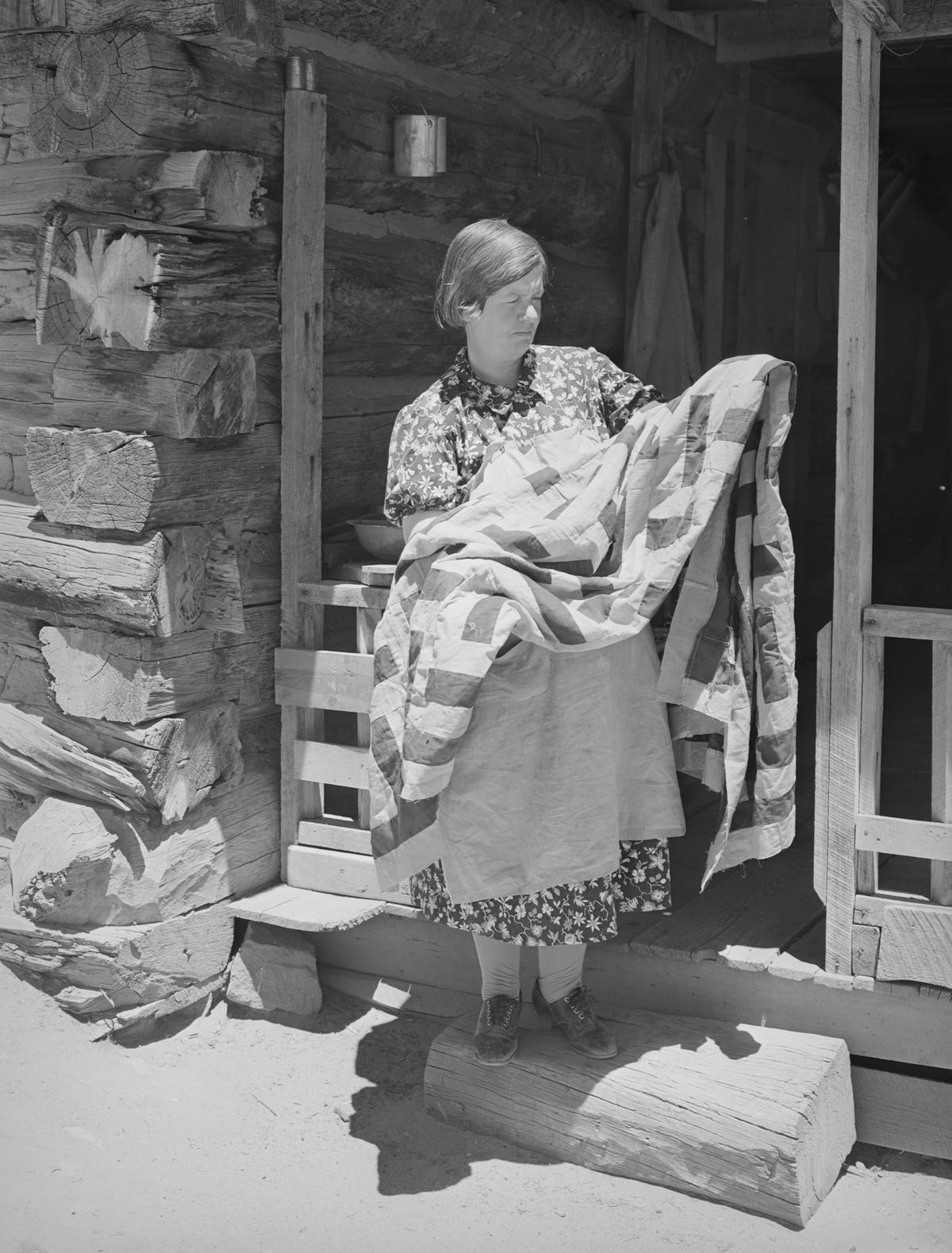
  • A woman on the porch of a log house holding up a pieced quilt
  • Close-up of cotton bag fabric printed with pale flowers and leaves on a dark ground, with a scalloped hem
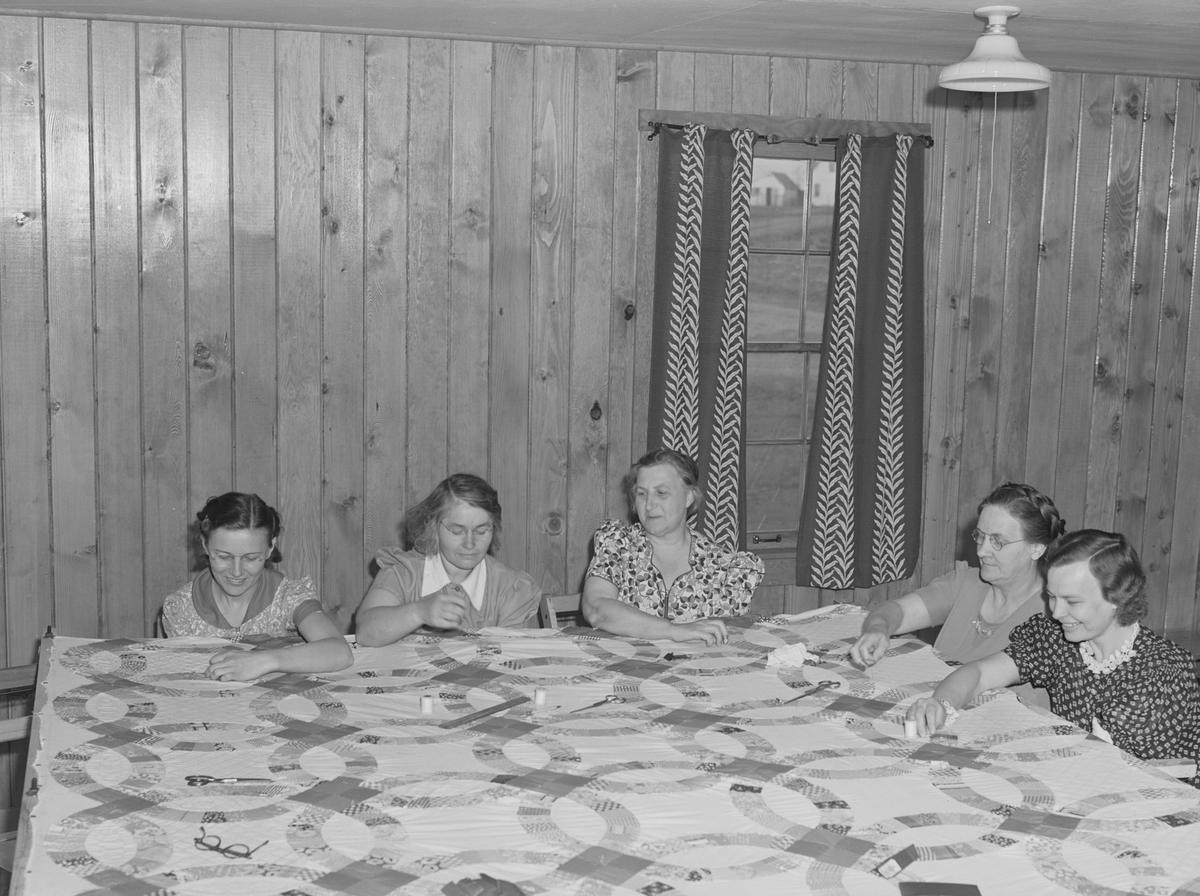
  • Five women sewing at a table spread with a scrappy Double Wedding Ring quilt
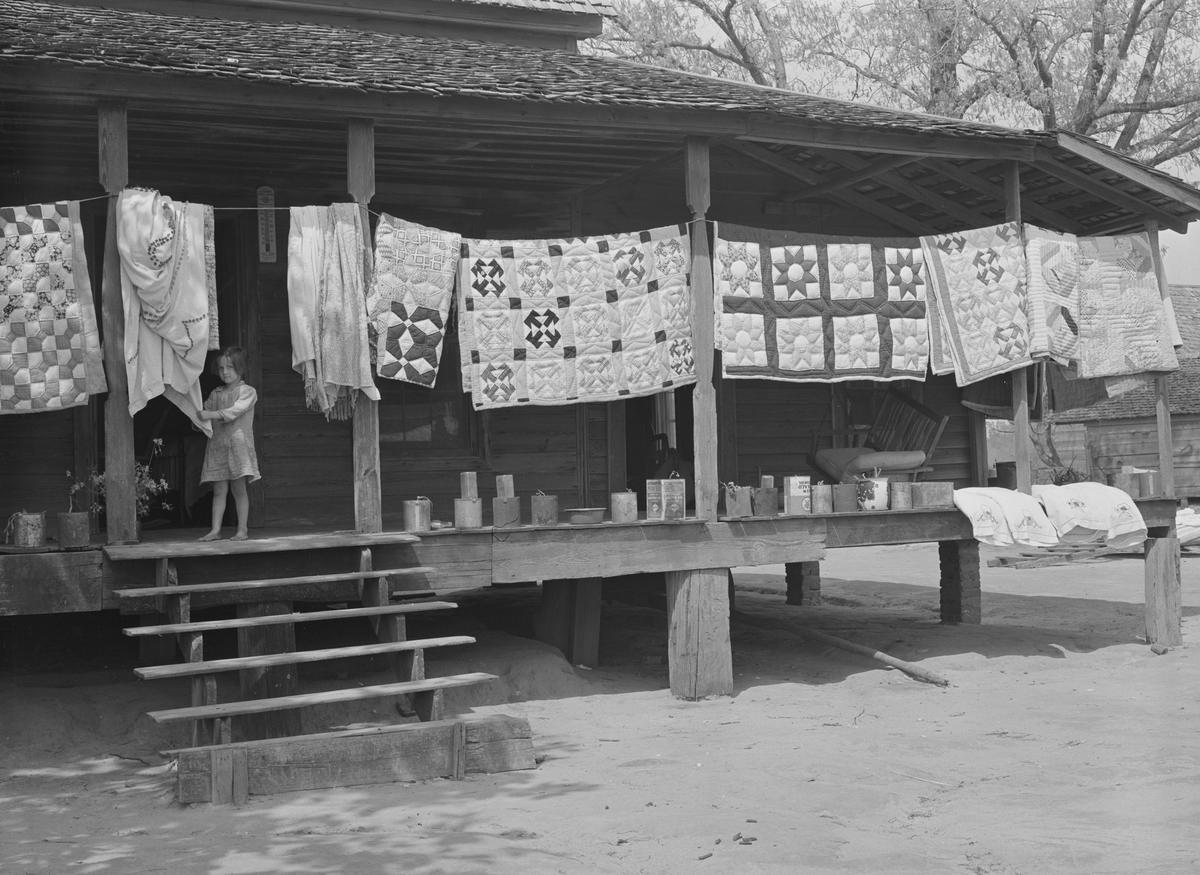
  • A row of pieced star and block quilts hung along the porch of a raised farmhouse, with a small girl on the steps

When were feed sack quilts made?

Families were reusing cotton flour and feed sacks by the late 1800s, but the dress-print sacks most people picture only became common in the late 1930s and peaked in the 1940s, so sack prints turn up most often in quilts of that decade. The first sack designed to become clothes, a checked gingham flour sack, was patented in 1924 and on sale by 1925. Paper bags took over in the 1950s, and most production had ended by the early 1960s. Most 1930s quilts were made from store-bought yardage, not sacks.

1800s – 1933

From barrels to dress goods

Before anyone printed a flower on a flour sack, the sack itself had to replace the barrel.

1800s – 1890s

From barrels to cotton sacks

For most of the 1800s, flour, sugar and grain traveled in wooden barrels, and a barrel of flour weighed nearly two hundred pounds. Sewing machines and cheaper mill-woven cotton made cloth bags less expensive than barrels, and the International Quilt Museum notes that cotton sacks made goods easier to move.

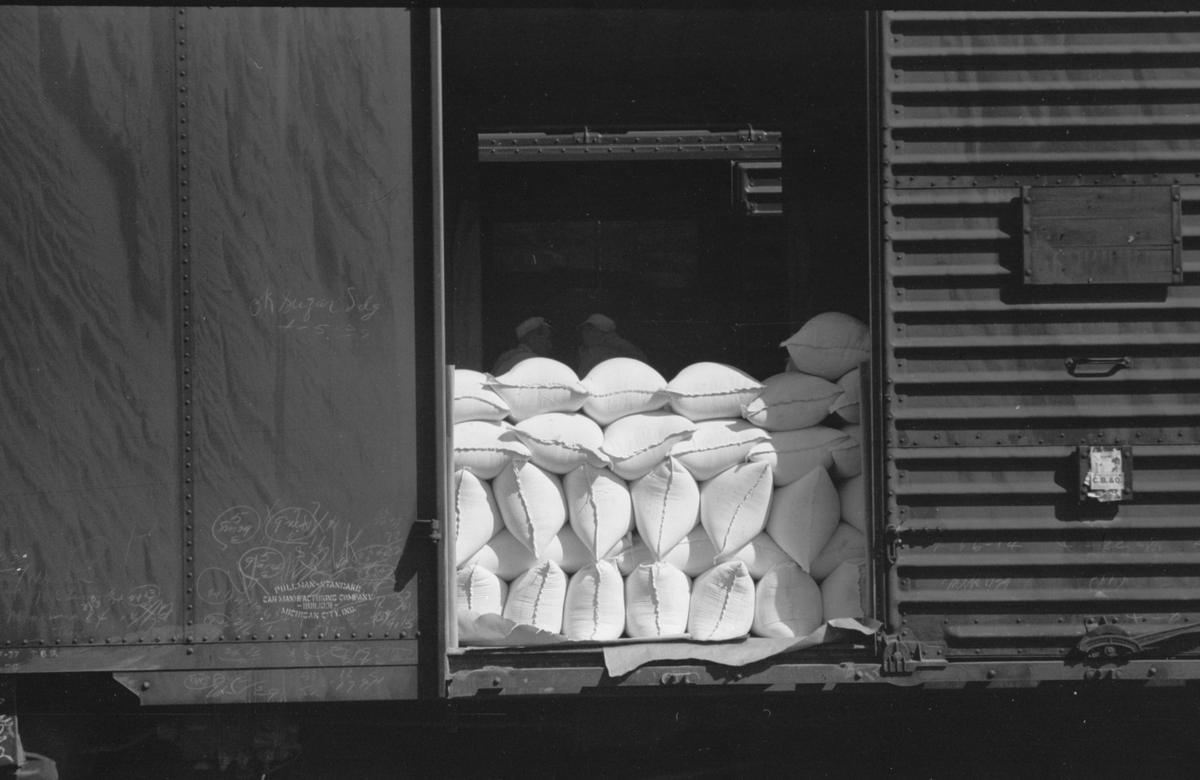
By the late 1800s mills shipped in sacks of coarse cotton osnaburg or burlap stamped with the brand, and thrifty families were already reusing the cloth for towels and rags. The sacks in this 1939 freight car at the Pillsbury mills in Minneapolis are the plain white kind.

White cloth sacks of flour stacked in the open door of a freight car
John Vachon, freight car loaded with sacks of flour, Pillsbury mills, Minneapolis, September 1939. John Vachon, FSA · Library of Congress · Public domain

1924 – 1926

A flour sack meant to become a dress

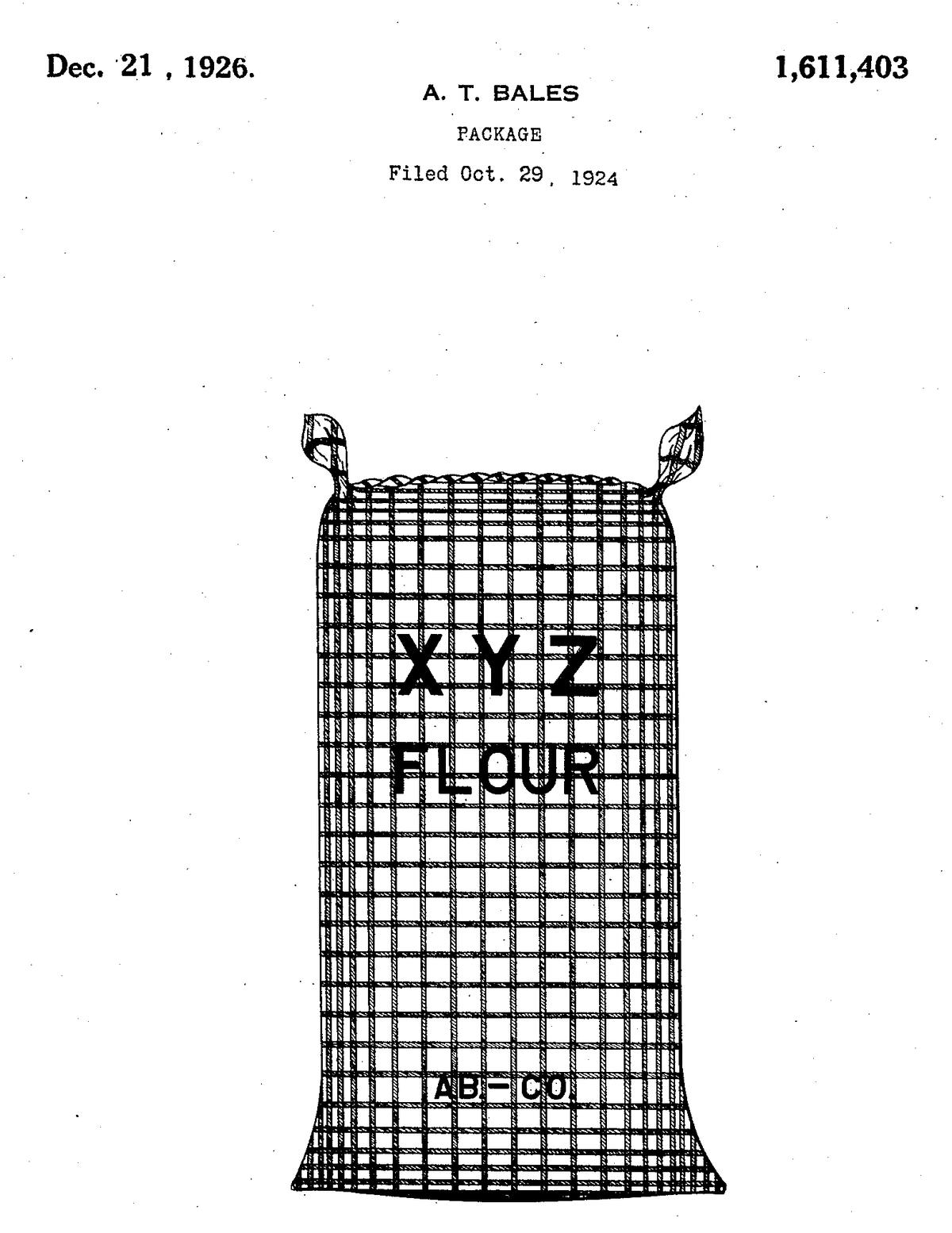
On October 29, 1924, Asa T. Bales of St. Louis filed a patent for a flour sack made of dress goods. The patent, assigned to the George P. Plant Milling Company and granted on December 21, 1926, describes gingham with a fast, woven-in pattern and a brand printed in "fugitive" ink that washes away, "leaving the dress goods with the pattern unimpaired."

According to feed sack historian Gloria Nixon, the company was selling its Gingham Girl flour in red-and-white checked sacks by 1925. It is the earliest documented sack designed from the start to be sewn into clothes.

A patent drawing of a checked cloth flour sack lettered XYZ Flour, under the heading A. T. Bales, Package, filed October 29, 1924
Asa T. Bales, “Package”: a flour sack of dress goods, U.S. Patent 1,611,403, filed October 29, 1924, granted December 21, 1926. U.S. Patent and Trademark Office · Public domain

1925 – 1933

Bag makers sell the second use

In 1925 bag manufacturers formed the Textile Bag Manufacturers Association, which worked with the millers' national federation to promote home sewing with cotton bags.

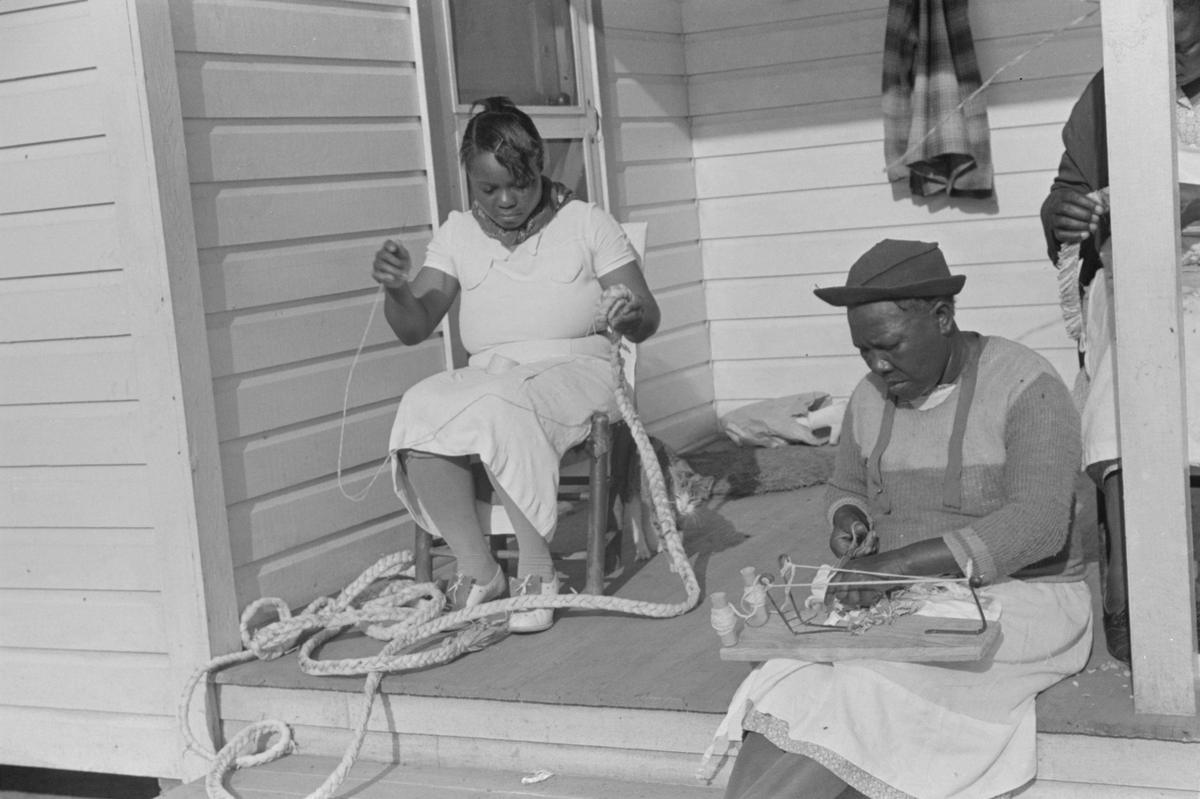
In 1933 the association published Sewing with Cotton Bags, which explained how to soak out the brand inks. By 1939, government home economics classes, like this one at Flint River Farms in Georgia, were teaching women to use flour, meal and feed sacks.

Two women working on a farmhouse porch, one braiding long ropes of material, the other working at a small frame
Marion Post Wolcott, a home economics class for adults that made use of flour, meal and feed sacks, Flint River Farms, Georgia, May 1939. Marion Post Wolcott, FSA · Library of Congress · Public domain

1929 – 1939

The Depression and the quilt boom

Hard times made every yard of cloth count, just as newspapers were turning quiltmaking into a national hobby.

1929 – 1939

The Depression: making do

The Smithsonian's National Museum of American History describes farm life in the 1920s and 1930s as a time of frugal habits, when women turned feed and flour bags into dresses, underwear, towels, curtains and quilts.

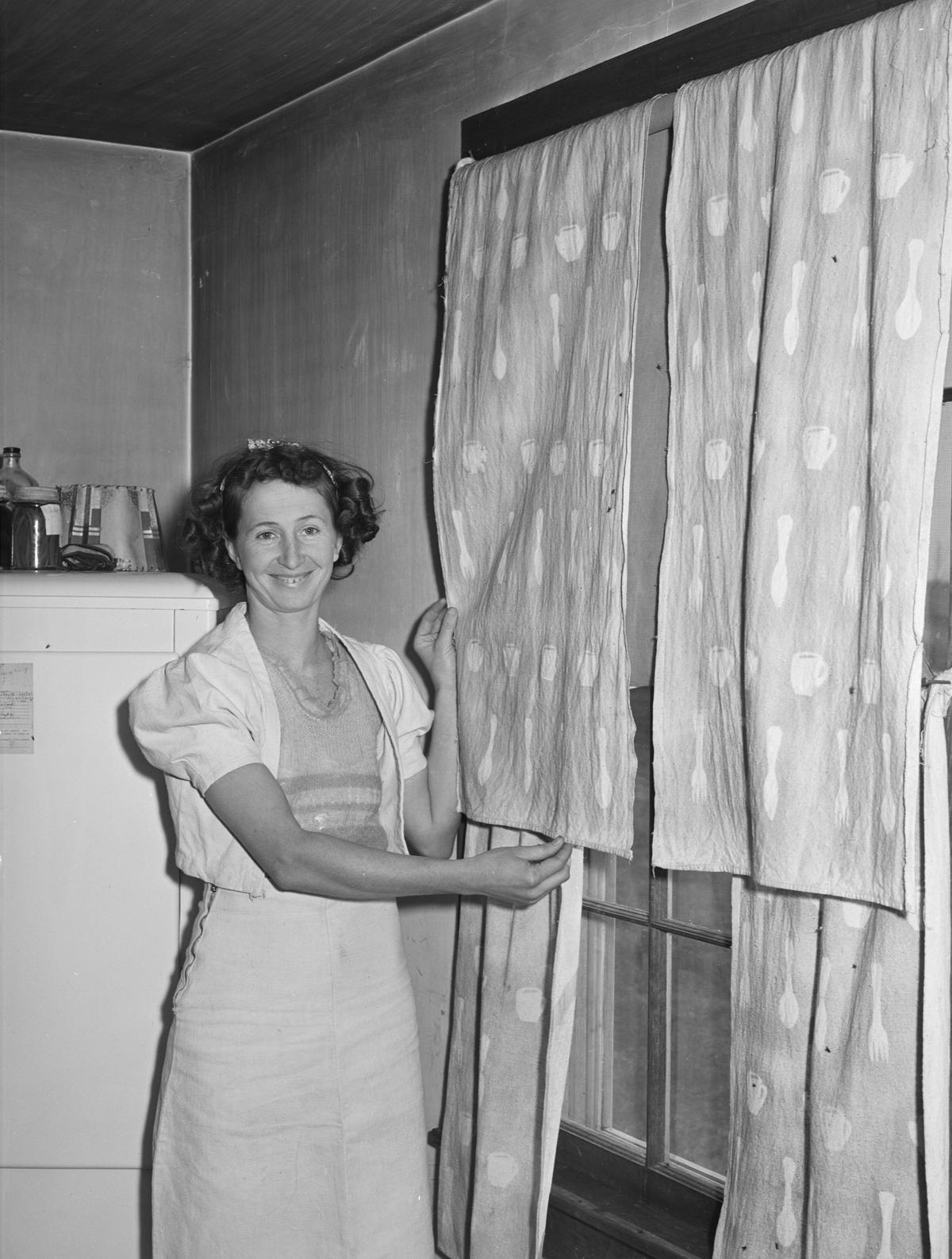
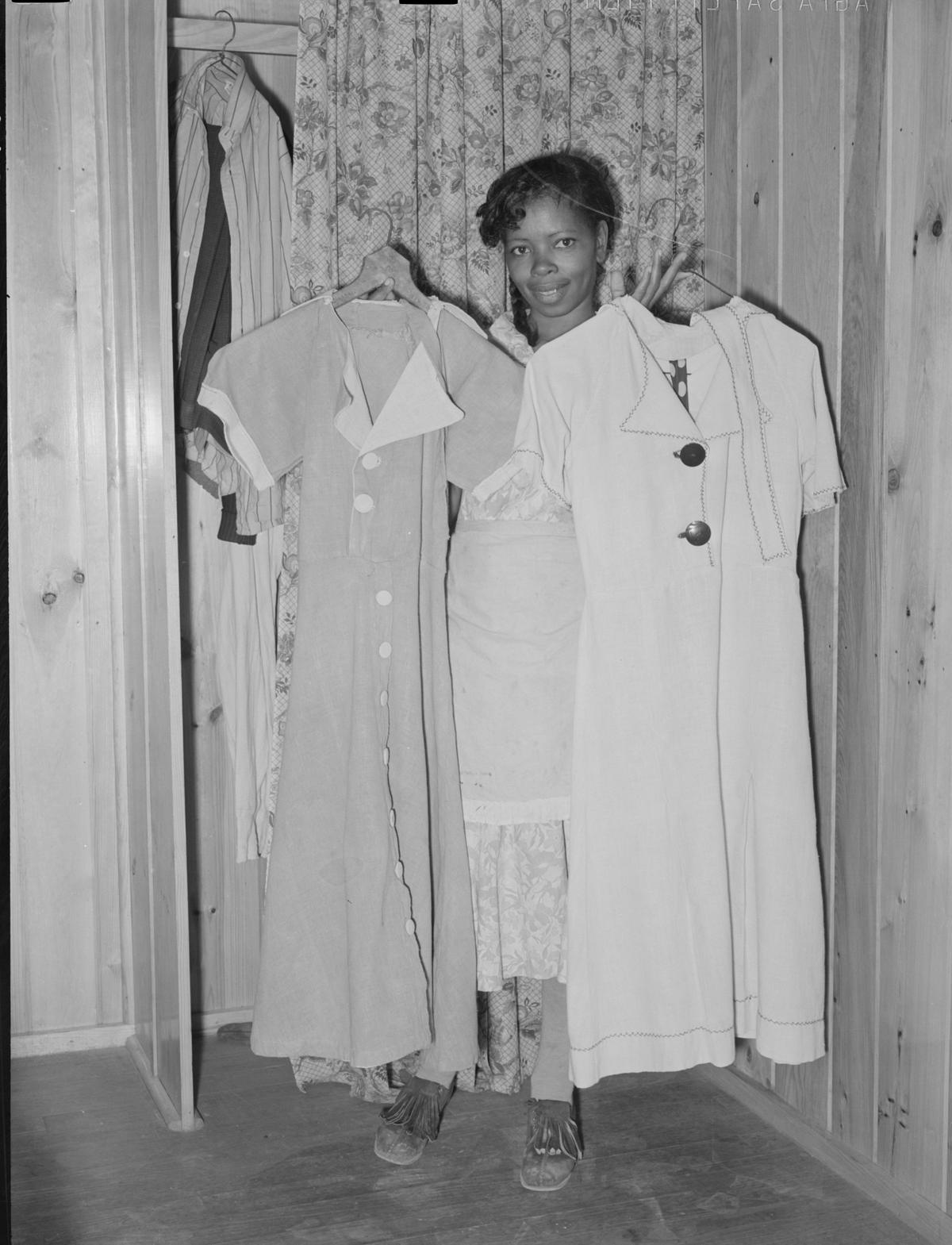
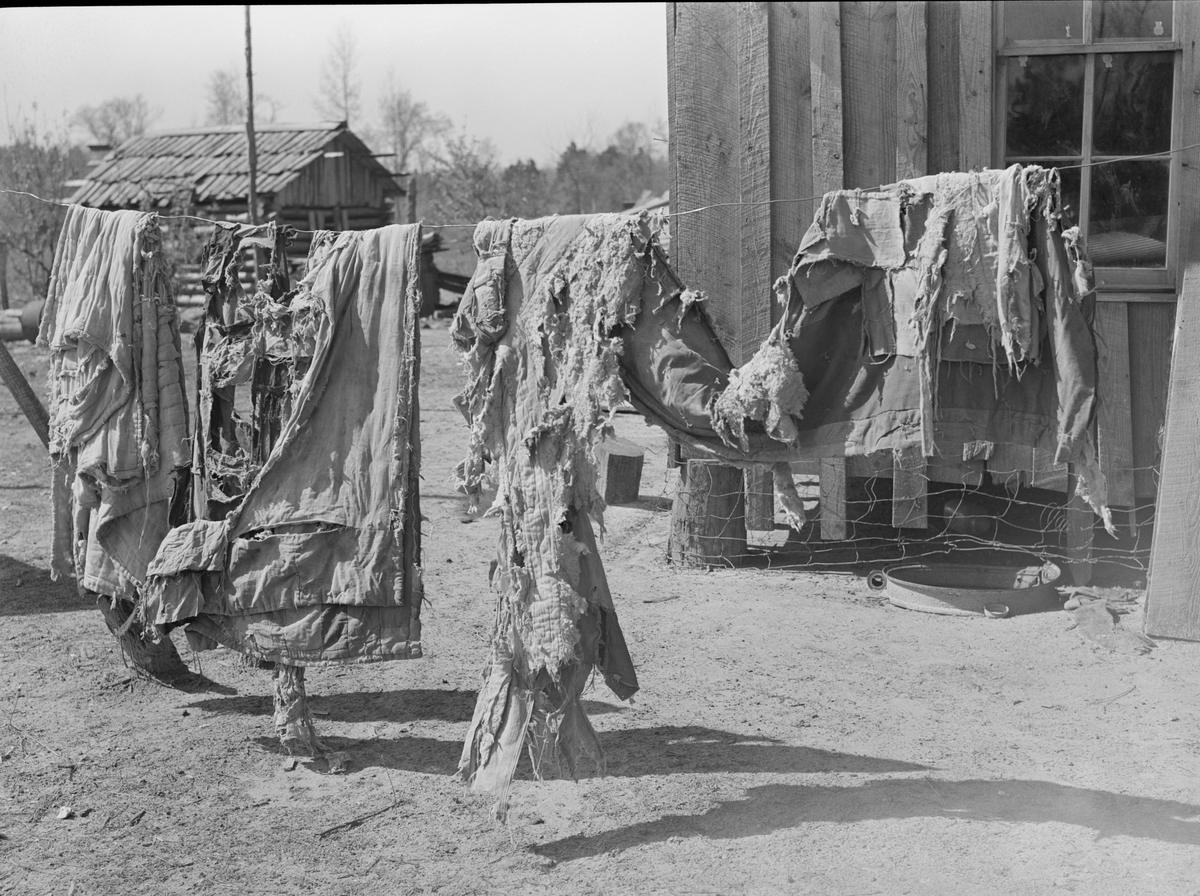
Farm Security Administration photographers recorded it: a woman at Sabine Farms, Texas, holding dresses she made from flour sacks (April 1939), and a dress of flour sacks made with a home supervisor's help at Osage Farms, Missouri (November 1939). Many families bleached out or covered the logos, because sack clothing could be read as a sign of poverty. Quilts were used hard too: Russell Lee photographed these worn ones, belonging to a family on relief, near Jefferson, Texas.

A smiling woman in a light dress and apron holding up a curtain decorated with splatter work
Arthur Rothstein, a woman whose dress of flour sacks was made with the help of the FSA home supervisor, Osage Farms, Missouri, November 1939. Arthur Rothstein, FSA · Library of Congress · Public domain
A young woman smiling as she holds up two pale dresses on hangers
Russell Lee, wife of an FSA client holding dresses she made from flour sacks, Sabine Farms, Marshall, Texas, April 1939. Russell Lee, FSA · Library of Congress · Public domain
Worn, tattered quilts hanging over a wire line in a dirt yard beside a wooden house
Russell Lee, quilts of a family on relief near Jefferson, Texas, March 1939. Russell Lee, FSA · Library of Congress · Public domain

1917 – 1930s

Patterns in every newspaper

Quiltmaking boomed between the world wars. Newspapers hired pattern columnists: Florence LaGanke wrote as Nancy Page, Loretta Leitner Rising as Nancy Cabot, and Ruby Short McKim's Mother Goose Quiltie series of 1917 is the earliest known syndicated newspaper quilt pattern series. The Kansas City Star printed a weekly quilt pattern from 1928 to 1961, more than a thousand in all.

Readers clipped them and made the quilts now linked with the era: Double Wedding Ring, which the Smithsonian says became popular in the late 1920s (the women's club at Granger Homesteads, Iowa, is making one in this 1940 photograph); Dresden Plate; the hexagon Grandmother's Flower Garden; and Sunbonnet Sue, whose faceless girls grew out of Bertha Corbett's Sunbonnet Babies of 1900.

A row of pieced star and block quilts hung along the porch of a raised farmhouse, with a small girl on the steps
Marion Post Wolcott, spring housecleaning, homemade quilts and bedding in the sun, Coffee County, Alabama, April 1939. Marion Post Wolcott, FSA · Library of Congress · Public domain
Five women sewing at a table spread with a scrappy Double Wedding Ring quilt
John Vachon, members of the women's club making a quilt, Granger Homesteads, Iowa, April 1940. John Vachon, FSA · Library of Congress · Public domain

1930s

Most 1930s quilts weren't sacks

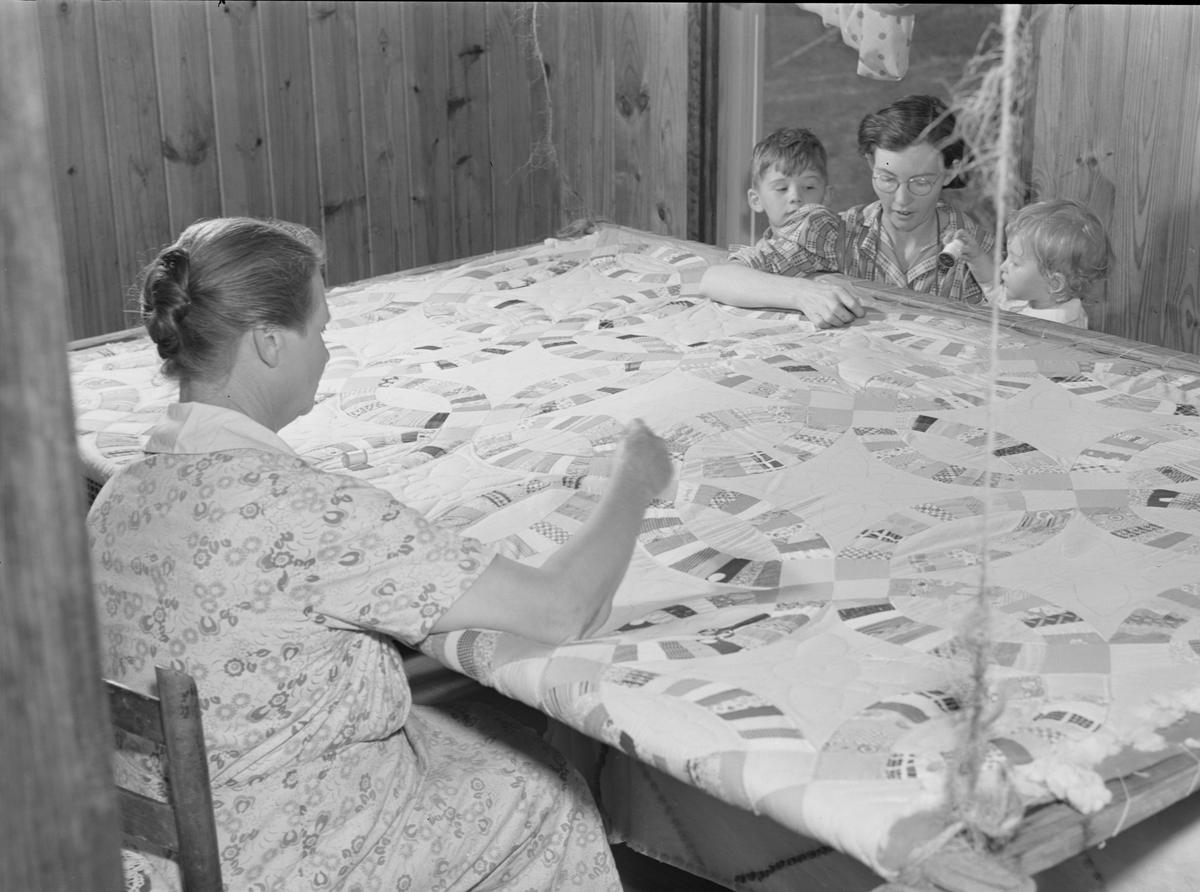
The soft prints of a 1930s quilt are often called "feed sack," but most quilts of the decade were made from store-bought yardage and dressmaking scraps, sometimes mixed with sack cloth. The Smithsonian's 1930 Double Wedding Ring quilt from North Carolina, for example, was made from yard goods sold in a country store.

Printed dress-goods sacks only became common at the very end of the decade, so sack prints turn up most often in quilts of the 1940s.

A woman quilting at a large frame of pieced arcs while three children watch from the far side
Marion Post Wolcott, Mrs. Clarence N. Pace with her children and her mother-in-law quilting at home, Transylvania Project, Louisiana, June 1940. Marion Post Wolcott, FSA · Library of Congress · Public domain
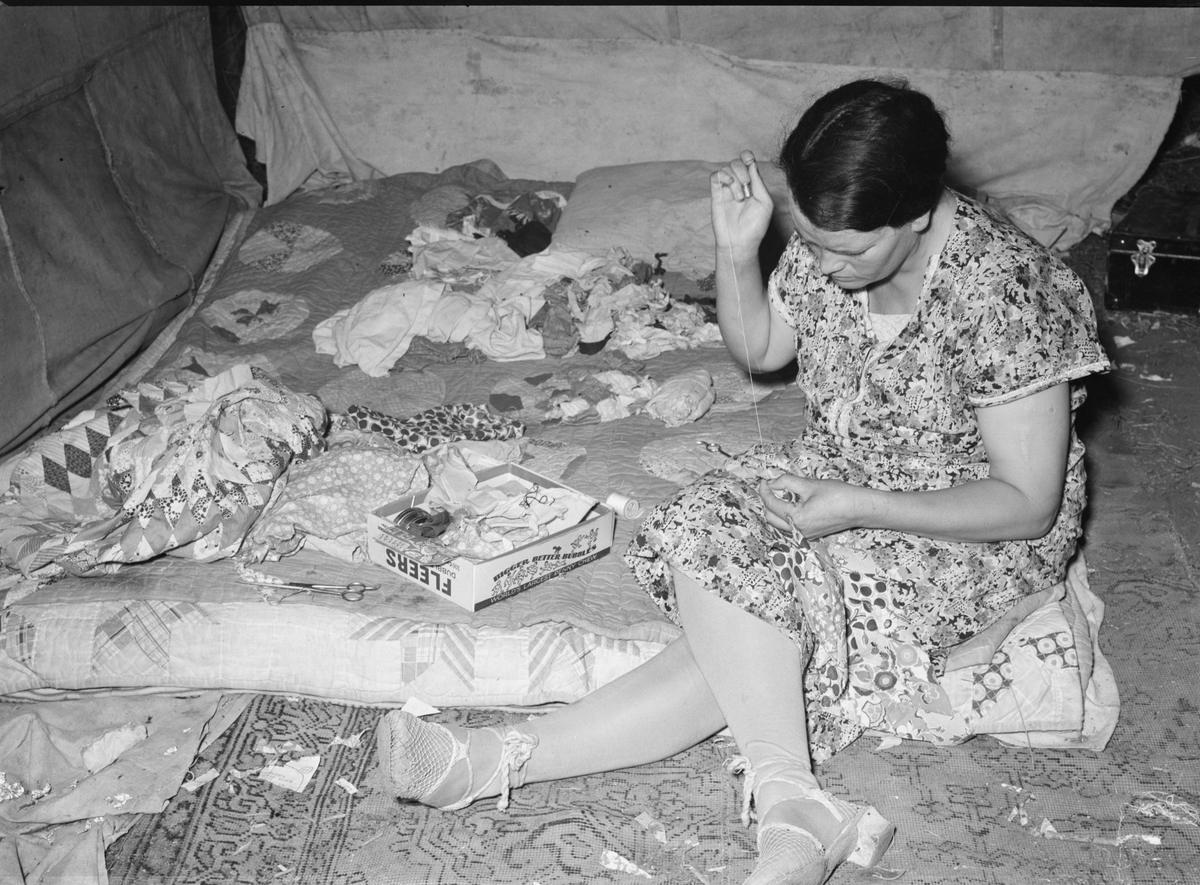
A woman in a print dress sitting on a bed piecing a quilt, surrounded by scraps of fabric
Russell Lee, a migrant mother piecing a quilt, Harlingen, Texas, February 1939. Russell Lee, FSA · Library of Congress · Public domain

1933

The Sears National Quilt Contest

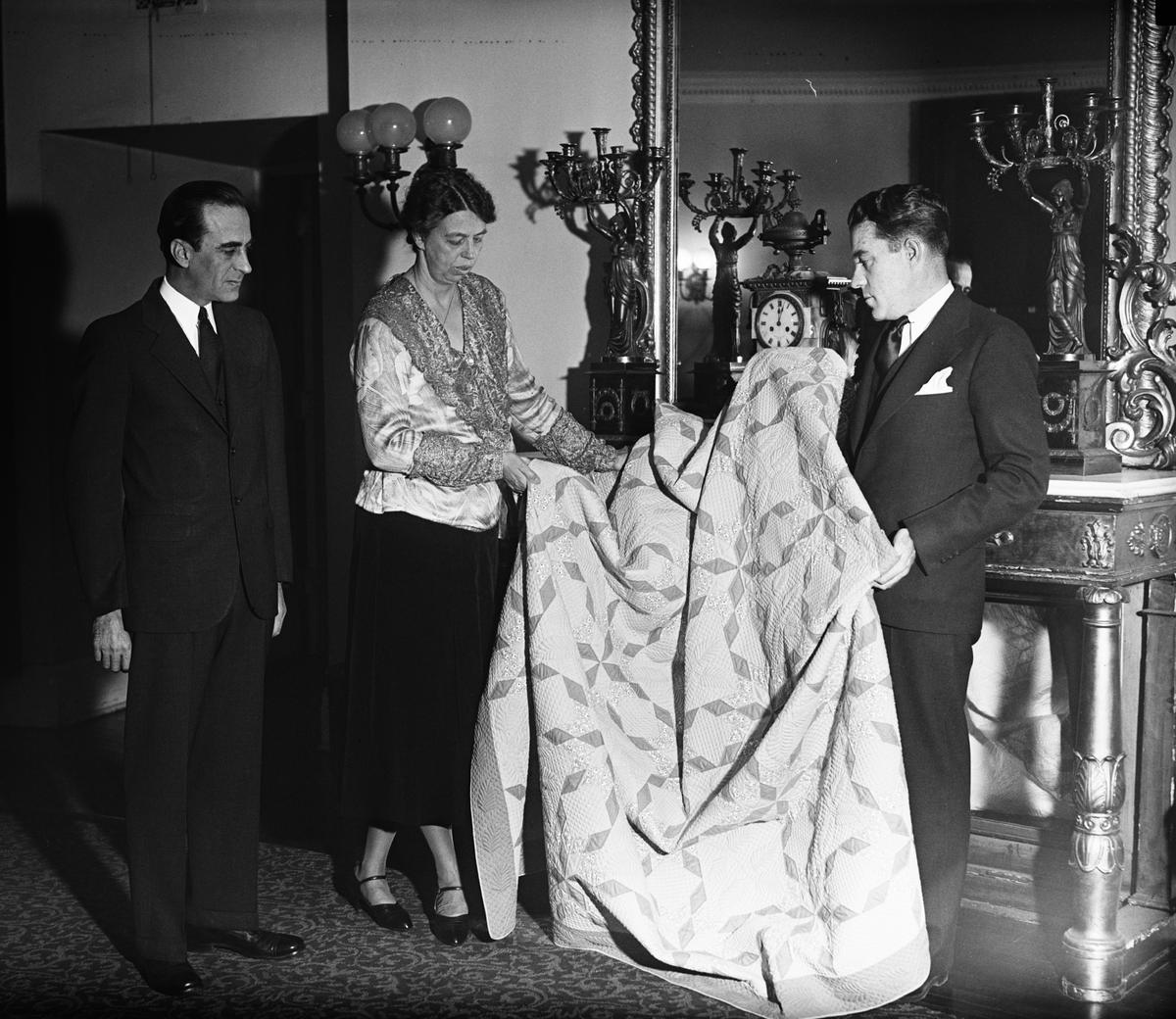
Sears, Roebuck and Co. held a national quilt contest for Chicago's 1933 Century of Progress World's Fair, offering $7,500 in prizes, a $1,000 grand prize and a $200 bonus if the winner was an original design commemorating the fair. More than 24,000 quilts were entered, the largest quilt contest on record.

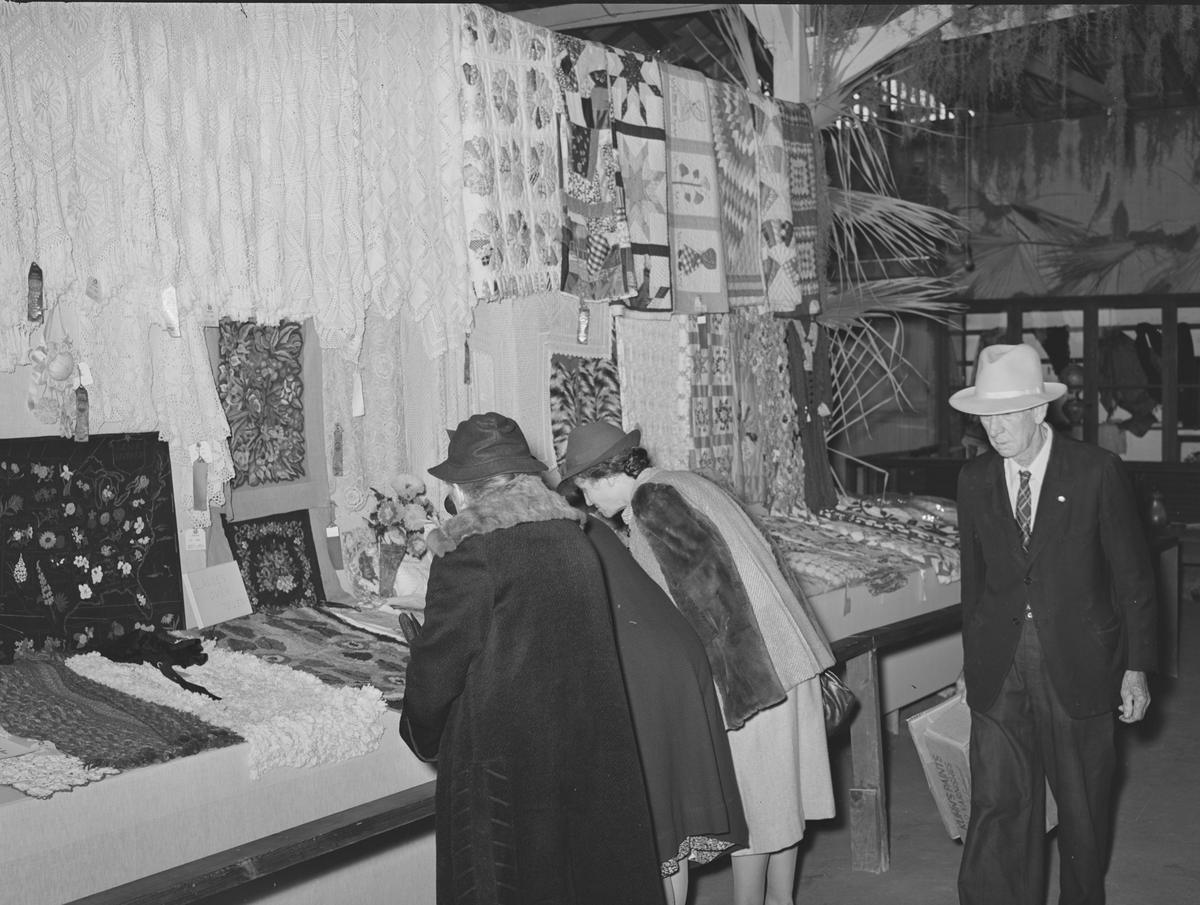
The grand prize went to a traditional star quilt, Star of the Bluegrass, entered by Margaret Caden of Lexington, Kentucky, and the $200 bonus was never paid because no theme quilt won. Sears presented the winning quilt to Eleanor Roosevelt. Even the 1933 press caption says Caden made it, but quilt historians later showed that she did not sew it herself: Kentucky needlewomen working for her did. County fairs, like this one in Gonzales, Texas, in 1939, kept quilters competing closer to home.

Eleanor Roosevelt holding up a large white star quilt with two men in suits
Harris & Ewing, Eleanor Roosevelt receiving the grand-prize quilt of the Sears contest, Washington, D.C., 1933. Harris & Ewing · Library of Congress · Public domain
Women in coats and hats looking at quilts, crochet and rugs in a county fair exhibit
Russell Lee, women looking at the quilting and crocheting exhibit, Gonzales County Fair, Gonzales, Texas, November 1939. Russell Lee, FSA · Library of Congress · Public domain

Late 1930s

Dress-print sacks: mills compete for the farm wife

Colored and patterned sacks spread through the 1930s; by 1936 Staley Milling of Kansas City was selling flour in pastel "Tint-sax." True dress-print sacks, cotton printed with florals and novelty patterns meant for sewing, became common in the late 1930s. Barbara Brackman points to 1938 photographs as evidence of when they arrived.

In February 1939 Russell Lee photographed printed flour sacks at a Texas migrant camp under a Liberty Mills poster for Rose Buds and Perfection Flour that told shoppers to "look for the coupon" and showed the prints sewn into aprons, curtains and quilts. The Smithsonian notes that bag makers printed bright patterns because they believed attractive fabric would win the homemakers who chose the brand.

Two sacks of flour in bold printed cotton below a Liberty Mills poster showing the prints made into an apron, curtains and a quilt
Russell Lee, flour sacked in new printed fabrics, under a chart of uses for the sacking, migrant camp near Sebastian, Texas, February 1939. Russell Lee, FSA · Library of Congress · Public domain

1940 – 1945

Sack quilts and the war

In the early 1940s, sack cloth went into quilts on homesteads and into the war effort at home.

June 1940

A quilt from tobacco sacks

In Pie Town, New Mexico, a homesteading community settled by farmers from Texas and Oklahoma, Russell Lee photographed Mrs. Bill Stagg in June 1940 holding a quilt she had made from tobacco sacks, which, the caption says, she "ripped up, dyed, and pierced" (probably "pieced"). "Nothing is wasted on these homesteading farms," the caption adds. He also photographed her, in color, with a state quilt she made.

Most surviving sack quilts look like any 1930s or 1940s scrap quilt, because makers mixed sack cloth with dress scraps and store-bought yardage. Women still often quilted together, like the women's club at Granger, Iowa, the same spring; see the history of quilting bees.

A woman on the porch of a log house holding up a pieced quilt
Russell Lee, Mrs. Bill Stagg with a quilt she made from tobacco sacks, Pie Town, New Mexico, June 1940. Russell Lee, FSA · Library of Congress · Public domain
A 1940 color photograph of a homesteader in a print dress and apron beside her pink and white embroidered state quilt hung on a line
Mrs. Bill Stagg with a state quilt she made, Pie Town, New Mexico, 1940. Russell Lee, FSA · Library of Congress · Public domain

1942 – 1945

World War II: thrifty and patriotic

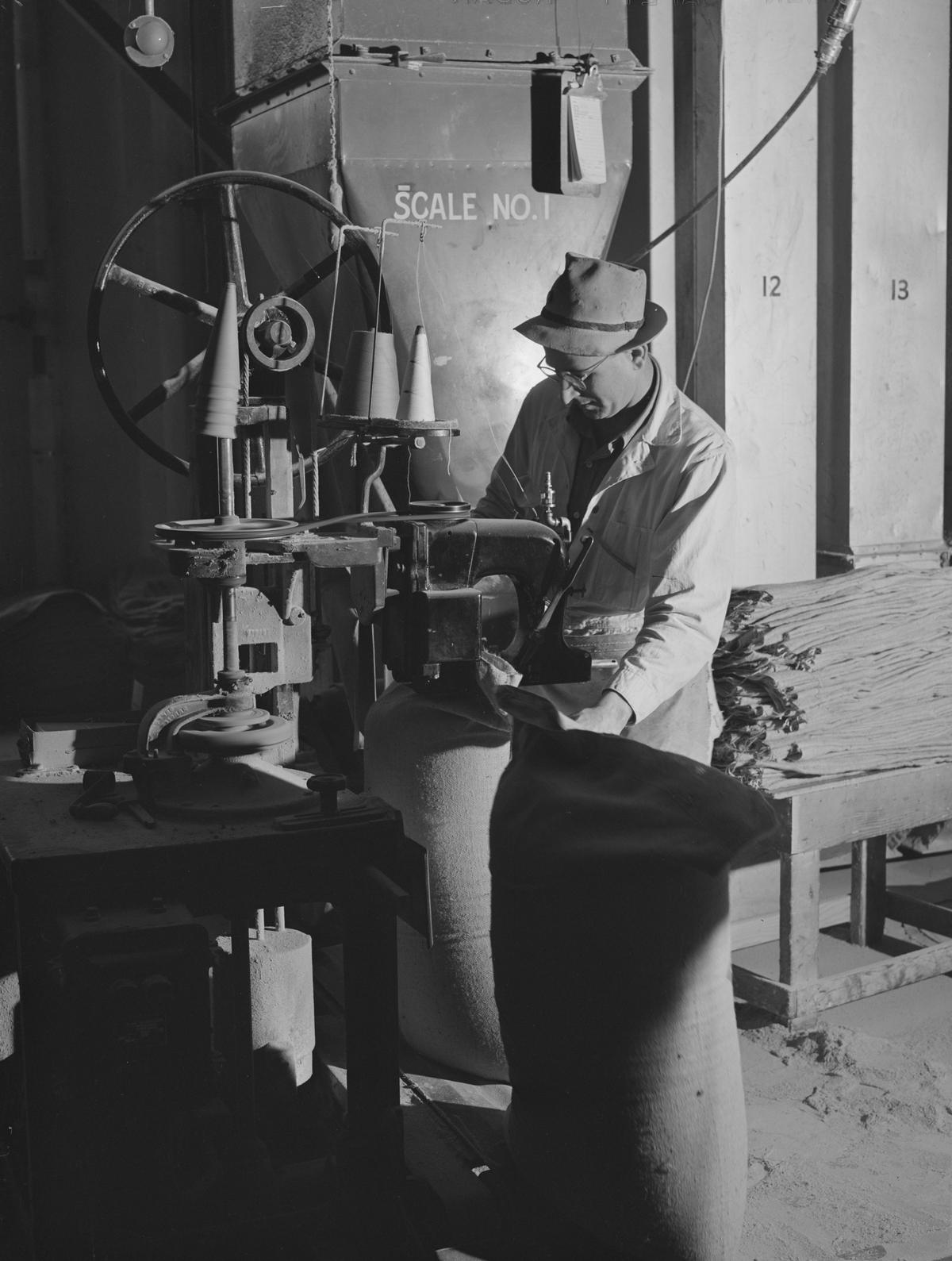
When Japan's advance threatened shipping from India, the world's main source of jute, the United States faced a shortage of burlap bags, and cotton and paper bags filled the gap. Cotton cloth was scarce for civilians, and the Smithsonian notes that the government encouraged women to reuse cotton bags.

Bag sizes were standardized during the war, and sewing with sacks was presented as thrifty and patriotic. The Smithsonian dates the brightly colored and printed bags to the 1940s, which is why sack prints turn up most often in quilts of that decade.

A mill worker in a hat filling a cloth sack with feed under a chute marked Scale No. 1
Russell Lee, filling sacks with feed at a feed mill, Petaluma, California, January 1942. Russell Lee, FSA · Library of Congress · Public domain
Older women in print dresses quilting a checkerboard quilt around a frame
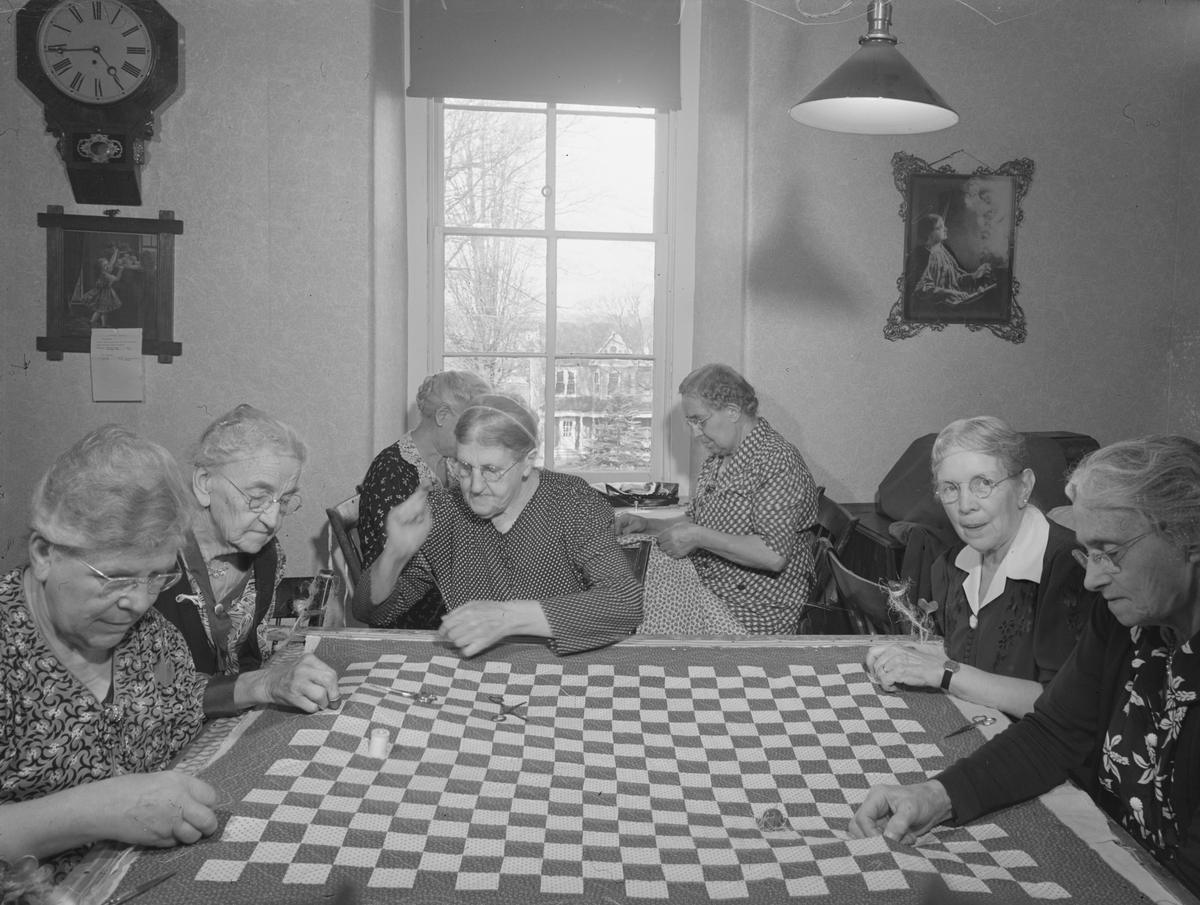
Marjory Collins, the Moravian sewing circle quilting, Lititz, Pennsylvania, November 1942. Marjory Collins, OWI · Library of Congress · Public domain

1946 – today

Fashion, then paper

After the war, the bag makers fought to keep women buying in cloth, and then paper won.

1946 – 1959

The peak, then sewing contests

The commodity bag trade peaked just after the war. The National Cotton Council and the Textile Bag Manufacturers Association worked with pattern companies, hired textile designers and ran sewing contests to keep women buying products in cloth.

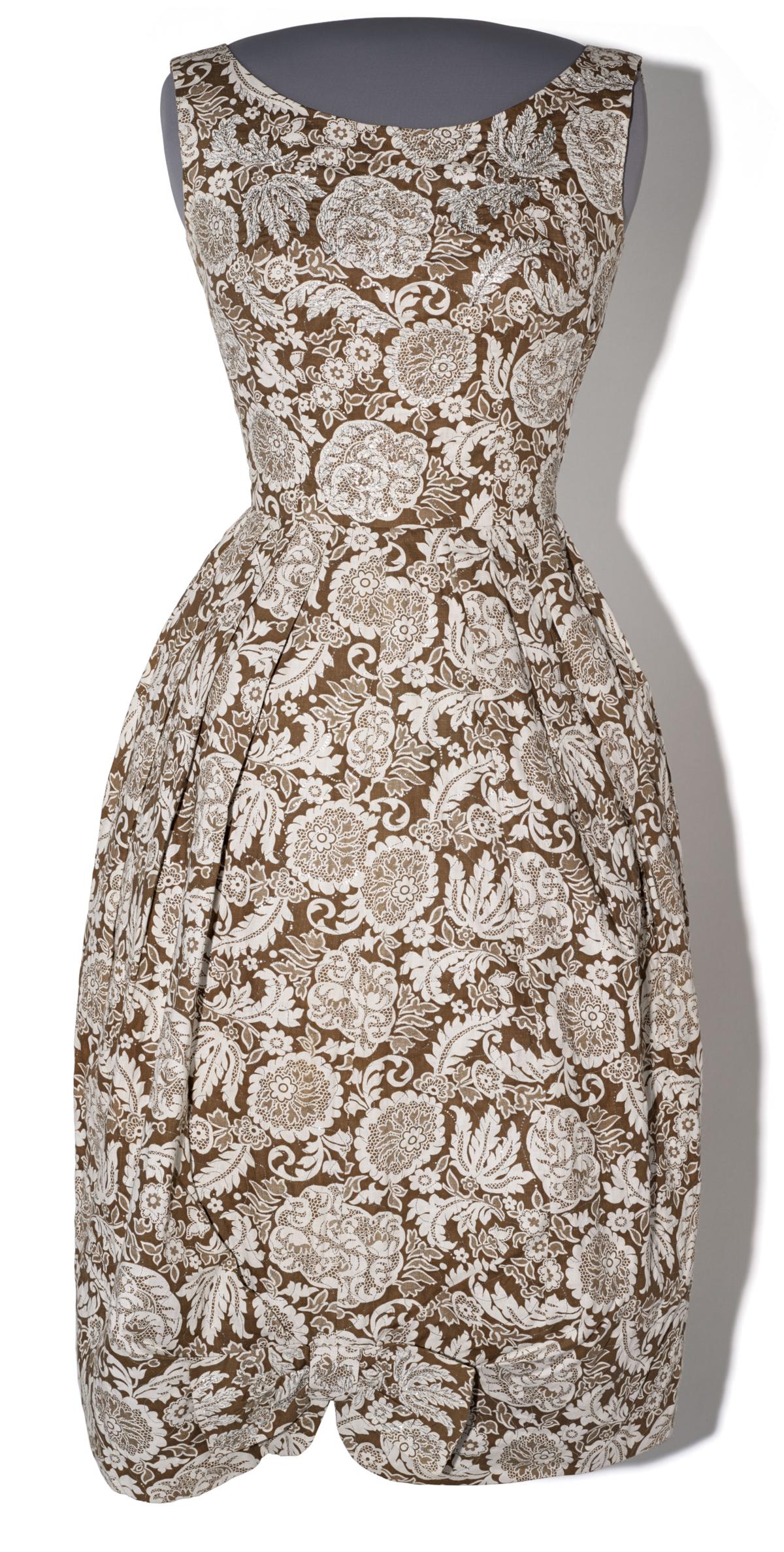
In 1959 Dorothy Overall of Caldwell, Kansas, made this dress for the Cotton Bag Sewing Contest from black cotton bag fabric printed with white flowers, lined in organdy. It took second place in the Mid-South section and is now in the Smithsonian.

A sleeveless dress with a full skirt in a dark cotton printed with white flowers and leaves
Dorothy Overall, dress made from cotton bag fabric for the 1959 Cotton Bag Sewing Contest, Caldwell, Kansas. Smithsonian National Museum of American History · CC0
Close-up of cotton bag fabric printed with pale flowers and leaves on a dark ground, with a scalloped hem
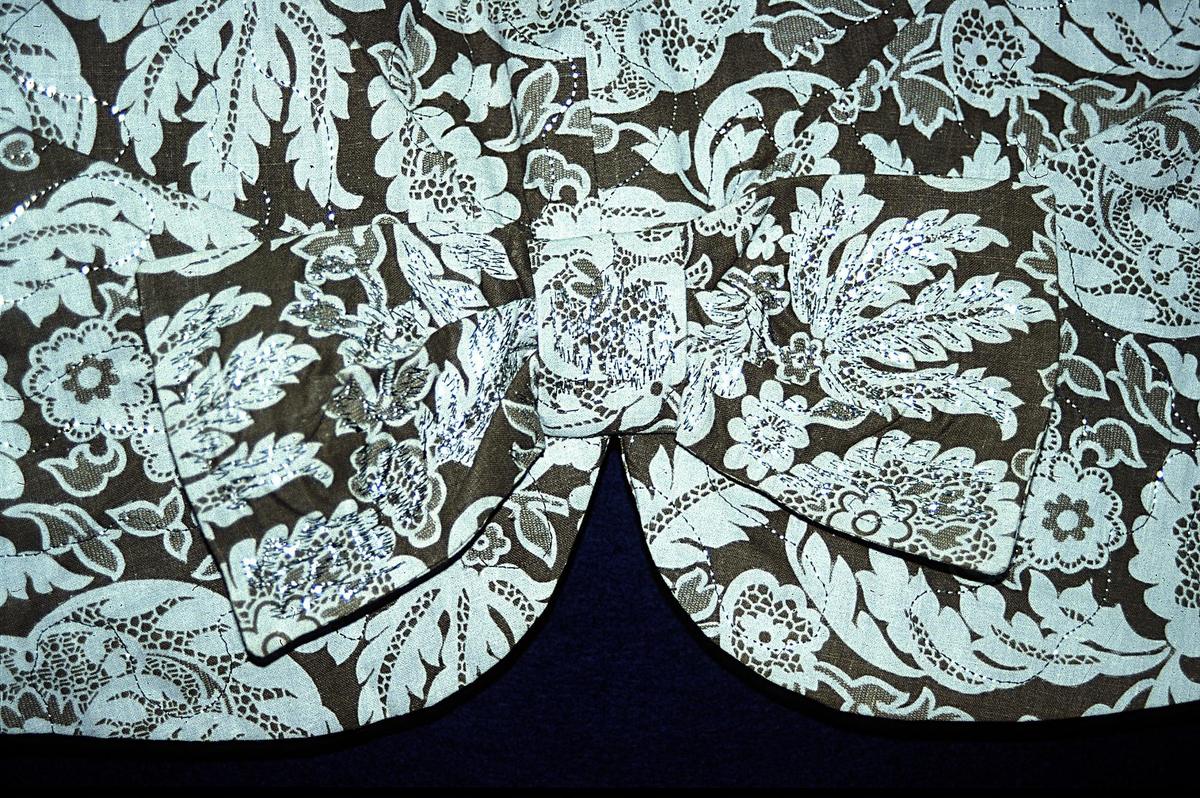
Detail of Dorothy Overall's 1959 dress: the printed cotton bag fabric and its scalloped hem. Smithsonian National Museum of American History · CC0

1950s – 1960s

Paper takes over

Cheaper packaging ended the era. Cloth bags gave way to multiwall paper bags, then to plastic bags and bulk delivery by truck. Most feed sack production had ended by the early 1960s, though the International Quilt Museum notes that use continued into that decade.

Today

Collecting feed sacks

Feed sack fabric and the quilts made from it are now collected and studied. The International Quilt Museum mounted Feed Sacks: An American Fairy Tale in 2024, and books by Gloria Nixon (2010) and Linzee Kull McCray (2016) document the prints and the companies that made them.

Historians caution that not every 1930s print came from a sack: much quilt fabric was store-bought yardage, and many sack prints date from the 1940s. If you have a stack of vintage sacks, you can photograph them and try them in a quilt in Quiltler before you cut.

Feed sack myths

Feed sacks come with a lot of family stories. Here is what patents, archive photographs and quilt historians actually show.

Partly true

Printed dress-print sacks date from the 1920s.

Checked gingham sacks (Gingham Girl, by 1925) and pastel solids came earlier, but true dress-print sacks only became common in the late 1930s and peaked in the 1940s and early 1950s.

Myth

Every 1930s pastel quilt is a feed sack quilt.

Most 1930s quilts used store-bought yardage and dressmaking scraps, sometimes mixed with sack cloth. The Smithsonian's 1930 Double Wedding Ring quilt was made from yard goods sold in a country store.

Myth

Margaret Caden made the quilt that won the 1933 Sears contest.

Even the 1933 press photo caption says she made it, but quilt historians found that she did not sew it; Kentucky needlewomen working for her did.

Myth

Double Wedding Ring is an old pioneer pattern.

It is a 20th-century pattern. Barbara Brackman found a 1928 Capper's Weekly sketch and a dated example from 1932; it grew from the older Pickle Dish pattern, and the Smithsonian says it became popular in the late 1920s.

Partly true

Grandmother's Flower Garden was invented in the 1930s.

The name and the pastel look are 1930s, but quilts of pieced hexagons, called mosaic or honeycomb quilts, go back to at least the early 1800s.

Partly true

Only the very poor wore feed sack clothes.

It began as thrift, and many families hid the logos. But after World War II sack prints were marketed as fashion through contests and pattern tie-ins, and women of many incomes sewed with them.

Make a 1930s-style quilt of your own

The patterns of the feed sack years are still among the most loved, and scrappy prints suit them all.

Feed sack quilt questions

What is a feed sack quilt?

A quilt pieced, at least in part, from the cotton bags that flour, sugar, feed and even tobacco were sold in. Women reused plain sacks from the late 1800s, and from the late 1930s mills sold goods in sacks printed with dress fabrics meant for sewing. Most sack quilts also mix in dress scraps and store-bought yardage.

When were feed sacks printed with patterns?

Checked gingham sacks were on sale by 1925, and pastel and colored sacks spread through the 1930s. True dress-print sacks, printed with florals and novelty patterns, became common in the late 1930s, peaked in the 1940s and early 1950s, and faded as paper bags took over.

Why were feed sacks printed with patterns?

To sell the flour or feed inside. Bag makers and millers promoted sewing with cotton bags from 1925, and the Smithsonian notes that they printed bright patterns because they believed attractive fabric would win the homemakers who chose the brand. Some mills added coupons and posters showing what the prints could become.

How can you tell if fabric is feed sack?

Often you can't from the print alone. A trace of a mill's printed lettering is the clearest clue, since brand inks were made to soak out. Historians caution that much fabric of the period was store-bought yardage and that most sack prints date from the 1940s, so a soft 1930s print is not proof on its own.

When did feed sacks stop being made?

Cheaper multiwall paper bags, then plastic bags and bulk delivery by truck, replaced cloth bags after the war. Most feed sack production had ended by the early 1960s, though some use continued into that decade.

What was the Sears 1933 quilt contest?

A national contest Sears held for Chicago's Century of Progress World's Fair, with $7,500 in prizes and a $1,000 grand prize. More than 24,000 quilts were entered. The winner, Star of the Bluegrass, was entered by Margaret Caden of Lexington, Kentucky, but sewn by needlewomen working for her, and it was presented to Eleanor Roosevelt.

What quilt patterns were popular in the 1930s?

Double Wedding Ring, Dresden Plate, Grandmother's Flower Garden and Sunbonnet Sue are the ones most linked with the era, spread by newspaper pattern columns such as Nancy Page, Nancy Cabot and the Kansas City Star's weekly pattern. Many were sewn in light pastel cottons, from yardage as often as from sacks.

More quilt history

Sources and image credits

  1. Margaret Powell, "From Feed Sack to Clothes Rack: The Use of Commodity Textile Bags in American Households from 1890–1960," Textile Society of America Symposium Proceedings (2012)
  2. Kendra Brandes, "Feed Sack Fashion in Rural America: A Reflection of Culture," Online Journal of Rural Research & Policy 4, no. 1 (2009)
  3. International Quilt Museum: Feed Sacks: An American Fairy Tale (2024)
  4. U.S. Patent 1,611,403, A. T. Bales, "Package" (filed 1924, granted 1926)
  5. Gloria Nixon, Feedsack Secrets: Fashion from Hard Times (2010)
  6. Linzee Kull McCray, Feed Sacks: The Colourful History of a Frugal Fabric (2016)
  7. Textile Research Centre, Leiden: For a Few Sacks More
  8. Smithsonian National Museum of American History: Feedsack Dress, 1959, Dorothy Overall
  9. Smithsonian National Museum of American History: 1930 Double Wedding Ring quilt, North Carolina
  10. Barbara Brackman, "Feed Sack Prints 1938," Material Culture (2022)
  11. International Quilt Museum: World Quilts, The American Story, "Publishing Explosion"
  12. Barbara Brackman, "Kansas City Star Quilt Patterns List" (2020)
  13. Encyclopedia of Cleveland History: Florence LaGanke Harris, "Nancy Page"
  14. Barbara Brackman, "Double Wedding Rings," Material Culture (2010)
  15. JSTOR Daily: The Merchandising Whiz behind the Sunbonnet Babies
  16. Merikay Waldvogel, "The Sears National Quilt Contest," Journal of Antiques & Collectibles (2020)
  17. International Quilt Museum: World Quilts, The Great Depression, "Eyes on the Prize"
  18. Barbara Brackman, "Chicago's 1933 Quilt Contest Updated," Material Culture (2023)
  19. Time, "Jute, Hemp and Bedlam" (1942)

Every photograph is in the public domain or released under CC0: the Farm Security Administration and Office of War Information photographs and the Harris & Ewing photograph from the Library of Congress, the patent drawing from the U.S. Patent and Trademark Office, and the contest dress from the Smithsonian's National Museum of American History. Each caption names the photograph and links to its record.