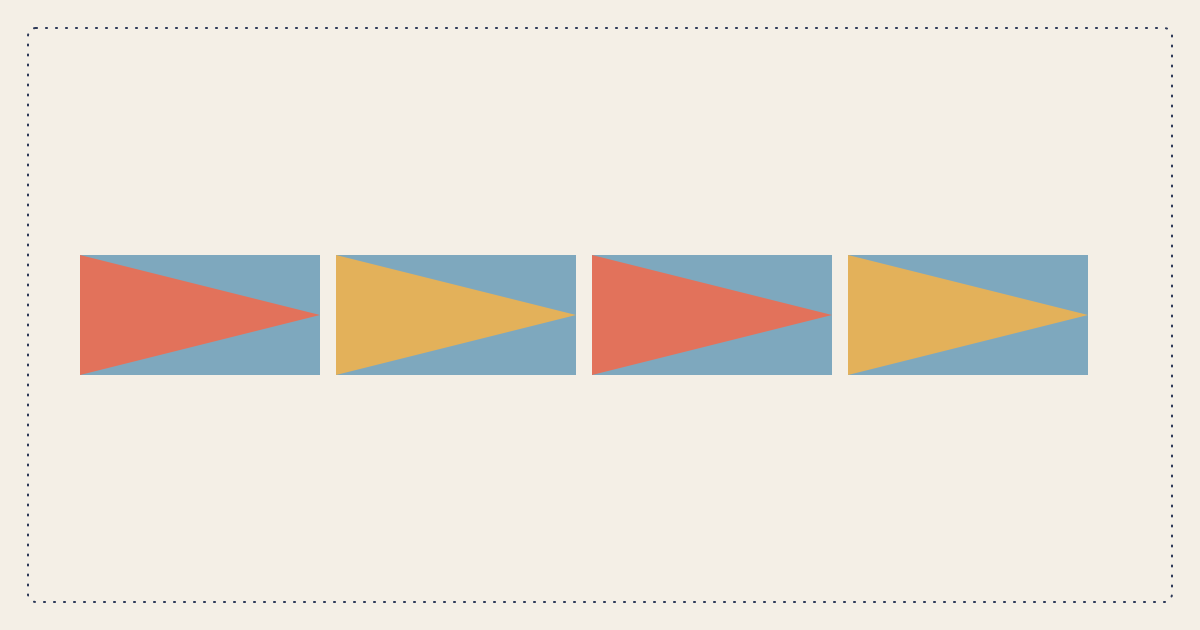
Sizes on this page are written height × width. "Finished" is the goose's size in the quilt: a 2 × 4 inch goose is 2 inches tall and 4 inches wide. Every cut is from Quiltler's flying geese calculator.
Flying geese size chart
| Finished goose | No-waste: 1 large square | No-waste: 4 small squares | Stitch-and-flip: 1 rectangle | Stitch-and-flip: 2 squares | Trim to |
|---|---|---|---|---|---|
| 1 × 2 in | 3 1/4 in | 1 7/8 in | 1 1/2 × 2 1/2 in | 1 1/2 in | 1 1/2 × 2 1/2 in |
| 1 1/2 × 3 in | 4 1/4 in | 2 3/8 in | 2 × 3 1/2 in | 2 in | 2 × 3 1/2 in |
| 2 × 4 in | 5 1/4 in | 2 7/8 in | 2 1/2 × 4 1/2 in | 2 1/2 in | 2 1/2 × 4 1/2 in |
| 2 1/2 × 5 in | 6 1/4 in | 3 3/8 in | 3 × 5 1/2 in | 3 in | 3 × 5 1/2 in |
| 3 × 6 in | 7 1/4 in | 3 7/8 in | 3 1/2 × 6 1/2 in | 3 1/2 in | 3 1/2 × 6 1/2 in |
| 3 1/2 × 7 in | 8 1/4 in | 4 3/8 in | 4 × 7 1/2 in | 4 in | 4 × 7 1/2 in |
| 4 × 8 in | 9 1/4 in | 4 7/8 in | 4 1/2 × 8 1/2 in | 4 1/2 in | 4 1/2 × 8 1/2 in |
| 4 1/2 × 9 in | 10 1/4 in | 5 3/8 in | 5 × 9 1/2 in | 5 in | 5 × 9 1/2 in |
| 5 × 10 in | 11 1/4 in | 5 7/8 in | 5 1/2 × 10 1/2 in | 5 1/2 in | 5 1/2 × 10 1/2 in |
| 5 1/2 × 11 in | 12 1/4 in | 6 3/8 in | 6 × 11 1/2 in | 6 in | 6 × 11 1/2 in |
| 6 × 12 in | 13 1/4 in | 6 7/8 in | 6 1/2 × 12 1/2 in | 6 1/2 in | 6 1/2 × 12 1/2 in |
The no-waste columns make four geese from one large and four small squares. The stitch-and-flip columns make one goose from one rectangle and two squares.
No-waste method: four at a time
Large square = finished width + 1 1/4 inches. Small squares = finished height + 7/8 inch. The large square becomes the goose and the small ones the sky, with nothing cut off and thrown away. A 3 × 6 inch goose takes one 7 1/4 inch square and four 3 7/8 inch squares.
- Draw a diagonal line on the back of each small square.
- Lay two small squares on opposite corners of the large square, right sides together, so their lines run corner to corner across it. They overlap a little in the middle.
- Sew 1/4 inch either side of the line, then cut on the line. Press the small triangles out.
- On each piece, lay a third small square in the corner of the large triangle, line running from the corner to the point between the two small triangles. Sew 1/4 inch either side and cut on the line.
- Press, and trim each of the four geese to its unfinished size.
No-waste geese only come out twice as wide as they are tall. For any other shape, use stitch-and-flip.
Stitch-and-flip: one at a time
Rectangle = finished height + 1/2 inch by finished width + 1/2 inch. Squares = finished height + 1/2 inch. It takes more fabric, because the corners are cut off, but it is accurate, works for geese of any proportion, and suits fabric with a direction.
- Draw a diagonal on the back of both squares.
- Lay one square on one end of the rectangle, right sides together, line running from the top center down to the bottom corner. Sew on the line, trim 1/4 inch beyond it, and press the corner out.
- Do the same at the other end. The two seams should cross 1/4 inch below the top edge, so the goose keeps its point when the next seam is sewn.
The corners you trim off are pairs of triangles. Sew a second line 1/2 inch outside the first and cut between the two, and they come away as small bonus half-square triangles.
Trim to
Every goose should measure its finished size plus 1/2 inch before it is sewn into a block: 2 1/2 × 4 1/2 inches for a 2 × 4 goose. Trim with the point 1/4 inch below the top edge, centered.
Work it out for your own size
Any size, any count. The flying geese calculator scales the squares to the number of geese you need, and takes geese that are not 1 by 2 for stitch-and-flip. It is also in the studio under Calculators → Flying geese. More about the unit: Flying Geese.
Step-by-step in Quiltler
- Flying geese on the web · 2 min