People search quilt seam allowance when a block comes out small or a quilt comes out short. Quiltler designs in finished language on the layout and includes seam allowance when it counts yardage from pieces. This page is that handshake, not a sewing-machine class. Block inches are quilt block size planner. Piece-based totals are quilt yardage from design. How-to math without a drawing is how to calculate quilt fabric.
On this page
What this page actually plans
- Finished is what you see on the quilt. Unfinished is finished plus two seam allowances.
- A scant quarter is a sewing habit; the software still plans a consistent SA.
- Calculators state when cuts include SA. Read the card.
- Two fabrics on free still get honest totals for those pieces.
- FPP seams follow the printed solid/dashed convention on foundation paper piecing sheets.
Why quilts come out small
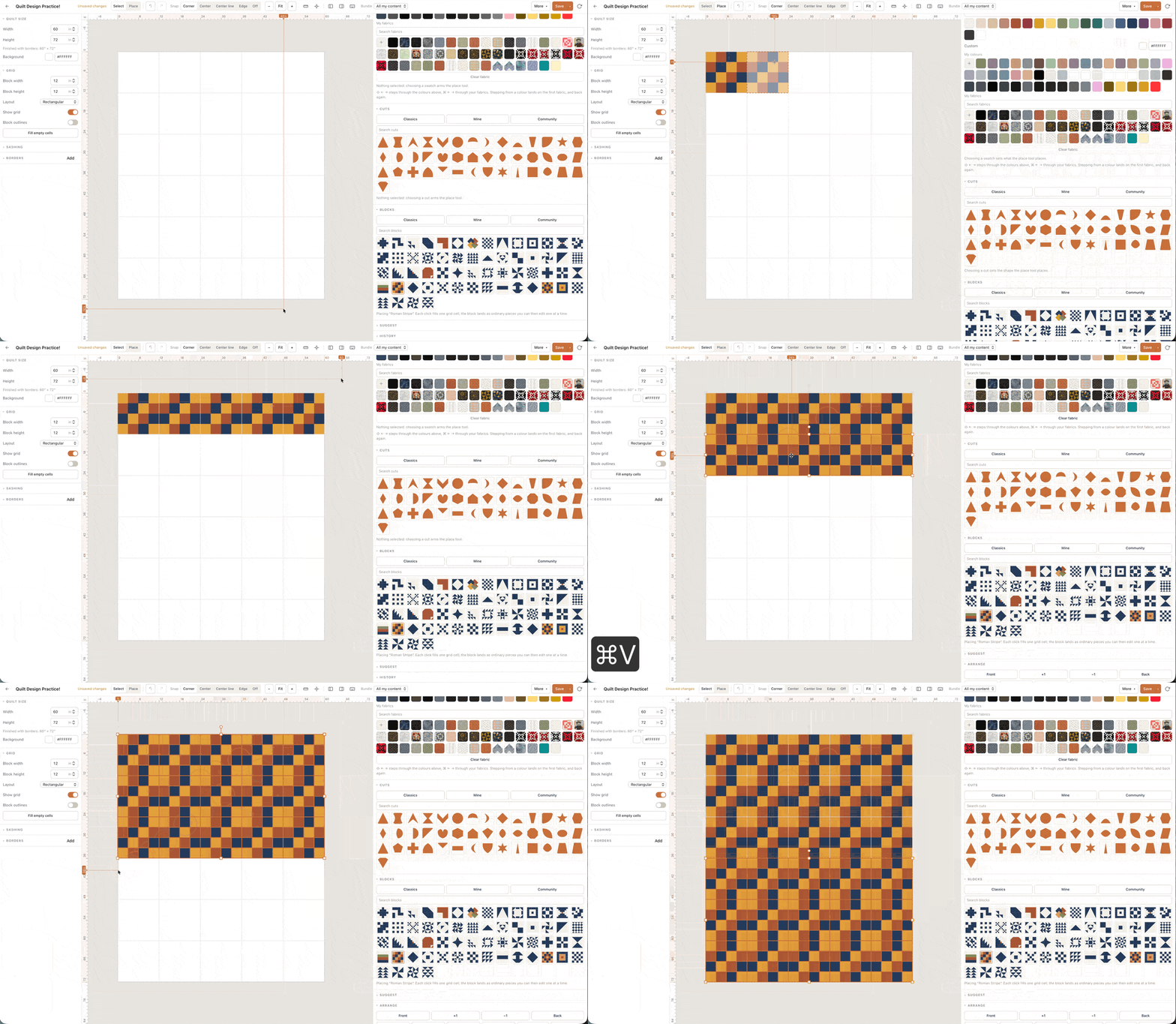
If every seam is a fat quarter-inch, a nine-patch of 3-inch finished squares can lose an inch across the block. Ten blocks later the throw is a pillow. The studio will not catch a fat seam. It will show the finished size you typed. Sew the SA you planned.
Yardage from design adds SA on the pieces so you cut enough cloth. That is not a license to sew a 3/8 inch seam and keep the same finished quilt. Quilting shrinks a little more. Measure the top before you cut binding from a pattern ideal.
One saved quilt whose finished size matches the bed you promised. A fat quarter-inch on every seam of a nine-patch can steal an inch per block; ten blocks later the throw is a pillow. The studio shows the finished size you typed. Sew the allowance you planned. Foundation paper piecing makes the sewing line visible on a sheet; regular patchwork is the same idea without paper.
Calculators versus the canvas
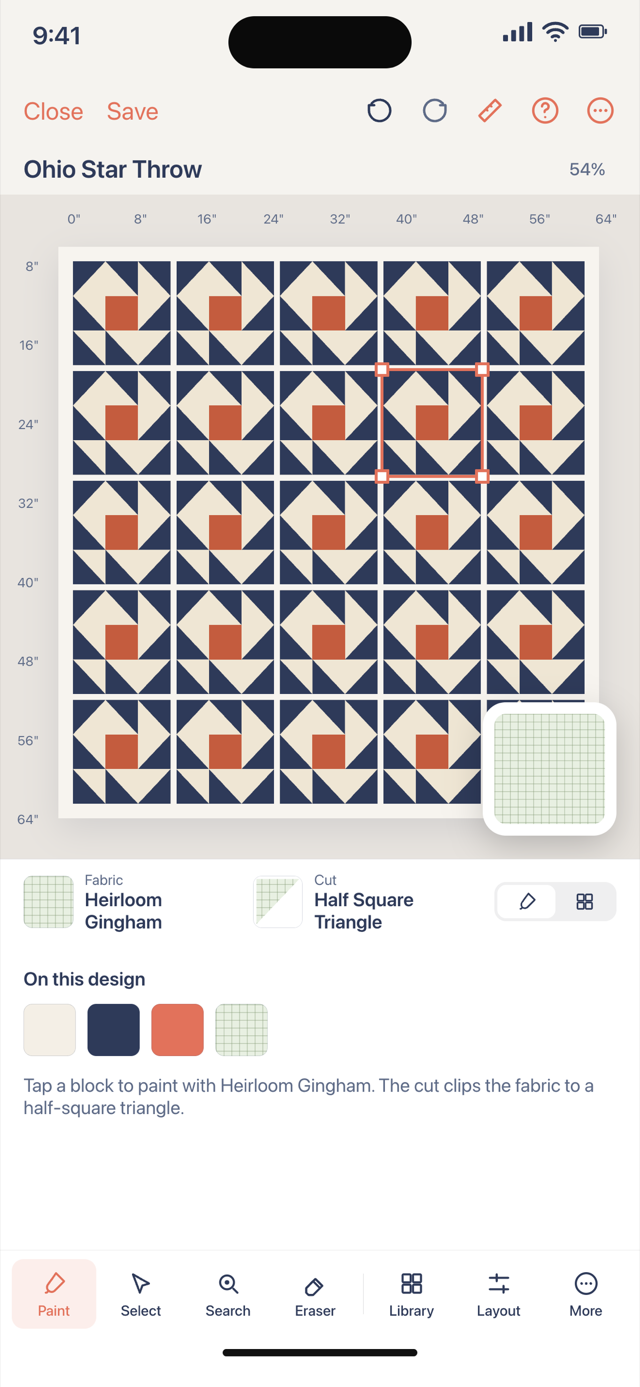
HST, geese, nine-patch and sashing calculators tell you cut sizes that already include the usual 1/4 inch. Do not add it twice. The canvas totals include SA on drawn pieces. Quilt width of fabric is unrelated except that strips are cut WOF. A scant quarter is a sewing habit that keeps the finished block from coming out small; the software still plans a consistent allowance.
EPP uses a different extra around papers — that is the EPP page, not this 1/4 inch patchwork habit. Foundation sheets show a sewing line and a trim line. Regular patchwork is the same idea without the paper. Print FPP at the finished size of the unit on the quilt, or the block will not fit the field you planned.
FPP and scant quarters
Foundation sheets show a sewing line and a trim line. That is seam allowance you can see. Regular patchwork is the same idea without the paper. If you use FPP for accuracy, print at the finished size of the unit on the quilt.
Write the finished inches down, then open the matching backing, binding or batting answer if that size has one. Those pages do not replace the canvas: they cover the rectangle jobs. The pieced top is still counted in the studio. If one unit needs foundation paper piecing, the pack can print sheets after you subscribe; a nine-patch field does not. Keep the free limit in mind: one saved quilt and two photographed fabrics, plus solids, is enough to prove the plan before you cut a stack the shop will not take back.
Open the studio, set a 12-inch finished block, and glance at yardage. Then sew a 1/4 inch, not a generous 3/8, if you want that 12 inches.