People search courthouse steps quilt planner when they want the cousin of log cabin: strips on opposite sides, then the other pair. Quiltler is that repeat in the studio. Classic spiral cabins are log cabin quilt planner and log cabin quilt block. Colour is how to choose quilt colors.
On this page
What this page actually plans
- Opposite sides, then the other pair. That is the construction difference.
- Value still makes the quilt. Two fabrics on free can prove it.
- Layout of many steps is this page; one block is drafting.
- Block size from log width. Quilt block size planner.
- FPP optional for tiny accuracy — foundation paper piecing.
Why it is not log cabin
Log cabin spirals. Courthouse steps marches: light on two opposite sides, dark on the others, round by round (methods vary, the pairing is the idea). If you sew a spiral and call it courthouse steps, the layout tricks (fields of bars) will not appear. Draft the unit so opposite logs match. Keep the name honest.
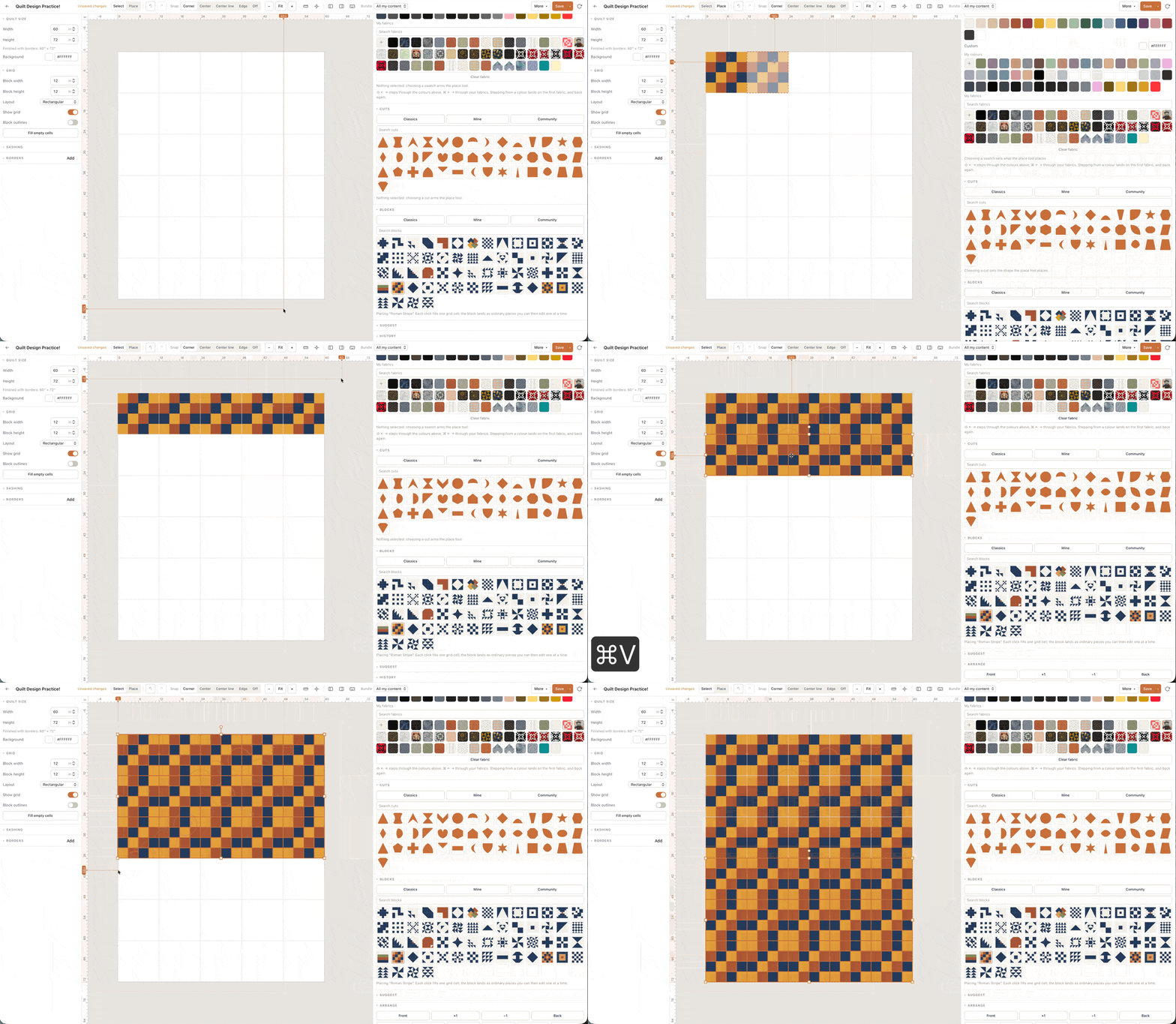
Then repeat. A throw of steps has a different rhythm than barn raising. Columns of courthouse steps make stripes; a spiral cabin layout will not. Photograph the two values. If they are too close, the bars vanish at three metres.
One saved quilt for the steps field you will sew. Opposite-side logs make bars; spirals make diamonds. If you sew a spiral and call it courthouse steps, the columns will not read. Foundation paper piecing is optional for tiny accuracy, not required for strip steps.
Where it shines
Courthouse steps makes strong horizontal and vertical bars when you set blocks in columns. Log cabin makes diamonds more easily. Pick the optical effect, then the block.
Strip sets and jelly rolls still apply if log width is 2.5 inches — jelly roll quilt planner. Courthouse steps in a jelly roll is opposite pairs, not a spiral. If the bars do not read, the values are too close, not the strip width.
Yardage
Same warning as cabins: lots of strips. Count on the canvas. Sashing is usually omitted so the bars can run. If you add sashing anyway, finished size changes and the bars break — decide on purpose.
Write the finished inches down, then open the matching backing, binding or batting answer if that size has one. Those pages do not replace the canvas: they cover the rectangle jobs. The pieced top is still counted in the studio. If one unit needs foundation paper piecing, the pack can print sheets after you subscribe; a nine-patch field does not. Keep the free limit in mind: one saved quilt and two photographed fabrics, plus solids, is enough to prove the plan before you cut a stack the shop will not take back.
Open the studio and draft opposite-side logs once. If the bars read, fill a throw.