People search flying geese quilt planner when the quilt is rows or borders of geese. Quiltler is that layout in the studio. One unit’s cut is the flying geese calculator and the flying geese quilt block guide. HSTs are a different triangle: half-square triangle quilt planner. Borders of geese still change size — quilt border planner.
On this page
What this page actually plans
- A goose has a direction. Layout is design, not only count.
- Finished goose size must divide the field or sashing must absorb leftovers.
- Two fabrics on free often means goose plus sky.
- Four-at-a-time methods live on the calculator; the quilt lives here.
- FPP geese exist for sharp points — foundation paper piecing.
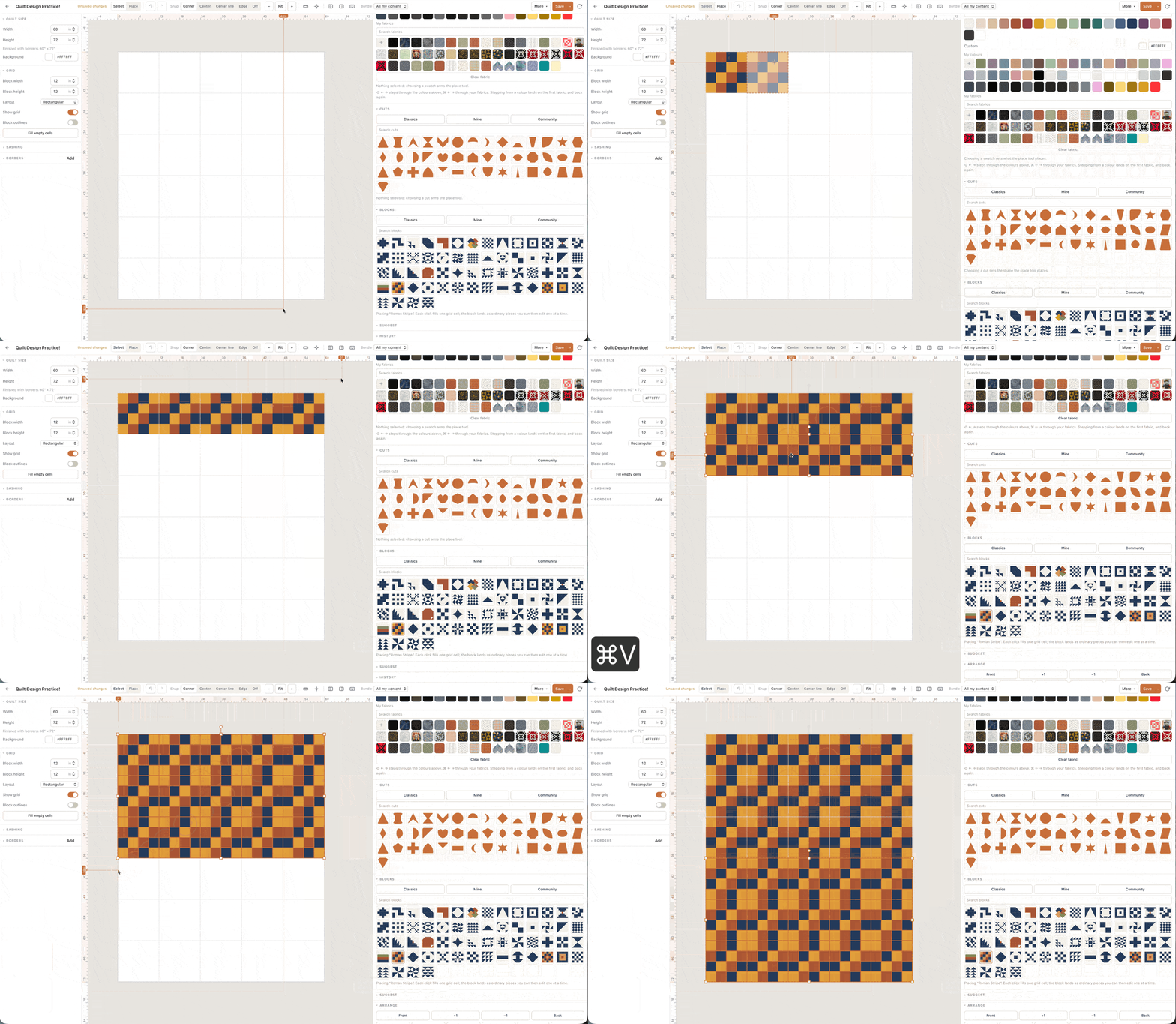
Rows, borders, or a whole field
Geese as a single inner border is a different quilt from a field of geese. Set throw or queen first. Then ask whether geese are the whole top or a frame. Frames belong with border math so the centre does not shrink by surprise.
The calculator gives the sky and goose rectangles. The studio shows how many repeats fill 50×65 or 90×95. Four-at-a-time methods change the starting squares; they do not change how many geese the quilt needs. Count the quilt first, then pick a construction method, then cut. A row that does not divide the width wants sashing or a different finished goose, not a sad sliver at the end.
One saved quilt for the goose plan you will sew. A border of geese is a different quilt from a field of geese; finished size moves either way. Cut sky and goose rectangles from the calculator after the canvas count. Foundation paper piecing helps tiny geese; most throw geese do not need paper.
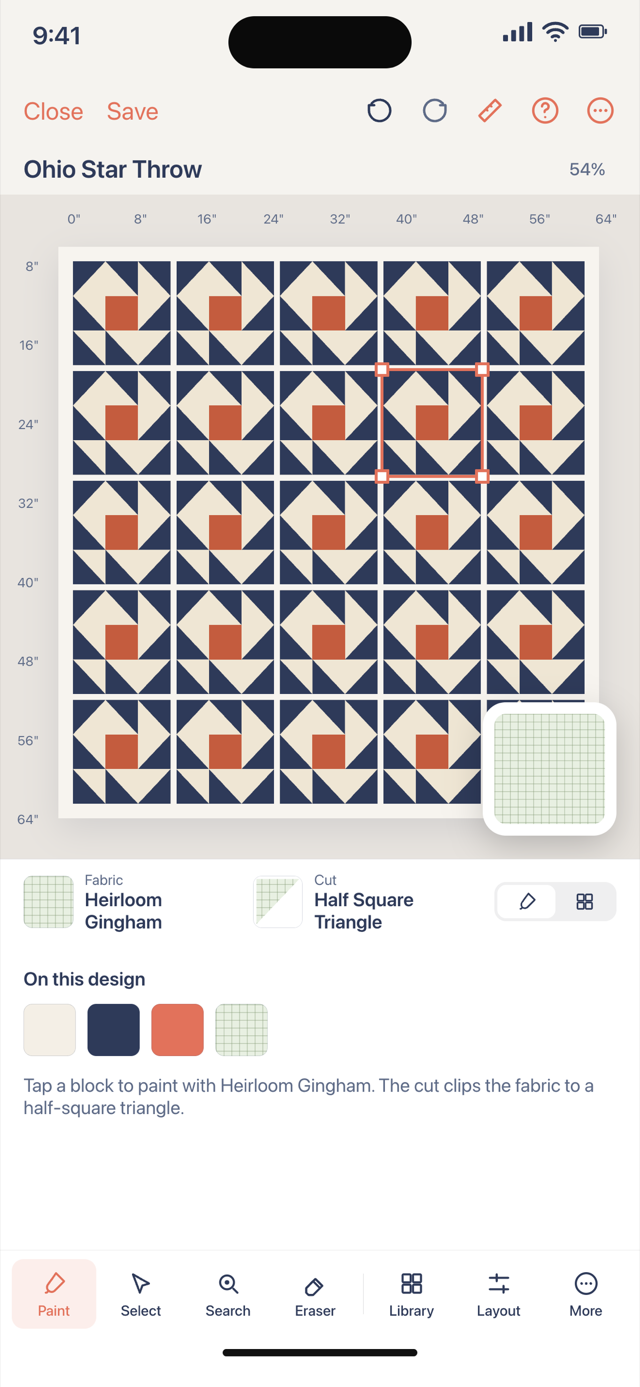
Geese versus HSTs versus setting triangles
HSTs are two triangles in a square. Geese are a large triangle with two small ones. Setting triangles fill on-point edges. Three calculators, three jobs.
Colour: sky fabric eats yardage. Photograph it. Quilt fabric stash app. A pale sky against a dark goose is the usual read; reverse it and the field flips. Prove that on two fabrics before you cut a hundred skies.
Points and FPP
If your geese never point, that is sewing, not software. If you want printed foundations for tiny geese, FPP sheets in the pack can help. Most throw geese do not need them.
Write the finished inches down, then open the matching backing, binding or batting answer if that size has one. Those pages do not replace the canvas: they cover the rectangle jobs. The pieced top is still counted in the studio. If one unit needs foundation paper piecing, the pack can print sheets after you subscribe; a nine-patch field does not. Keep the free limit in mind: one saved quilt and two photographed fabrics, plus solids, is enough to prove the plan before you cut a stack the shop will not take back.
Open the studio, place a row of geese on a throw, and check finished size before you cut a hundred skies.