People search half-square triangle quilt planner when the quilt *is* HSTs: pinwheels, fields, chevrons. Quiltler is that layout job in the studio. How to cut one unit is the half-square triangle guide and the half-square triangle calculator. Drafting a custom unit is make your own quilt block. This page is the quilt, not the Wikipedia of HSTs.
On this page
What this page actually plans
- The unit is small; the quilt is large. Set throw or queen first.
- Two fabrics shine. HST fields are the rare job where free two fabrics is often enough.
- Pressing and trim still happen at the machine. The canvas shows finished size.
- On-point HST fields need on-point quilt planner thinking.
- FPP is optional for tiny precision units — foundation paper piecing.
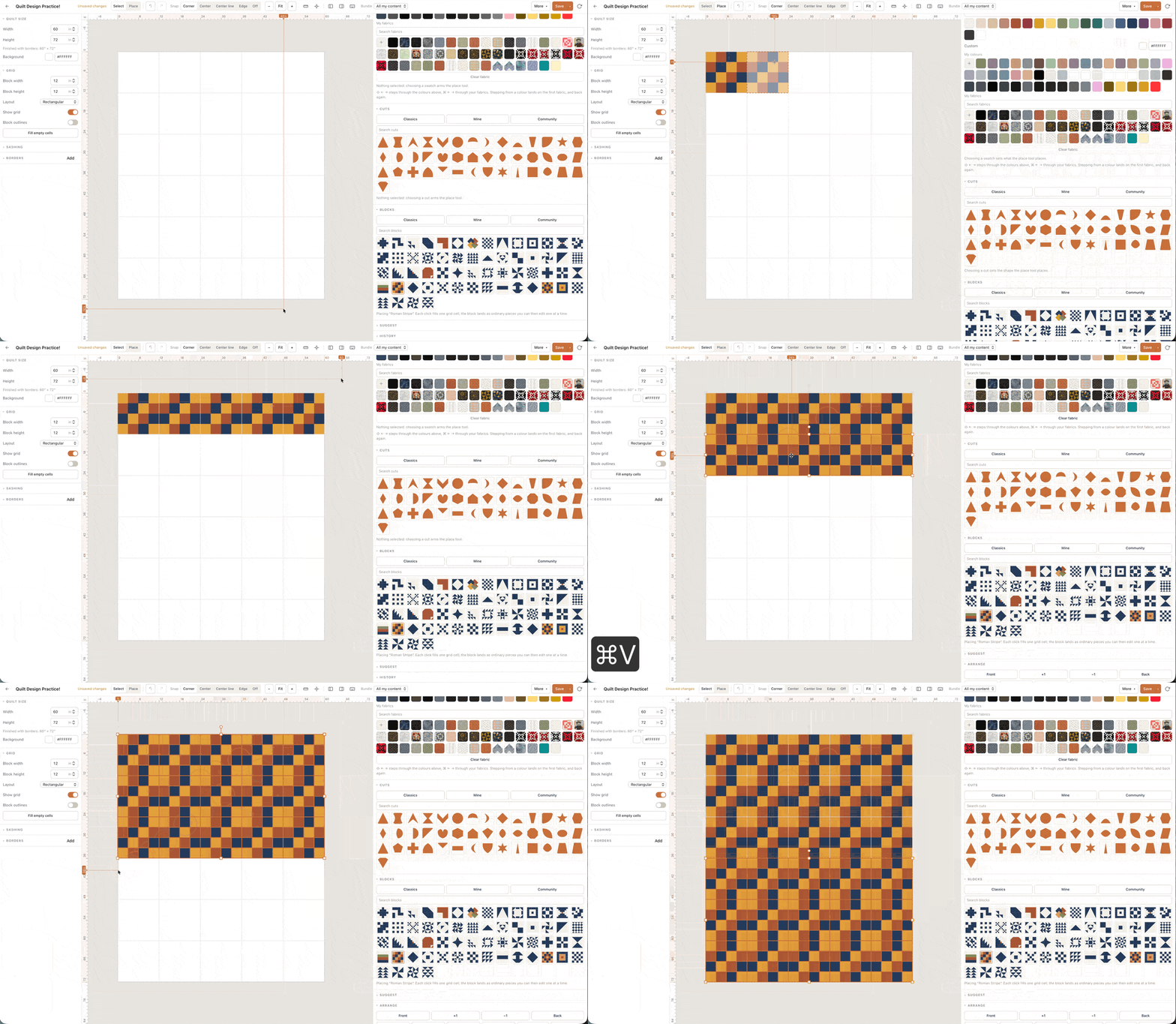
Layout, then the 2-at-a-time chart
Decide 50×65 or 90×95. Decide finished HST size (often 3, 4 or 6 inches). The calculator tells you the square to cut. The studio tells you how many HSTs the field needs, plus sashing if you add it. Do those in that order and you will not cut 400 of the wrong size.
Pinwheels are four HSTs. A whole pinwheel quilt is still this planner plus quilt block designer if you stamp a pinwheel.
One saved quilt for the HST field you will sew. Decide 3-, 4- or 6-inch finished units against the throw or queen, then cut squares from the HST calculator. Two-at-a-time methods waste less; eight-at-a-time is a different square. Foundation paper piecing is optional for tiny points, not required for a sofa field of HSTs.
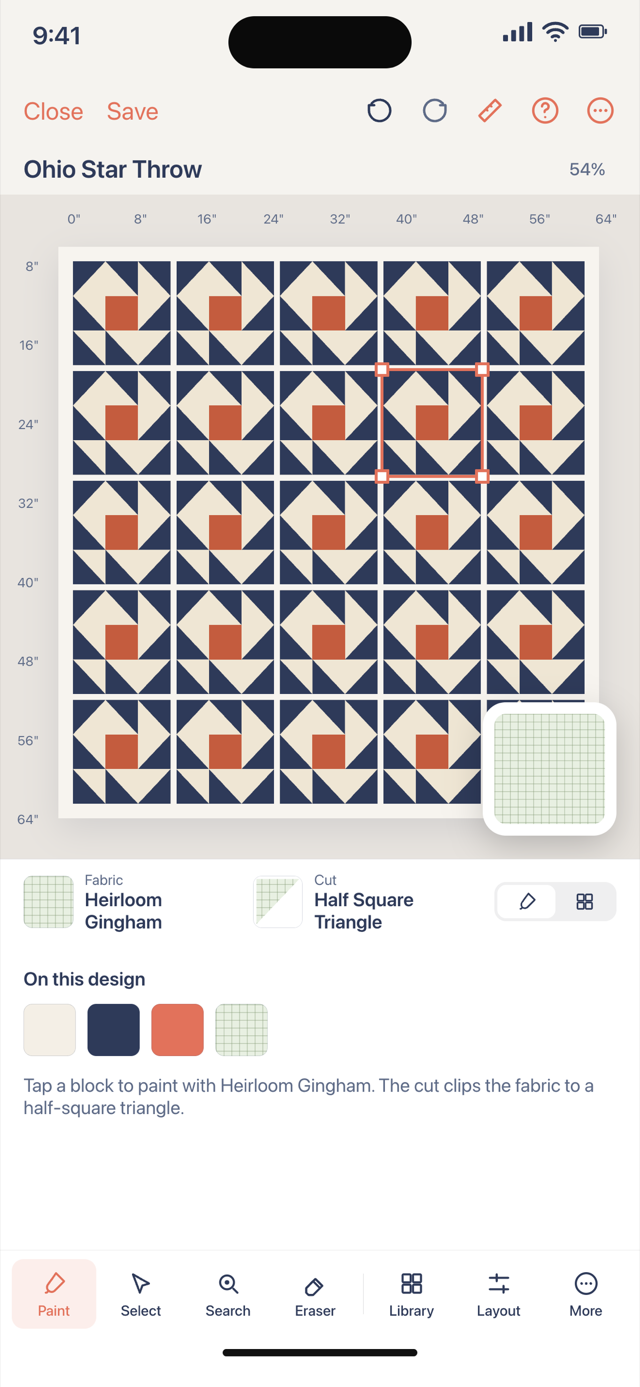
HST versus QST versus geese
Quarter-square triangles (hourglasses) are the quarter-square triangle calculator. Flying geese are flying geese quilt planner. Do not mix the cut charts.
Colour: two prints plus a solid is a classic HST quilt. How to choose quilt colors. High contrast HSTs read from across the room; low contrast HSTs look like texture. Prove both on the canvas with the two photographed fabrics you actually own before you cut four hundred squares.
Yardage
HSTs waste triangles if you pair squares. The calculator accounts for method (two, four, eight at a time). The studio counts the pieces on the quilt. They should agree within rounding.
Write the finished inches down, then open the matching backing, binding or batting answer if that size has one. Those pages do not replace the canvas: they cover the rectangle jobs. The pieced top is still counted in the studio. If one unit needs foundation paper piecing, the pack can print sheets after you subscribe; a nine-patch field does not. Keep the free limit in mind: one saved quilt and two photographed fabrics, plus solids, is enough to prove the plan before you cut a stack the shop will not take back.
Open the studio, stamp or pair HSTs across a throw, and keep the HST calculator open for the cut square.