People search memory quilt planner after a death, a graduation, or a drawer of baby clothes. Quiltler’s honest offer is design: photograph the cloth, lay blocks, keep finished size, read a fabric total. It does not sew the quilt or print photos onto cotton for you. T-shirt-only grids are t-shirt quilt planner. A portrait turned into polygons is photo quilt maker. Stash photography is the quilt fabric stash app.
On this page
What this page actually plans
- The garment is the print. Photograph shirts, ties, dresses on a flat board.
- Mixed block sizes are allowed. Memory quilts are rarely one charm pack.
- Size is still inches. Baby, throw or queen — pick from quilt sizes guide.
- Two photos on free. Choose the two hardest prints to prove scale.
- FPP for odd shapes. Custom pieces can use quilt cut designer and foundation paper piecing sheets when the pack is paid.
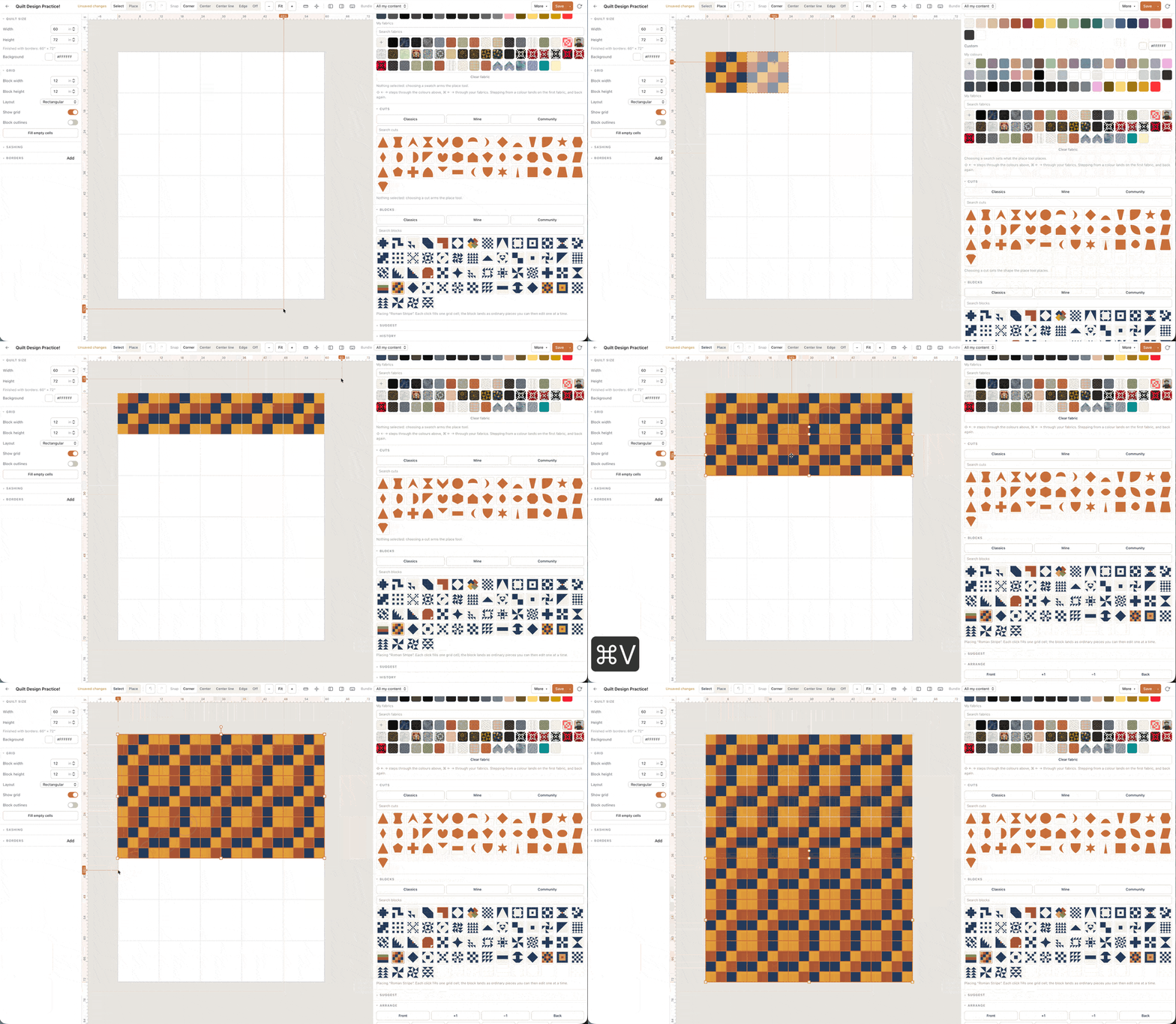
What the studio can and cannot hold
Quiltler holds geometry and photographs of cloth. It does not replace a longarmer, a label maker, or a grief counsellor. Use it so the family agrees on size and on which two prints dominate before anyone cuts a wedding dress.
Sashing in a quiet solid often saves a busy memory top. That is the quilt sashing planner. Borders should not accidentally turn a lap of baby clothes into a king.
Stabilise knits and silks at the ironing board. The canvas assumes you will sew the fibres you photographed.
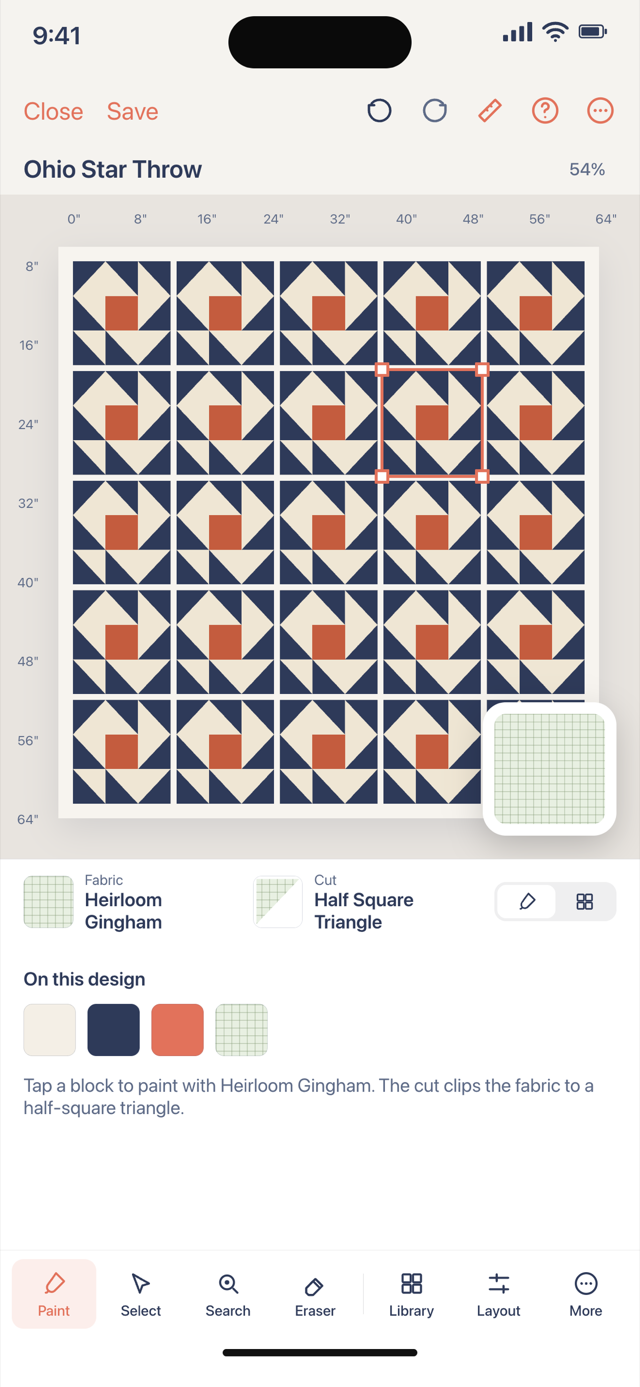
Memory versus t-shirt versus photo quilt
T-shirt planner assumes a grid of graphics. Memory planner assumes mixed clothing and maybe a scanned photo printed on fabric you already bought. Photo quilt maker assumes one picture faceted into pieces. Pick the job.
Colour roles still matter. How to choose quilt colors applies when the clothes fight each other.
Yardage and free limits
Background, sashing and backing are still shopping. Use how to calculate quilt fabric for the split. The garments are inventory.
One saved quilt on free should be the layout the family signed off on. Extra fabric photos are the paid library. Agree on throw versus queen before anyone cuts a wedding dress. Quiet sashing is allowed. Quiltler does not sew the quilt or print photos onto cotton. Foundation paper piecing is only for odd custom pieces you draw in Cut Creator, not for a rectangle of shirting.
Write the finished inches down, then open the matching backing, binding or batting answer if that size has one. Those pages do not replace the canvas: they cover the rectangle jobs. The pieced top is still counted in the studio. If one unit needs foundation paper piecing, the pack can print sheets after you subscribe; a nine-patch field does not. Keep the free limit in mind: one saved quilt and two photographed fabrics, plus solids, is enough to prove the plan before you cut a stack the shop will not take back.
Open the studio with two photographed garments and a throw size. If the scale is wrong, you learned it before the scissors.