People search king quilt designer when the quilt must cover a 76×80 mattress with drop — wider than queen, not a throw with ambition. Quiltler does that job in the studio. Inches are in the quilt sizes guide. Shopping without a saved design: how much fabric for a king quilt, how much backing for a king quilt, how much batting for a king quilt. Queen is queen quilt designer.
On this page
What this page actually plans
- 110×95 or your drop. Type king width first. Queen-width tops do not become kings by wishing.
- More blocks, same studio. King fields eat repeats. Pick units you can actually sew.
- Sashing that does not hide the size. Quilt sashing planner and quilt layout software keep strips honest.
- Two photographed fabrics on free. Solids fill extra roles. Fabric total includes king pieces.
- FPP only if the block needs it. Foundation paper piecing sheets print from the pack; most king nine-patches do not.
Why king design is a width problem
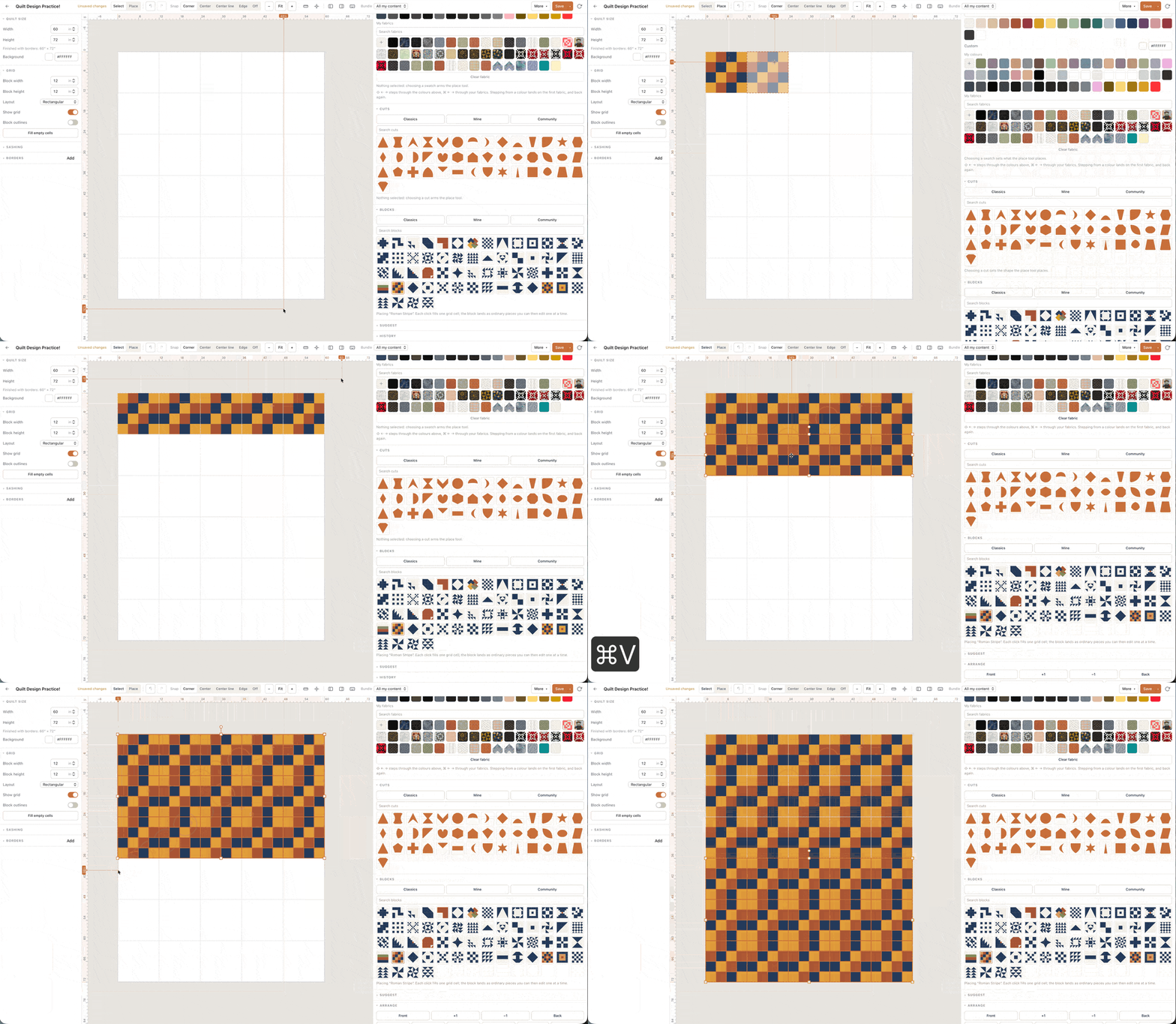
Quiltler’s king is 110×95 — five inches longer than a queen’s 90×95 in the other direction, and twenty inches wider. That width is why backing jumps to more panels or to 108 inch goods. If you design at queen size and ‘add a column later,’ you will buy the wrong batting twice.
Set 110×95, then decide whether borders eat the drop or the piecing does. A 3-inch border on a king is a lot of strip. Watch finished inches.
Save one saved quilt when the king plan is real. King yardage punishes three forgotten experiments.
King versus queen on the same canvas
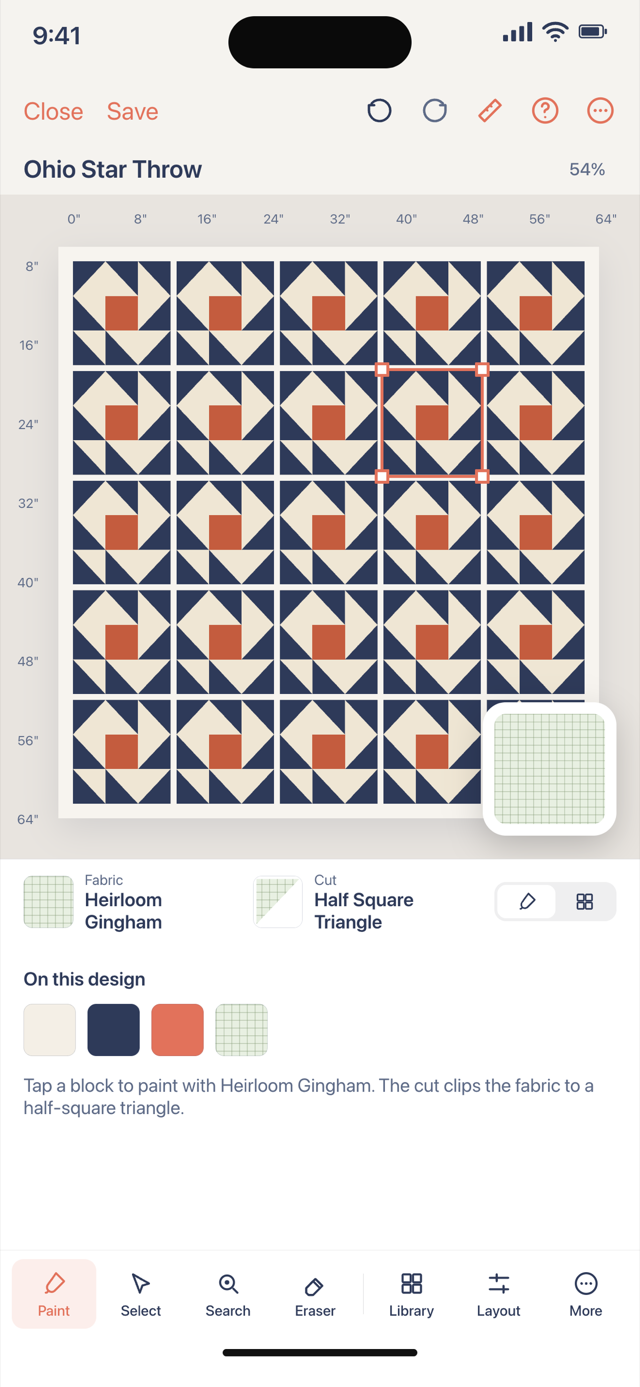
Queen is the default US bed search. King is the width search. Same tools: stamps, cuts, photo fabric, fabric total. Do not copy a queen layout and stretch it — block proportions go ugly. Rebuild the grid for 110 inches.
California King is listed separately in the sizes guide. This page is the 110×95 king, not a 72×84 mattress. If your frame is a Cal King, type 72×84 plus drop rather than stretching this 110-inch language. The studio does not have a separate Cal King product — it has inches.
King quilts are where people buy batting by the word King on the bag and still come up short if the longarmer wants eight inches extra. Read how much batting for a king quilt before you assume 120×120 is automatic. Binding is a long perimeter; the king binding article is the strip count when you are not inside a saved design.
A king of HSTs or log cabins is still this size page plus the matching unit planner. Do not let the block fashion hide that you promised 110 inches of width. The fabric total will look alarming. That is the honest number.
Backing and FPP at this scale
Read how to piece quilt backing before you seam three or four widths. Quilt width of fabric is why 108 inch backing exists.
Complex king blocks can still use FPP. The pack is paid; the geometry is free to try on canvas.
Write the finished inches down, then open the matching backing, binding or batting answer if that size has one. Those pages do not replace the canvas: they cover the rectangle jobs. The pieced top is still counted in the studio. If one unit needs foundation paper piecing, the pack can print sheets after you subscribe; a nine-patch field does not. Keep the free limit in mind: one saved quilt and two photographed fabrics, plus solids, is enough to prove the plan before you cut a stack the shop will not take back.
Open the studio, set 110×95, and add a single border. If the number surprises you, that is the point of designing first.