People search queen quilt designer when the quilt must cover a 60×80 mattress with drop, not a throw that grew borders. Quiltler is that job in the studio. Named inches live in the quilt sizes guide. Shopping math without a saved design is how much fabric for a queen quilt, how much backing for a queen quilt, and how much batting for a queen quilt. Twin scale is twin quilt designer; king is king quilt designer.
On this page
What this page actually plans
- 90×95 or your drop. Type queen size before you stamp a hundred blocks. Finished inches must stay on screen — queen tops balloon when borders stack.
- Block count at bed scale. More repeats than a twin; still pick units you can chain-piece. The library stamps; this page is how many fit a queen field.
- Sashing and borders on queen math. Layout tools add strips that change total size. Quilt layout software is that geometry live.
- Fabric photos on roles. Free two fabrics plus solids; the fabric total includes queen pieces. Per-fabric charts and backing are subscription.
- FPP when a queen block needs it. Sharp stars on a bed top may print foundation paper piecing sheets. A nine-patch queen does not require FPP.
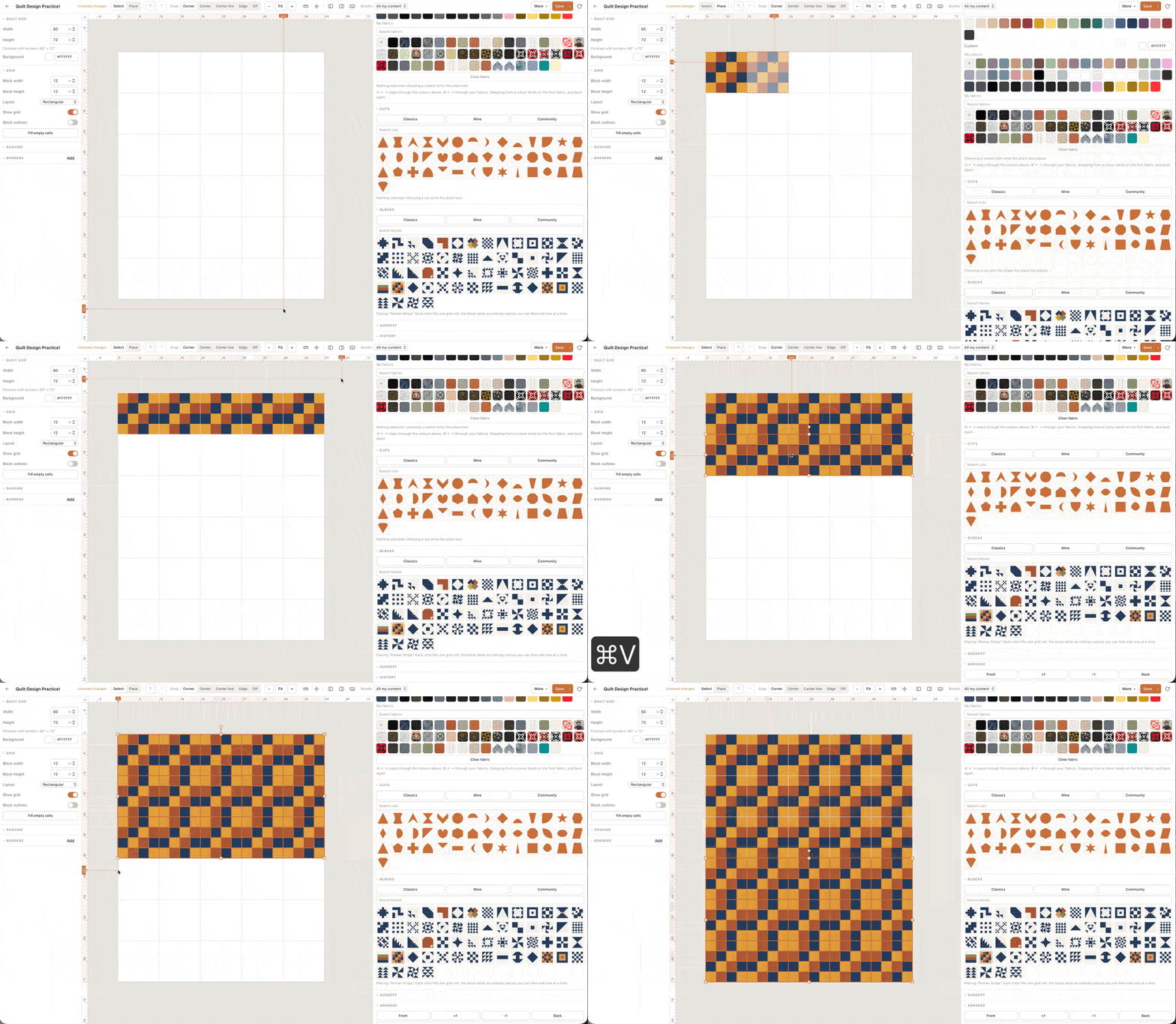
Design a queen you will actually quilt
Start from 90×95 unless you measured the mattress, pillows and drop. A queen that is ‘about ninety’ in your head becomes 98 inches after two borders, and then the batting package you bought no longer fits. Set size first. Choose a block whose repeat divides the field, or admit sashing will absorb the remainder.
Photograph a background and a focus print. On the free tier those two photos plus solids are the honest limit. Read the fabric total while you add sashing. Use the how-much-fabric-for-a-queen article when you want backing and binding without opening a saved quilt.
One saved quilt on free should be the queen you will cut. Auditioning three queens you cannot tell apart wastes the slot. Subscription adds per-fabric rows, backing, binding and optional FPP templates for fiddly units.
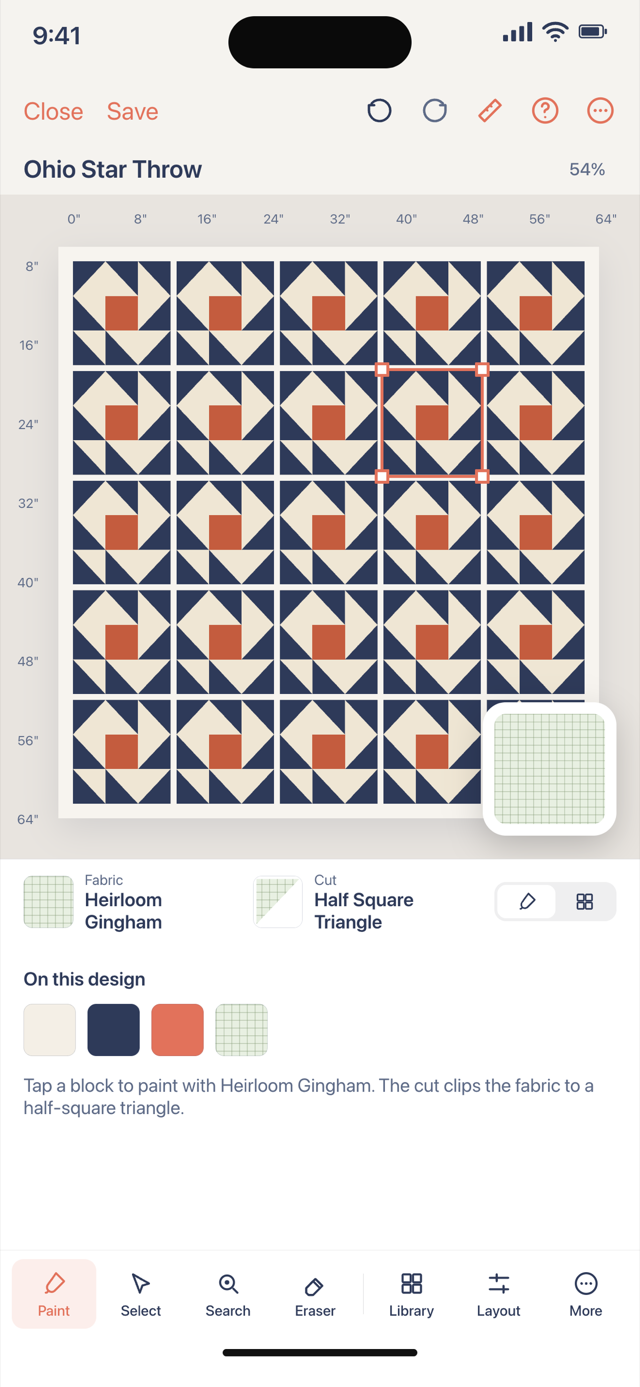
Queen versus full, king and twin
A full quilt on Quiltler is 85×90 — close enough that people mix them up, far enough that backing panel count can change. Use full quilt designer when the mattress is 54×75. King is 110×95: wider, same length as queen on this site, and wide backing starts to pay for itself. Twin is 70×90. The studio is the same; the size page is the intent.
Queen designs fail when they are secretly king tops with queen in the filename, or throws with four borders. If the guild asked for a queen, set 90×95 on day one.
Yardage that is not a rectangle
A pieced queen is never width times height divided by 42. That shortcut is how to calculate quilt fabric in reverse: it is what not to do. Piece-based totals live in the studio and on quilt yardage from design.
Backing seams for 90×95 are three panels of 42 inch cloth or one length of 108 inch goods. Learn the join in how to piece quilt backing. Width language is quilt width of fabric.
Write the finished inches down, then open the matching backing, binding or batting answer if that size has one. Those pages do not replace the canvas: they cover the rectangle jobs. The pieced top is still counted in the studio. If one unit needs foundation paper piecing, the pack can print sheets after you subscribe; a nine-patch field does not. Keep the free limit in mind: one saved quilt and two photographed fabrics, plus solids, is enough to prove the plan before you cut a stack the shop will not take back.
Open the studio, set 90×95, add one border, and watch total inches. That is queen design before you buy eight yards of the wrong background.