People search nine-patch quilt planner for a first bed quilt or a scrap grid. Quiltler is that repeat in the studio. One block’s cuts are the nine-patch calculator and the nine-patch quilt block guide. First-quilt pacing is first quilt planner. Sashing between nines is quilt sashing planner.
On this page
What this page actually plans
- Nine squares, then a quilt of nines. Set throw, twin or queen.
- Ten fabric photos on the free account leave room for a classic light/dark nine-patch and variations.
- Sashing is optional and changes size.
- Block size planner if you are choosing 6 versus 9 versus 12 — quilt block size planner.
- FPP is rarely needed for a nine-patch; still available via foundation paper piecing for add-on stars.
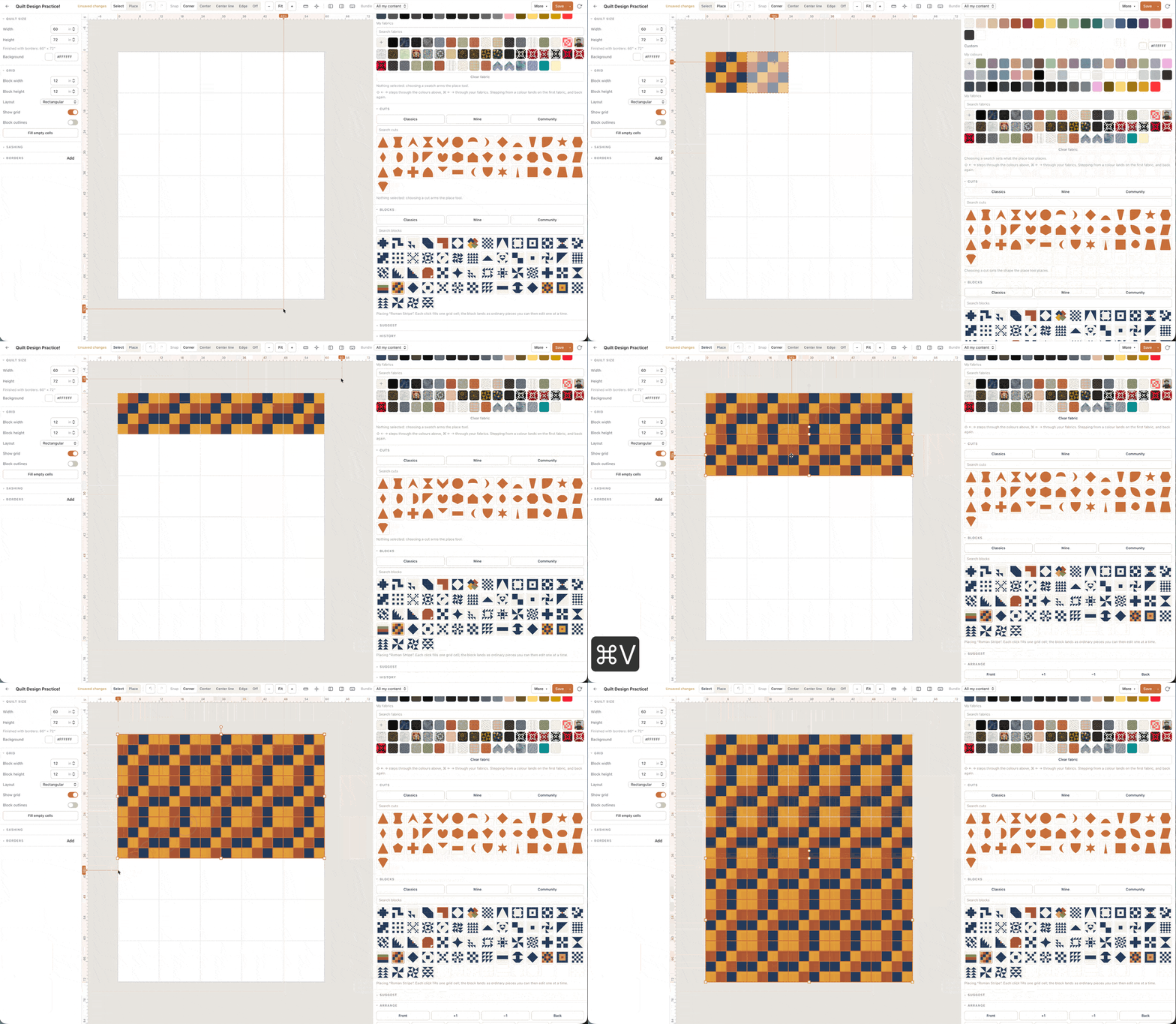
The best first quilt that is still a real quilt
A nine-patch throw is how many people should start. It is also how many people get bored if the block is 4 inches and the quilt is a king. Match block size to the field. Throw quilt designer plus this planner is a weekend you can finish.
The nine-patch calculator gives the patch cut size. The studio is how many blocks. An Irish chain is still nine-patches plus plain squares — more color roles, same studio. On-point nine-patches need setting triangles from the on-point planner, not leftover nine-patch patches turned on the bias.
One saved quilt for the grid you will sew. A 4-inch nine-patch king is thousands of squares; a 9-inch nine-patch throw is a weekend. Match the unit to the field. Sashing is optional and changes size. Foundation paper piecing is rarely needed for a nine-patch; keep it for add-on stars in the printable pattern.
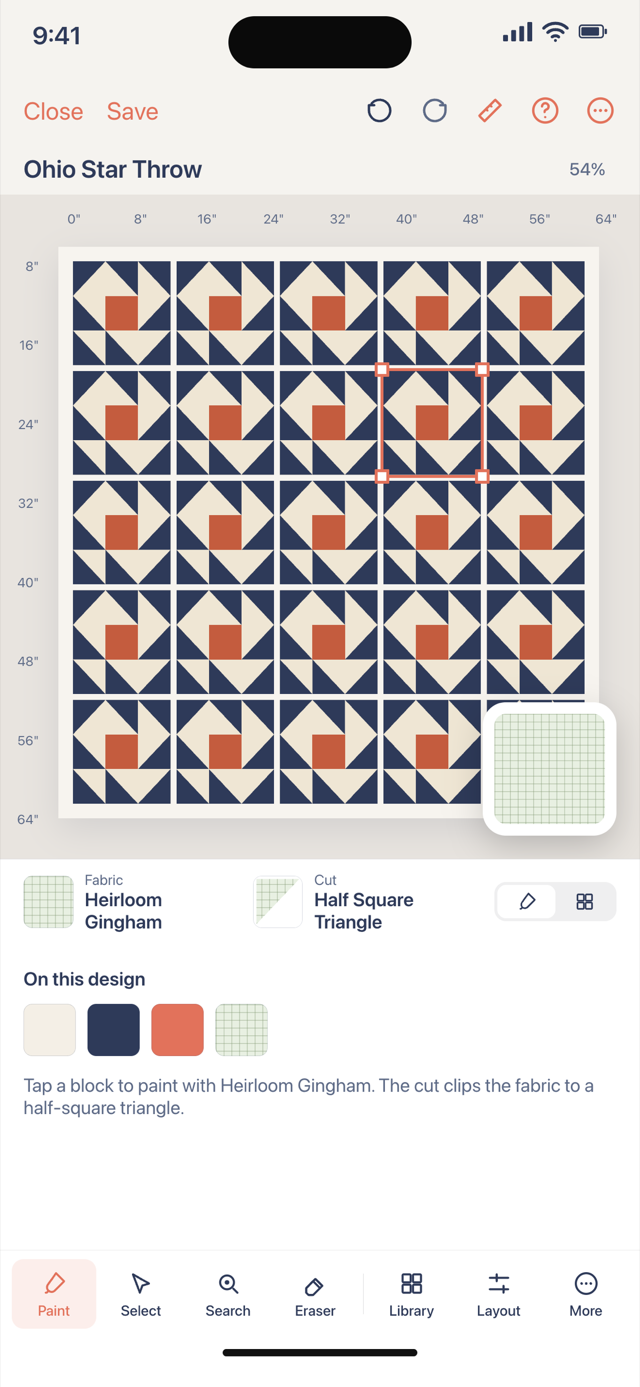
Straight set, on point, Irish chain
Straight set of nine-patches is the default. On-point nine-patches need on-point quilt planner and setting triangles. Irish chain is nine-patches plus plain squares — still this studio, more color roles.
Scrappy nines are the scrappy quilt planner with a nine-patch stamp.
Yardage
Lights and darks swap if you press toward the dark. The studio does not press for you. It does count the fabric. Binding and backing remain size articles: start with how much fabric for a throw quilt if that is the field. A nine-patch throw with 2-inch sashing is a different quilt than the same blocks butted; watch finished size.
Write the finished inches down, then open the matching backing, binding or batting answer if that size has one. Those pages do not replace the designer: they cover the rectangle jobs. The pieced top is still counted in the studio. If one unit needs foundation paper piecing, the printable pattern can print sheets with Quilter or this quilt’s pattern ($4.99); a nine-patch field does not. Keep the free limit in mind: one saved quilt and ten photographed fabrics, plus solids, is enough to prove the plan before you cut a stack the shop will not take back.
Open the studio, stamp a nine-patch, and fill 50×65. If you still like it, you have a first quilt.